When I first landed in Paris, the Eiffel Tower‘s iron lattice loomed above, a testament to human ingenuity and a symbol of romance. Walking along the Seine, I was struck by the stonework of Notre-Dame, reopened to visitors in December 2024 after its long post-fire restoration. Visiting the Château de Versailles felt like stepping back into a royal era, while the Arc de Triomphe stood as a silent witness to centuries of history. The city blends modernity and tradition with quiet confidence, and there is far more to discover than any single trip allows.
Before you go: Visitor details can change. Check Eiffel Tower Official Website – Home and Eiffel Tower Ticket Rates and Opening Times before you go.
Eiffel Tower
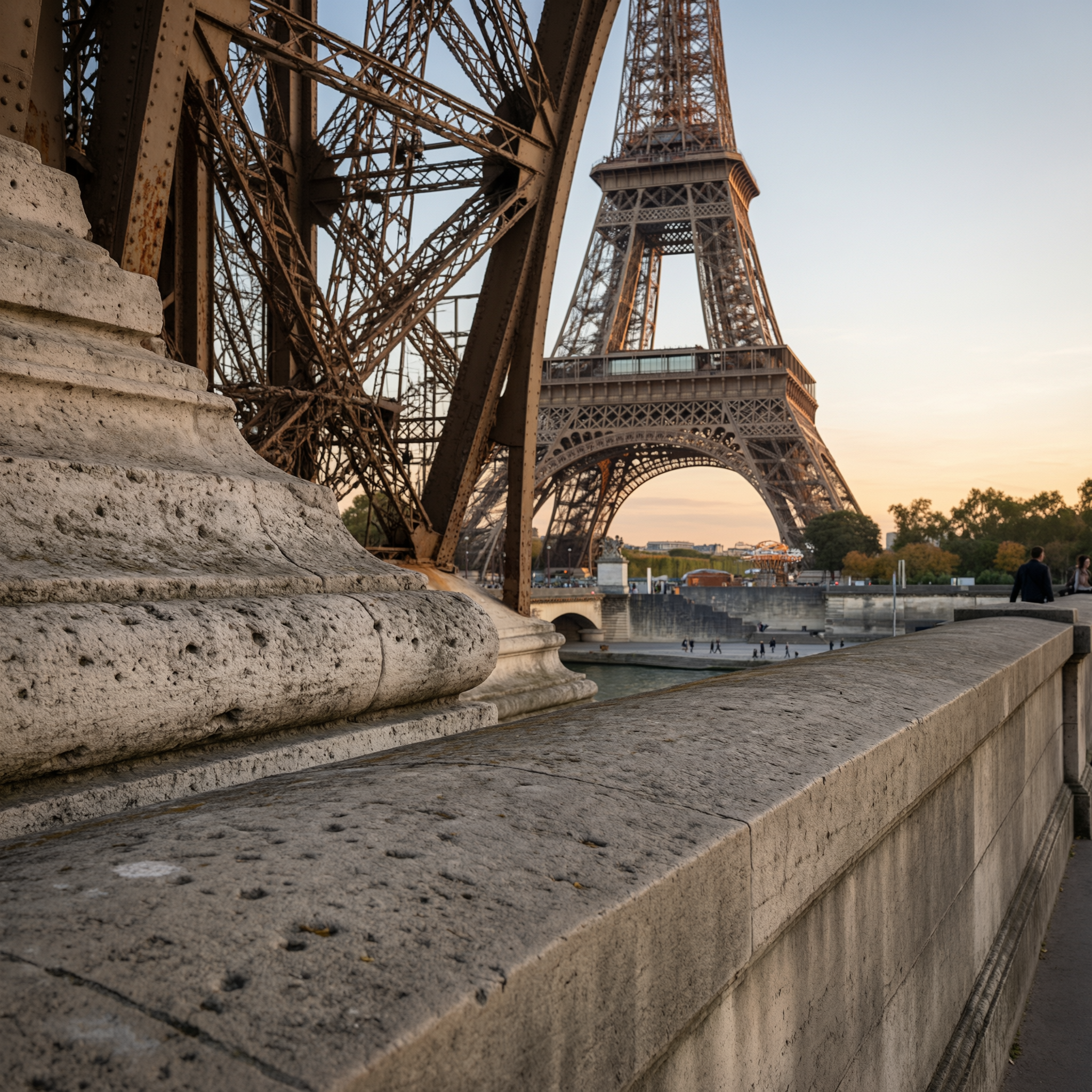
The Eiffel Tower, completed in March 1889 and opened to the public that May, remains the defining emblem of Paris. When I first saw it, the scale of the iron framework, at once delicate and massive, was genuinely arresting. Occasional closures can occur for security or special events; check the official attendance page before planning your visit.
As I climbed to the observation levels, either by elevator or stairs, I was treated to sweeping views that seemed to capture the essence of Paris. From the lively streets below to the far-off horizon, every angle offered a new perspective. It felt like I had the whole city at my feet.
At sunset, the city shifts into softer light and the tower takes on a warm glow that justifies every cliché ever written about it. Place du Trocadéro is a popular spot for photographs, with the tower framed by fountains and formal gardens, though expect crowds, particularly in summer. Arriving early in the morning or later in the evening gives you a better chance of a clear shot.
Despite nearly being demolished twice after its construction, the Eiffel Tower endures as the city’s most recognizable landmark and a genuinely moving piece of engineering history.
The Seine River Cruise

After taking in the views from the Eiffel Tower, I found another rewarding way to see Paris by boarding a Seine River Cruise. The pace slowed the moment I stepped onto the boat, and the city’s famous facades arranged themselves into a continuous, unhurried panorama.
As we sailed down the Seine, the Eiffel Tower receded behind us while Notre-Dame Cathedral, reopened since December 2024 following its restoration, came into view from the water. Seeing the riverbanks from this angle offered a perspective that walking tours simply cannot replicate.
Some operators offer a lunch or dinner cruise with multiple courses and French wine, a popular option, though menus and availability vary by company and season, so confirm details directly with your chosen operator before booking. We drifted past the Louvre and the Musée d’Orsay, each building carrying its own weight of history even from the river.
Whether it is your first time in Paris or a return visit, a Seine cruise offers a relaxed counterpoint to the city’s busier attractions and a useful orientation of its riverside landmarks.
Disneyland Paris

Walking into Disneyland Paris felt like stepping into a place where every turn promised a new adventure. The two parks, Disneyland Park and Walt Disney Studios Park, were packed with attractions and entertainment. Roaming through Disneyland Park, I was drawn into the themed areas, each with its own distinct character. Fantasyland, with its fairy-tale castles and storybook characters, brought out my inner child, while Adventureland‘s exotic scenery offered a different kind of excitement.
Over at Walt Disney Studios Park, the focus on film and animation made for a different but equally engaging experience. I was pulled into the rides and interactive shows, and Disney Village provided a lively spot to eat and unwind between the parks.
For those wanting to make the most of their day, Disney Premier Access was a real major advantage, allowing me to skip the regular lines and jump straight into the fun. Whether you're young or just young at heart, Disneyland Paris is a family-friendly destination where dreams and reality come together, creating a magical experience you won't forget.
Château De Versailles
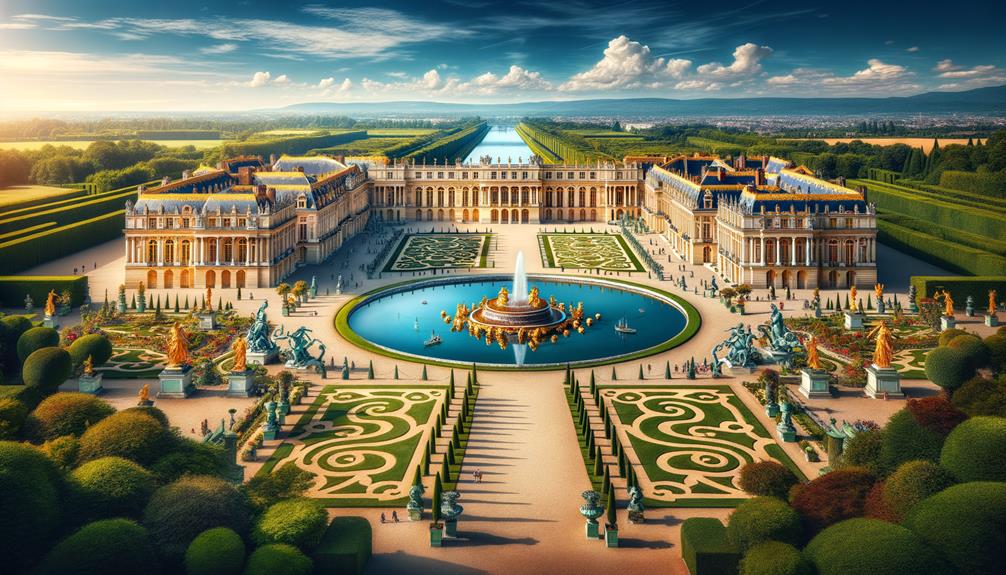
After Disneyland Paris, I was drawn to the altogether different grandeur of the Château de Versailles. Originally a hunting lodge, the palace commissioned by Louis XIV grew into a complex of approximately 2,300 rooms, though only a fraction are open to visitors, including the celebrated Hall of Mirrors, the King’s and Queen’s Apartments, and the formal gardens. The Hall of Mirrors, with its seventeen arched mirrors reflecting the garden light, remains the palace’s most arresting interior.
During peak season, the queues can be considerable, so I would recommend booking skip-the-line tickets in advance. This allows for a more relaxed exploration of the rooms and grounds rather than spending the morning waiting at the gate.
| Feature | Description |
|---|---|
| Hall of Mirrors | Stunning reflections and grandeur |
| Skip-the-Line Tickets | Essential during peak times |
| Extensive Grounds | Beautiful gardens and landscapes |
As I wandered through the rooms, I felt the weight of its historical significance. The Château de Versailles symbolizes France's royal past, a place of luxury and power. The intricate details, from gold leaf ceilings to lavish tapestries, speak volumes about the opulence of the era.
Exploring the vast gardens, I was amazed by the meticulous landscaping and serene water features. The combination of art, history, and nature here is truly unique. For anyone wanting a glimpse into the grandeur of French royalty, the Château de Versailles is a must-see.
Arc De Triomphe
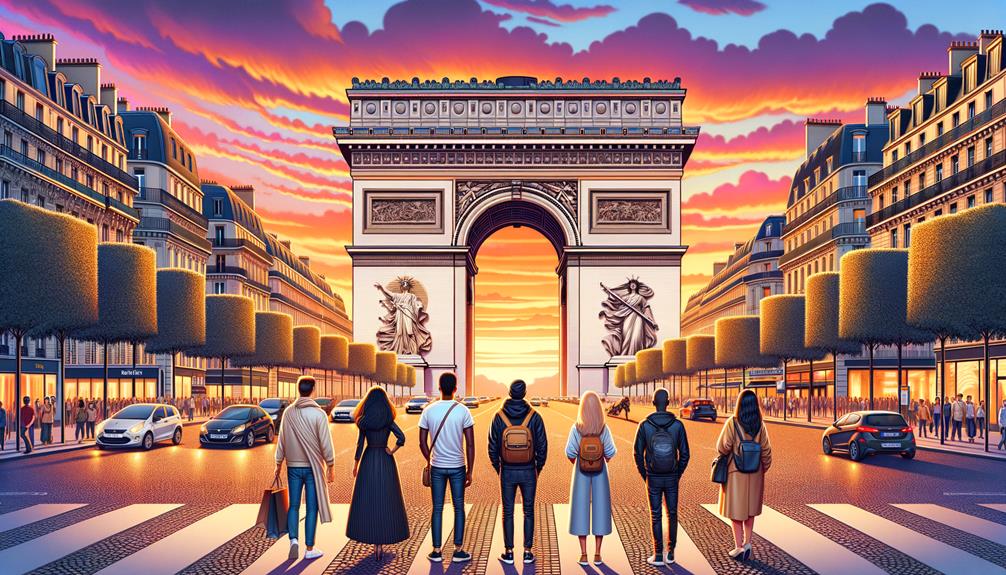
At the western end of the Champs-Élysées stands the Arc de Triomphe, a stunning blend of history and breathtaking city views. Commissioned by Napoleon, this iconic monument celebrates French military achievements and national pride. As I walked toward the massive arch, I was struck by its grandeur and the detailed carvings covering its surface.
Climbing the 284 steps to the rooftop viewing platform is worth the effort. From the top, the twelve avenues radiating outward from the arch make sense of the city’s layout in a way that no map quite manages, with the Eiffel Tower and Sacré-Cœur both visible on the skyline. Note that access to the top may be restricted during high-attendance periods or special events; check ahead before visiting.
Here are four reasons why the Arc de Triomphe is a must-see:
- Historical Importance: The arch commemorates Napoleon’s victories and honors those who fought and died for France.
- Tomb of the Unknown Soldier: This tomb is a moving tribute to unidentified soldiers from World War I.
- Charles de Gaulle Plaque: This plaque pays homage to his significant World War II broadcast, adding a modern historical layer.
- Prime Location: Situated at the center of one of Paris’s busiest roundabouts, the Arc de Triomphe is a natural anchor for exploring the western end of the city.
The Arc de Triomphe holds together the military, political, and urban history of Paris in a single structure, more layered than it first appears.
Musée D’Orsay
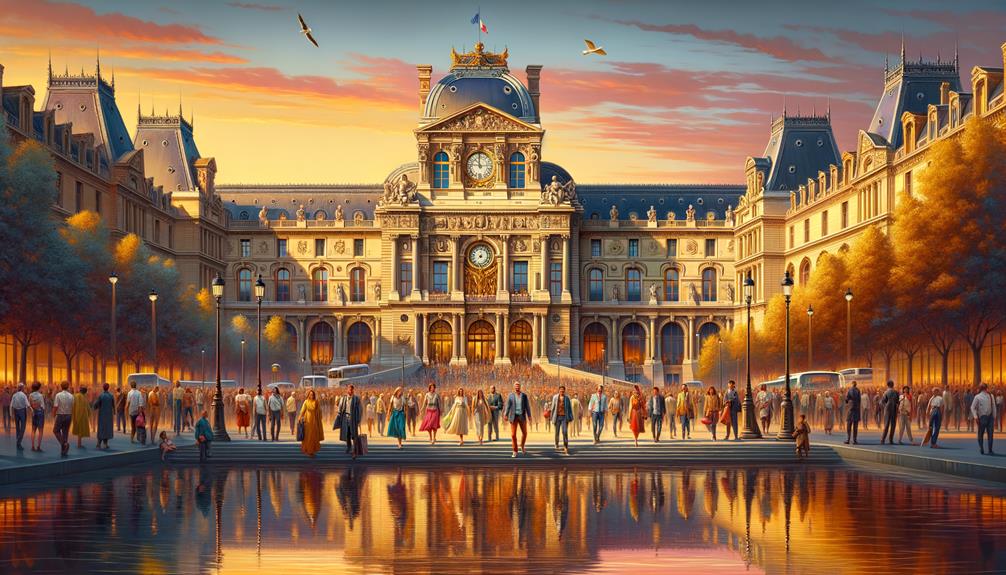
The Musée d’Orsay occupies the former Gare d’Orsay, a Beaux-Arts railway station that closed to trains in 1939 and reopened as a museum in 1986. As I wandered through its halls, I was struck by how well the architecture suits the collection: natural light from the glass roof falls across canvases by Monet, Van Gogh, and Degas in a way that a purpose-built gallery rarely achieves. The museum’s decorative arts section, spanning the 19th and early 20th centuries, adds further depth to the visit.
Impressionist Art Collection
Walking into the grand halls of the Musée d’Orsay, I was immediately struck by the Impressionist and Post-Impressionist collection, one of the finest anywhere. The works of Monet, Van Gogh, and Degas line the walls, each painting using light, color, and loose brushwork to capture something that more formal academic painting rarely managed.
As I wander through the galleries, the beauty and variety of the pieces captivate me. Here are a few highlights you won't want to miss:
- Monet’s ‘Water Lilies’ series: Serene, almost meditative studies of his garden pond at Giverny.
- Van Gogh’s ‘Starry Night Over the Rhône’: Swirling stars reflected in the calm surface of the river, one of the museum’s most arresting works.
- Degas’ ‘The Ballet Class’: A precise and unsentimental look at young dancers in rehearsal.
- Renoir's 'Dance at Le Moulin de la Galette': A lively scene brimming with movement and joy.
For anyone drawn to 19th-century art, the Musée d’Orsay is an essential stop, the collection is exceptional and the building itself is part of the experience.
Former Train Station
Standing inside the Musée d’Orsay, the building’s origins as a working railway station remain unmistakable. The towering arched ceilings, the ornate ironwork, and the pair of giant station clocks all survive from the Gare d’Orsay, and they give the museum a grandeur that no conventional gallery could replicate.
The Musée d’Orsay focuses on art produced between roughly 1848 and 1914, with Impressionism and Post-Impressionism at its core. Monet’s landscapes, Van Gogh’s charged brushwork, and Degas’ studies of movement all benefit from the natural light that pours through the original station windows.
| Emotion | Artwork | Artist |
|---|---|---|
| Tranquility | Water Lilies | Monet |
| Passion | Starry Night | Van Gogh |
| Elegance | The Ballet Class | Degas |
Exploring these works in a converted railway station creates an unusual sense of continuity, the building itself is a product of the same era as the art it houses, and the two inform each other in ways that are easy to feel even if they are hard to articulate.
Decorative Art Highlights
Beyond the paintings and sculptures, the decorative arts at the Musée d’Orsay offer a detailed look at the craftsmanship of the 19th and early 20th centuries. As I moved through the museum, the applied arts collection held its own alongside the more celebrated works, each piece reflecting the same spirit of experimentation that drove the Impressionists.
Some standout pieces include:
- Art Nouveau Furniture: Fluid curves and natural motifs that blur the line between craft and fine art.
- Glassware by Émile Gallé: Richly colored and intricately formed pieces that demonstrate the period’s ambition for decorative objects.
- Ceramics and Porcelain: Functional objects elevated by careful design and skilled execution.
- Jewelry by René Lalique: Pieces that capture the opulence and inventiveness of the Belle Époque.
After working through the decorative arts galleries, I stopped at the museum’s café, tucked behind one of the original station clocks. Sitting there with a coffee, looking back over the morning’s paintings, I felt the full weight of what the Musée d’Orsay holds, and how much a single visit leaves unexplored.
The Louvre
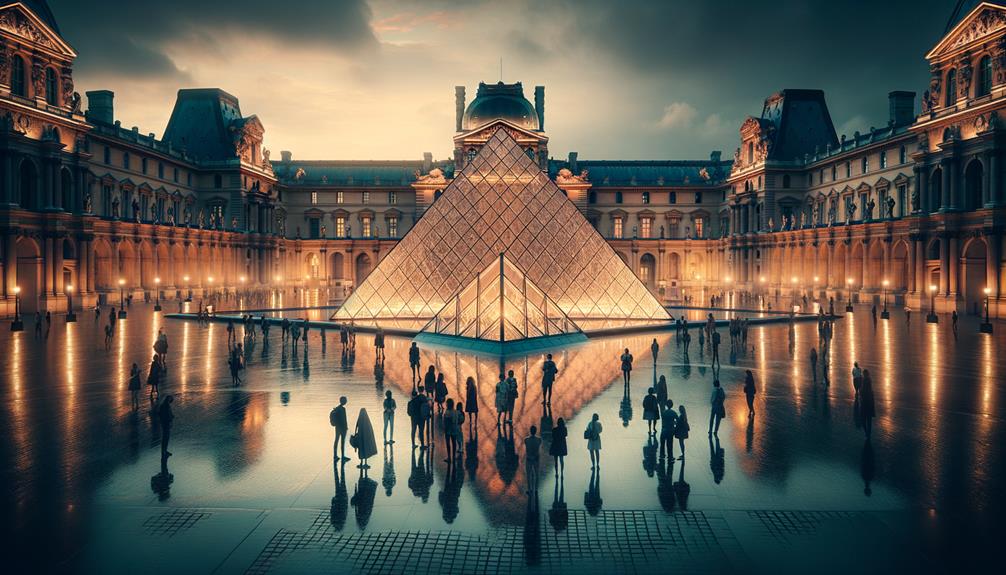
Visiting the Louvre, the world’s largest art museum, is an exercise in accepting that you cannot see everything. As I moved through its halls, the sheer range of the collection, spanning centuries and continents, was as humbling as it was impressive. Housed in the historic Louvre Palace, the museum opened in 1793 during the French Revolution, its transformation from royal residence to public institution a deliberate statement about access to culture.
Seeing the Mona Lisa in person is a singular experience, even surrounded by crowds. Leonardo da Vinci’s handling of light and shadow holds up at close range in a way that reproductions do not convey. A few rooms away, the Venus de Milo stands with quiet authority, a reminder of how much ancient Greek sculpture still shapes our sense of beauty. These are just two of more than 35,000 works on display.
For a more structured visit, guided tours are available and help navigate a building that can otherwise feel overwhelming. The Louvre offers free entry on the first Friday evening of each month, 6:00 PM to 9:45 PM, a worthwhile option if your dates align, though those sessions tend to be busy. For current hours, ticket prices, and booking options, check the official Louvre website before visiting.
Montmartre and Sacré-Cœur
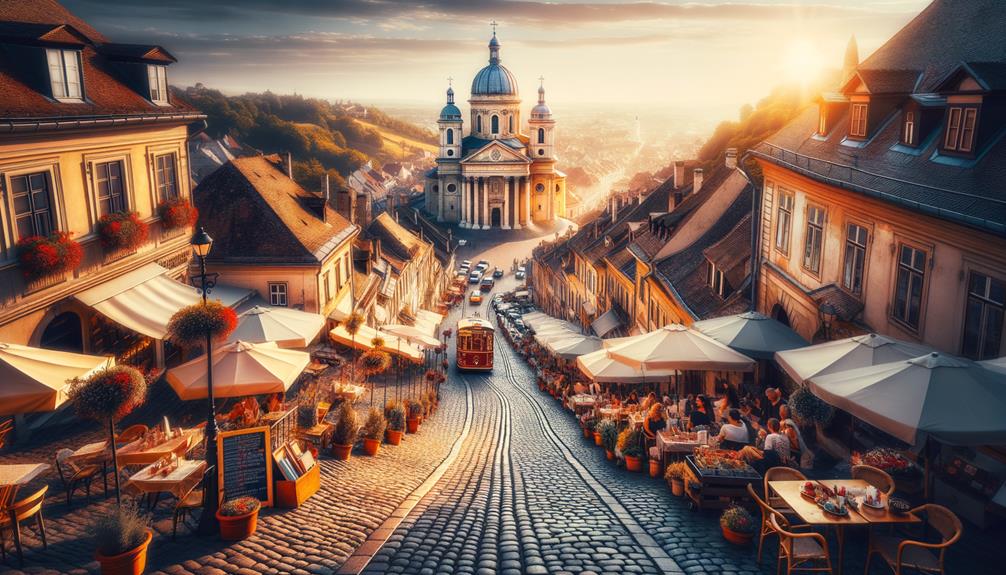
As I wandered through Montmartre, the neighborhood’s artistic past felt present in the narrow streets, the café terraces, and the painters working in Artists’ Square. The Sacré-Cœur Basilica stood at the top of the hill, its white domes visible from much of the city below, and the view from the esplanade in front of it stretched across Paris in every direction.
Artistic Heritage and Vibes
Strolling through Montmartre’s cobblestone streets, it is easy to understand why the neighborhood drew generations of artists. The district retains a distinct character, part working neighborhood, part open-air gallery, that sets it apart from the more formal attractions elsewhere in the city.
Artists’ Square, where painters display and sell their work in an open-air setting, is the most concentrated expression of Montmartre’s creative identity. The range of styles on show is wide, and watching artists at work gives the square a lively, unscripted quality.
The Sacré-Cœur Basilica crowns the hill, its white travertine stone, which whitens rather than darkens with age, standing out against the Paris skyline. The basilica is a relatively recent addition to the city, consecrated in 1919, but it has become inseparable from Montmartre’s identity.
Here are four worthwhile activities in Montmartre:
- Walk the cobblestone streets and take in the neighborhood’s distinct atmosphere.
- Visit Artists’ Square to see painters at work and browse original pieces.
- Admire the Sacré-Cœur Basilica for its architecture and the views from the esplanade.
- Find a quiet café and take a break from sightseeing with a coffee and some people-watching.
Montmartre’s appeal lies in the way its artistic history and everyday neighborhood life continue to coexist, it is one of the few parts of central Paris that still feels genuinely lived-in.
Panoramic City Views
Standing on the esplanade in front of the Sacré-Cœur Basilica, Paris opens up below in a broad, unhurried panorama. The city spreads out across the basin, rooftops, landmarks, and the thin line of the Seine, in a way that makes the scale of it suddenly legible. The basilica’s white domes behind you add a striking frame to the view.
For an even higher vantage point, the basilica’s dome can be reached by climbing approximately 300 steps, a separate, more demanding ascent from simply entering the basilica, which is accessible without any climbing. From the dome, the Eiffel Tower, the ordered avenues, and the Seine winding through the city are all visible. It is a popular spot for photographers, and queues can form during busy periods.
Montmartre’s artistic history and the views from Sacré-Cœur together make this one of the most rewarding half-days in Paris. Whether you spend your time in the galleries and cafés below or climb to the dome above, the neighborhood offers a perspective on the city that the major museums cannot.
Jardin Du Luxembourg
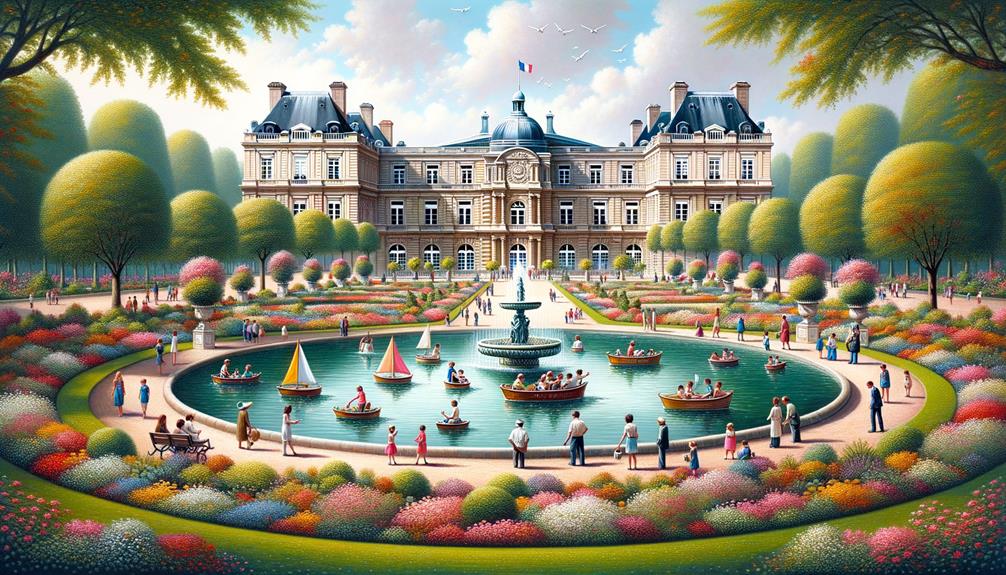
In the heart of the Latin Quarter, the Jardin du Luxembourg offers a well-tended retreat from the surrounding streets. As I walked through the park, the formal French garden layout, clipped lawns, gravel paths, and symmetrical flowerbeds, gave way to quieter corners where the pace slowed noticeably.
The park is well suited to picnics and unhurried walks. I watched locals and visitors alike spread out on the grass or claim one of the park’s distinctive green metal chairs around the central pond. The statues placed throughout the grounds add a layer of history to what might otherwise be a straightforward city park.
Some highlights of the Jardin du Luxembourg:
- Luxembourg Palace: The grand centerpiece, originally built as a royal residence and now home to the French Senate.
- Fountains and Ponds: Calm spots well suited to sitting and watching the city slow down around you.
- Orchard and Apiary: Practical features that reflect the park’s long history as a working estate as well as a public garden.
- Children’s Play Area: A well-used space that makes the park genuinely family-friendly.
Jardin Du Luxembourg truly offers a peaceful retreat in the lively Latin Quarter of Paris.
Frequently Asked Questions
What Shouldn’t I Miss in Paris?
The Eiffel Tower, the Louvre, and Notre-Dame are the obvious starting points; Notre-Dame reopened to visitors in December 2024 after its post-fire restoration. Beyond those, a walk through Montmartre, an afternoon at the Musée d’Orsay, and a cruise along the Seine will give you a well-rounded sense of the city.
What Is the Number One Attraction in Paris?
When I think of Paris, the Eiffel Tower is the first thing that comes to mind. No photograph quite prepares you for the scale of it up close, and the views from the upper levels remain the best single vantage point the city offers. Just be sure to check the official site for any closures before you visit.
Is 3 Days in Paris Enough?
Three days in Paris? Sure, if you're ready to hustle like an athlete. But for those of us who prefer a laid-back pace with leisurely walks, delicious croissants, and soaking in that unique Parisian vibe, it's a delightful yet all-too-short visit.
What Is Paris Most Iconic?
The Eiffel Tower is Paris’s most recognizable landmark by some distance. Its iron lattice structure, built for the 1889 World’s Fair and nearly demolished twice since, has become so associated with the city that it is difficult to think of one without the other. Standing beneath it, I still find the engineering as impressive as the view from the top.