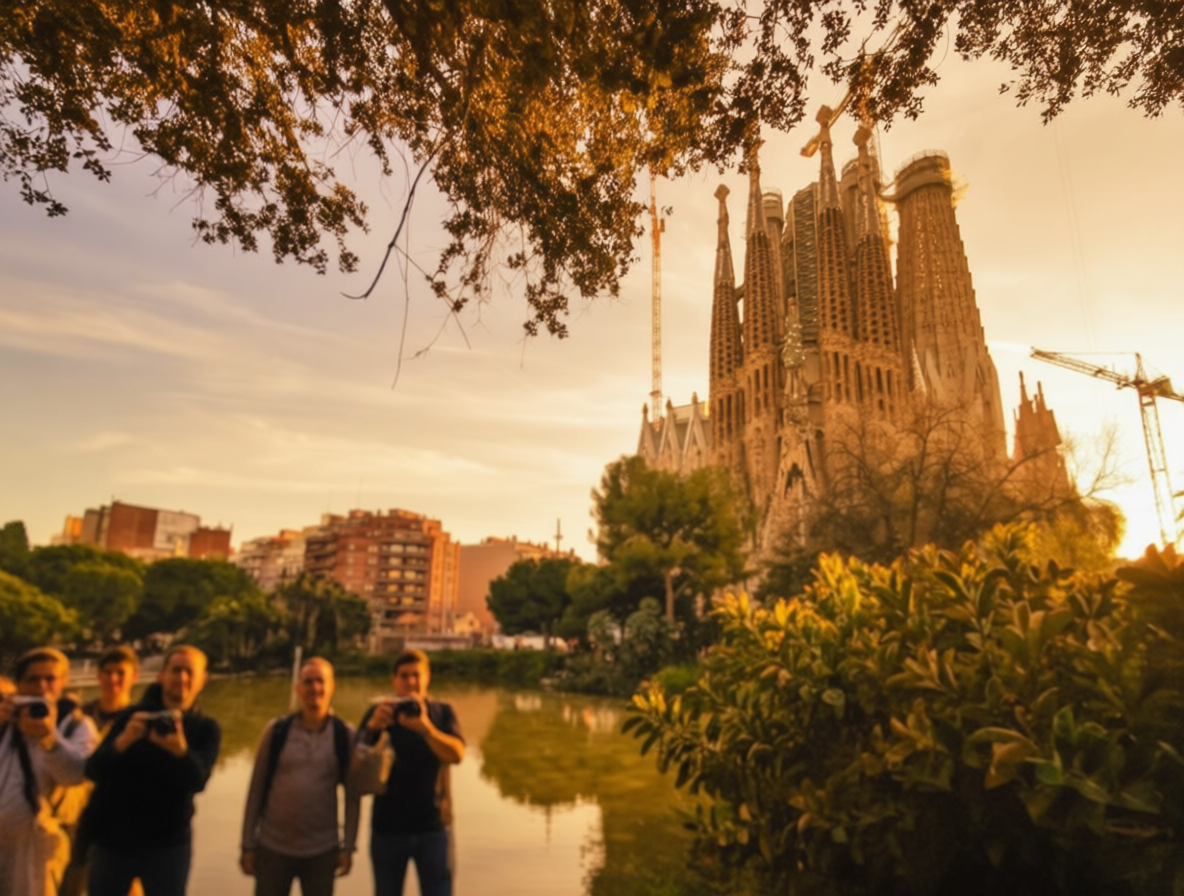
When I first stepped into Barcelona, the Sagrada Familia was the main attraction on my radar. Booking tickets ahead of time proved to be a smart move, allowing me to skip the long lines and immerse myself in Gaudí’s iconic architecture. I opted for a guided tour, which provided valuable insights into the basilica’s intricate design elements inspired by nature. As I made my way up the tower, the breathtaking views of the city left me speechless. But what truly left an indelible mark was the Sagrada Familia’s essence – something that can only be experienced firsthand.
Before you go: Visitor details can change. Check Sagrada Familia Official Website before you go.
Tickets and Entry
When visiting the Sagrada Familia, buying tickets ahead of time is essential. Not only do you save time, but you also get to skip the often lengthy ticket line. I can attest that planning ahead made my visit much smoother. The official website is the best place to purchase your tickets, ensuring you get legitimate access and avoiding potential scams. Plus, you can choose a timed entry slot that fits perfectly into your itinerary.
Upon arrival, the entry process was a breeze. The security check took about 15 minutes, which was reasonable given the grandeur and significance of the basilica. With timed entry tickets, there wasn’t an overwhelming crowd, allowing me to take my time and appreciate every intricate detail of Gaudí’s masterpiece.
The tower tour is a highlight for many visitors. The elevator ride up offers panoramic views of Barcelona. Visitors ascend by elevator and descend via narrow, winding stairways. The Nativity Tower has 340 steps, and the Passion Tower has 426 steps. Tower access is weather-dependent and not recommended for those with claustrophobia, mobility issues, or children under six. The Passion Tower offers better panoramic city views, while the Nativity Tower provides a closer look at Gaudí’s original stonework. A special ticket is required for tower access, which costs an extra €10. I found the views from the top breathtaking, offering a unique perspective on Barcelona’s beauty.
Visiting Hours
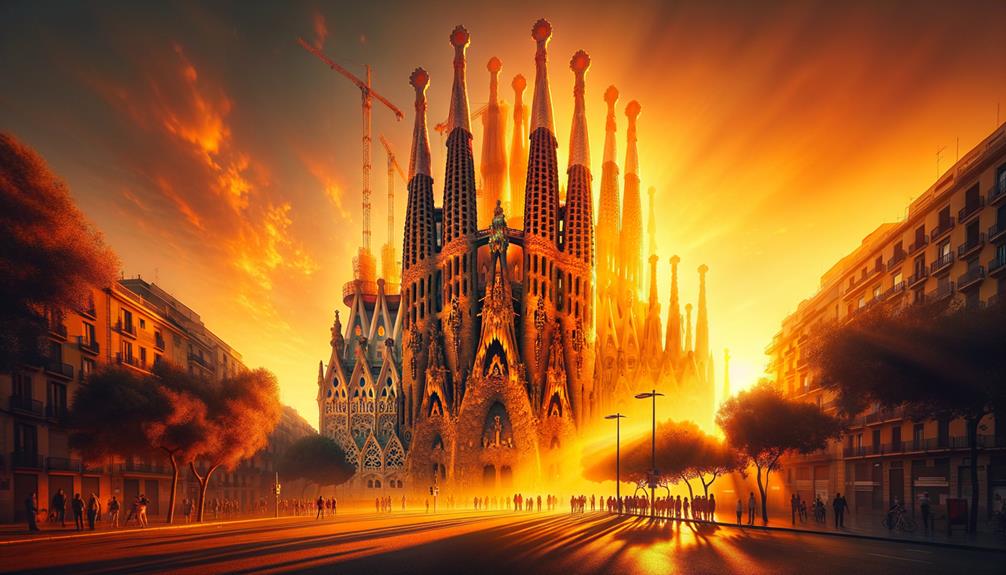
The Sagrada Familia is open every day of the year, but the exact opening and closing times vary depending on the season. Always check the official website for the latest information.
To make the most of your visit, consider the following tips:
Book your tickets ahead of time to guarantee entry and avoid long lines, especially during peak hours.
Check the official schedule for special events that might affect regular visiting hours, so you’re not caught off guard.
Choose a ticket option that suits your interests and schedule, such as a guided tour, which provides varying levels of access and insights.
I found that visiting early in the morning or late in the afternoon was the most peaceful, allowing me to absorb the basilica’s grandeur without the crowds. This made my experience truly unforgettable.
Guided Tours
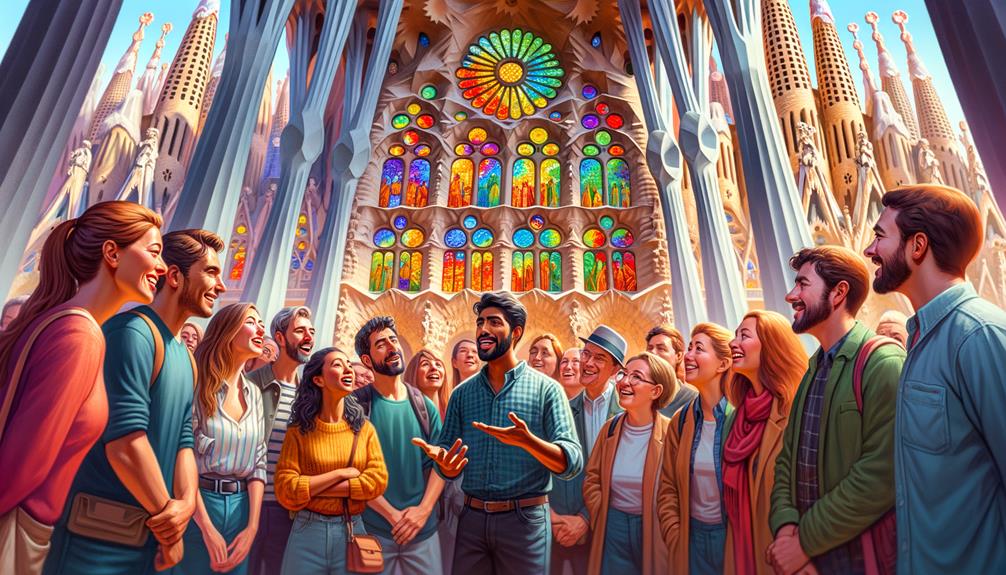
Guided tours at the Sagrada Familia offer insights into the basilica’s history and architecture. These tours are available in multiple languages, and some include tower access. As I walked through Gaudí’s masterpiece, the professional guide’s vivid narration brought each stone and spire to life, sharing fascinating anecdotes and insights.
One of my favorite parts was the early morning tour, which allowed me to fully absorb the grandeur of Gaudí’s vision in a serene and less crowded atmosphere. Guided tours also provide the opportunity to analyze the intricacies of the design and collect fascinating data about the construction process, both historical and current.
Here’s a comparison to help you decide:
| Feature | Guided Tour | Audio Guide |
|---|---|---|
| Access | Exclusive areas and stories | General areas |
| Duration | Varies (Short to extended) | Self-paced |
| Personal touch | Interaction with knowledgeable guide | Pre-recorded information |
| Early mornings | Less crowded, more immersive | Available |
| Cultural Insights | In-depth exploration of Gaudí and architecture | Basic historical context |
This guided tour truly deepened my appreciation of the Sagrada Família’s unique architecture. It’s a must-do for anyone keen on exploring Gaudí’s genius and the basilica’s grand narrative in greater detail.
Tower Visit
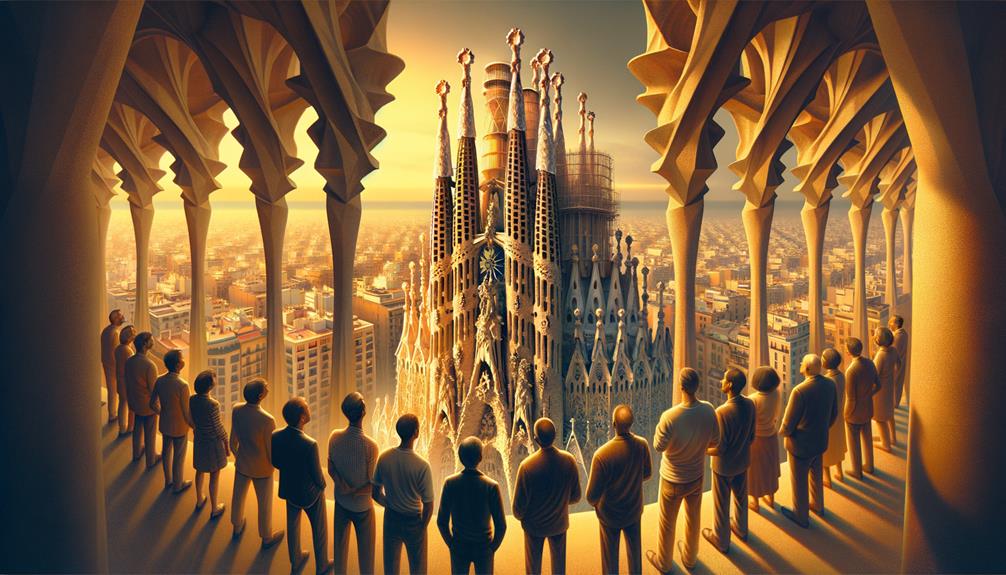
Taking the elevator up to the top of the Nativity Tower at the Sagrada Familia, I was struck by the breathtaking views of Barcelona unfolding beneath me. The cityscape stretched out in every direction. The elevator ride was smooth, but the real adventure began as I started my descent.
The narrow, winding stairway offered a close-up look at the decorative pinnacles, allowing me to appreciate the intricate details of Gaudí’s craftsmanship. Every step revealed something new, from the textured stonework to the carefully designed railings. As I navigated the stairway, I paused at several points to take in the unique perspectives.
My tower visit was marked by three highlights:
Elevator Ride: A quick ascent to the top, revealing panoramic views of the city.
Winding Stairway: A close look at the decorative pinnacles and detailed architecture.
Cityscape Views: Unparalleled sights of Barcelona’s sprawling urban landscape.
The experience felt liberating, each view a reminder of the city’s rich history and dynamic culture. After descending, I headed to the museum in the basement, which deepened my appreciation for the Sagrada Familia’s ongoing story.
Architectural Highlights
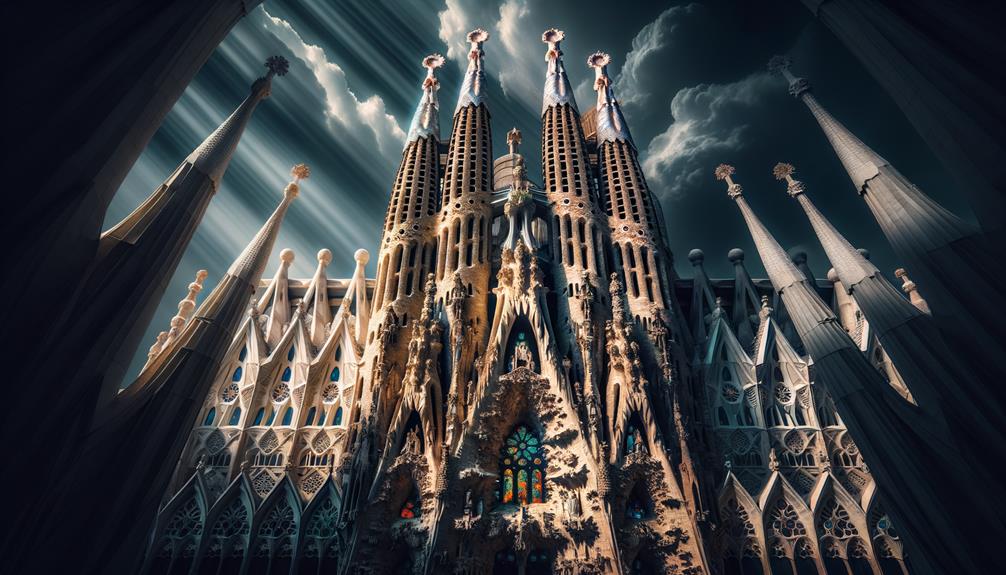
Wandering through the Sagrada Familia, I was struck by the brilliant blend of geometry and organic forms that define Gaudí’s architectural masterpiece. The stone architecture, with its varied textures and meticulous details, exudes a sense of timelessness. Each facade tells a story, but the Nativity Facade stood out, adorned with intricate sculptures that showcase Gaudí’s attention to detail. Among them, the significant representation of Saint Joseph drew my attention, symbolizing the sanctity and family values that Gaudí cherished.
The Sagrada Familia, a UNESCO World Heritage Site, attracts visitors from around the world who come to marvel at its unique beauty. It is expected to be completed in 2026, coinciding with the 100th anniversary of Gaudí’s death.
Gaudí’s nature-inspired design is evident throughout the building, with columns resembling tree trunks and arches that mimic natural forms. This organic approach connects the building to the natural world and creates a serene atmosphere. The Sagrada Familia is not only an architectural highlight of Barcelona but also a testament to Gaudí’s innovative approach to design.
Nature’s Influence
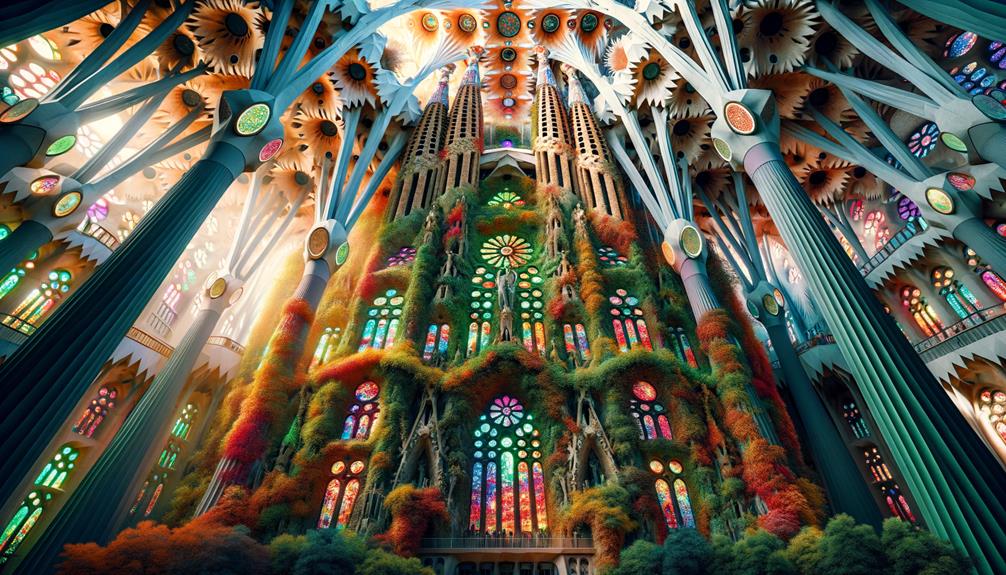
Walking through the Sagrada Família, I felt an intense connection to nature. Gaudí’s genius is on full display in the tree-like columns and organic shapes that seem to come alive within the basilica. The way he incorporated natural forms and the play of light through stained glass creates a spiritual atmosphere that’s both breathtaking and deeply moving.
Nature-Inspired Architectural Elements
As I stand beneath the towering columns of the Sagrada Família, I’m struck by how Gaudí masterfully blends natural elements into his architectural design, making the basilica feel like a living forest. The tree-like columns branch out towards the ceiling, creating a canopy of leaves that fills the space with a natural ambiance. Gaudí’s nature-inspired architectural elements are evident everywhere I look.
The intricate details and organic shapes are mesmerizing. The lively colors of the stained glass windows transform the light-filled spaces into a kaleidoscope of hues, deepening my spiritual connection. Three elements that particularly caught my attention are:
Tree-Like Columns: These columns resemble tree trunks, branching out to support the ceiling, evoking the sense of walking through an enchanted forest.
Leaf Motifs: The ceilings and walls are adorned with leaf patterns, making the interior feel alive and in harmony with nature.
Organic Shapes: Every curve and contour echoes the natural world, from the undulating lines of the façade to the intricate stone carvings.
Gaudí’s vision was to create a spiritual sanctuary that mirrors the beauty of the natural world, and standing here, I can truly appreciate his genius.
Gaudí’s Organic Design Principles
Gaudí’s organic design principles in the Sagrada Família are a testament to the profound impact nature had on his architectural vision. As I walk through the basilica, I’m struck by how seamlessly he incorporated natural forms into his design. The tree-like columns and intricate leaf-shaped details create a sense of harmony that’s almost palpable.
Gaudí’s genius lies in his ability to capture the beauty and complexity of nature. The columns, resembling towering trees, branch out as they rise, creating a canopy that filters natural light through stained glass windows. This bathes the interior in a kaleidoscope of colors, evoking the serenity of a forest. The immersive experience is profound; it’s as if you’re walking through a living, breathing organism.
Every detail, from the fruit motifs adorning the facades to the sinuous curves of the interior, reflects Gaudí’s commitment to integrating nature into architecture. His dedication to this approach is not just visually stunning but spiritually uplifting. The Sagrada Família is more than a structure; it’s a living tribute to the beauty of the natural world.
How to Get There
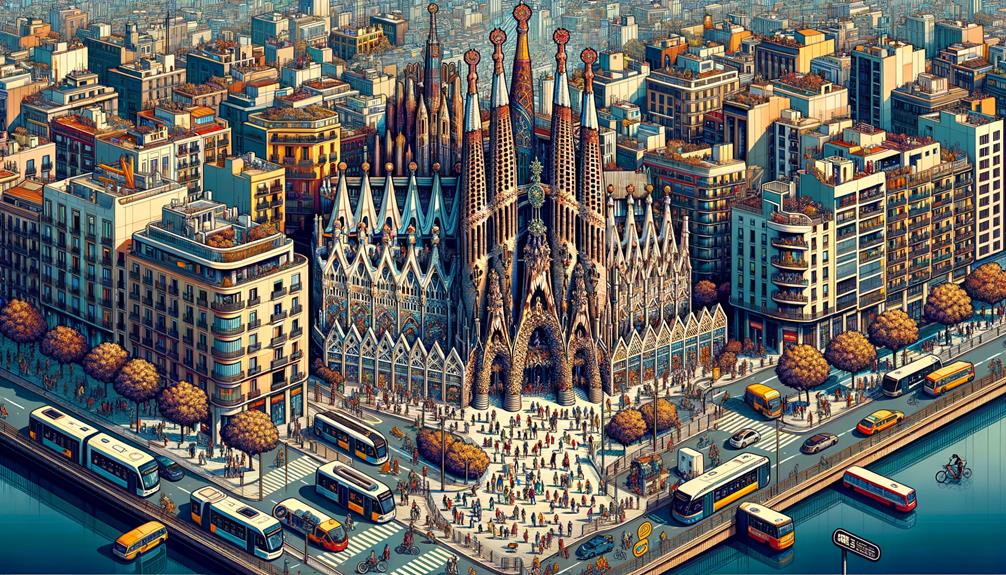
Finding your way to the Sagrada Familia is easy, no matter how you prefer to get around Barcelona. The iconic basilica, located at Carrer de Mallorca, 401, 08013 Barcelona, Spain, is accessible by metro, bus, or on foot or bike.
If you’re in a hurry, the metro is your best option. The Sagrada Familia station is served by both the L2 and L5 lines, putting you just a short walk away.
If you prefer a more scenic route, there are multiple bus lines to choose from, including lines 19, 33, 34, D50, H10, and B24.
- Bus lines 19, 33, 34, D50, H10, and B24 stop near the Sagrada Familia.
- Walking or biking through Barcelona’s lively streets adds an extra layer of adventure to your visit.
- The Sagrada Familia is approximately a 25-30 minute walk from Plaça de Catalunya and 20 minutes from Passeig de Gràcia.
Each mode of transport offers a unique experience, making the journey to the Sagrada Familia just as memorable as the destination itself.
Additional Recommendations
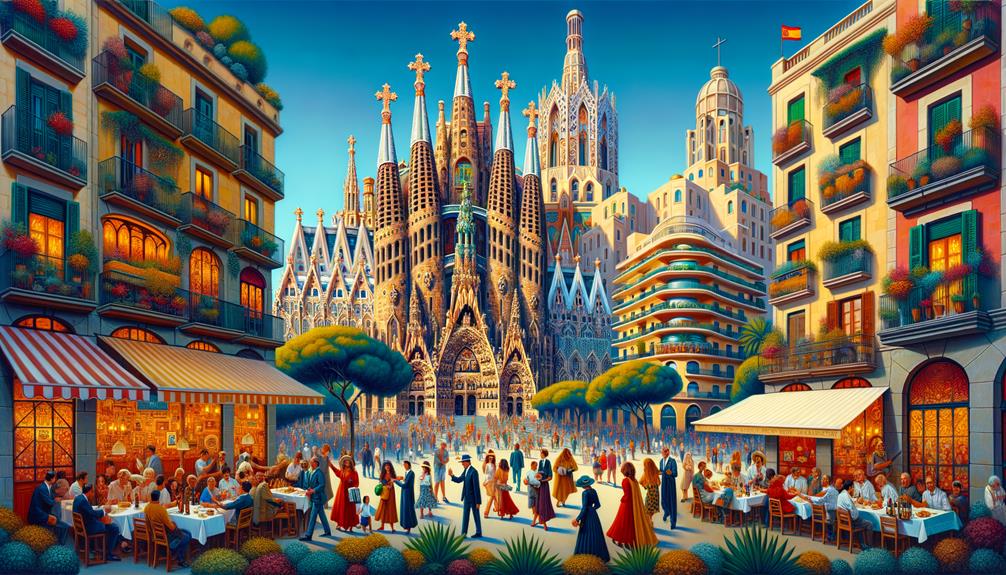
For a truly unforgettable visit to Barcelona, exploring the lively neighborhoods around the Sagrada Familia is a must. This area is packed with lively cafes, unique boutiques, and local art galleries that showcase the city’s essence. On Sundays and holy days of obligation at 9 AM, attend the International Mass at the Basilica for a unique experience that combines spiritual beauty with architectural grandeur. Entry is free but limited, with doors opening at 8:30 AM at the Nativity Facade. Appropriate attire and respectful behavior are expected, and photography is prohibited during the service. Regular Sunday masses are also held in the crypt.
Taking a day trip to Montserrat is another great idea. The journey itself is an adventure, starting with a scenic train ride followed by a thrilling cable car or funicular ascent. Once you’re there, the Montserrat Basilica is a must-visit, with its stunning views and peaceful surroundings. Be sure to take the Sant Joan funicular for breathtaking panoramic vistas.
If you’re looking for a change of scenery, the coastal town of Sitges is just a short train ride from Barcelona. Known for its beautiful beaches and charming old town, Sitges offers a relaxing contrast to the bustling city life.
These additional recommendations will make your Barcelona trip truly special.