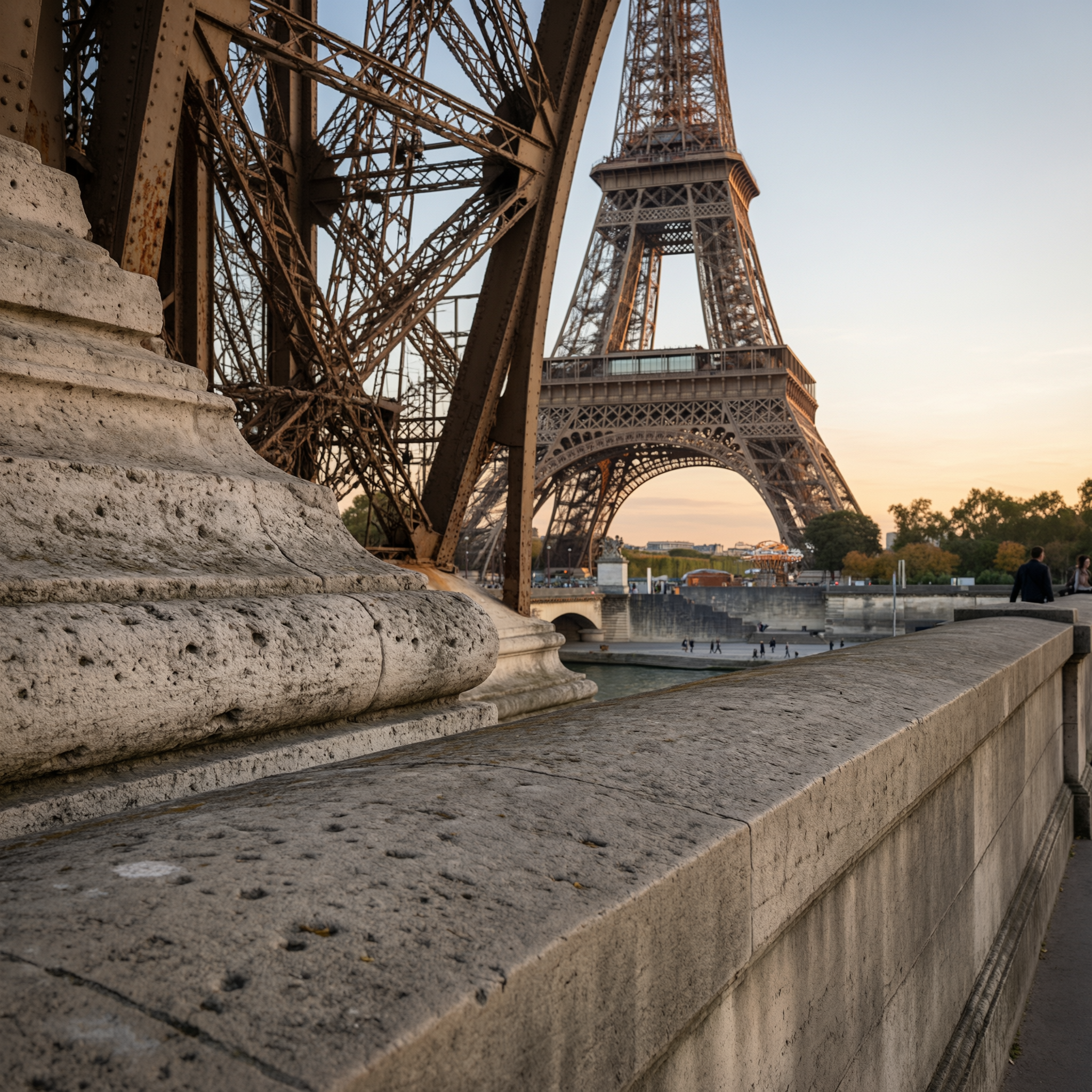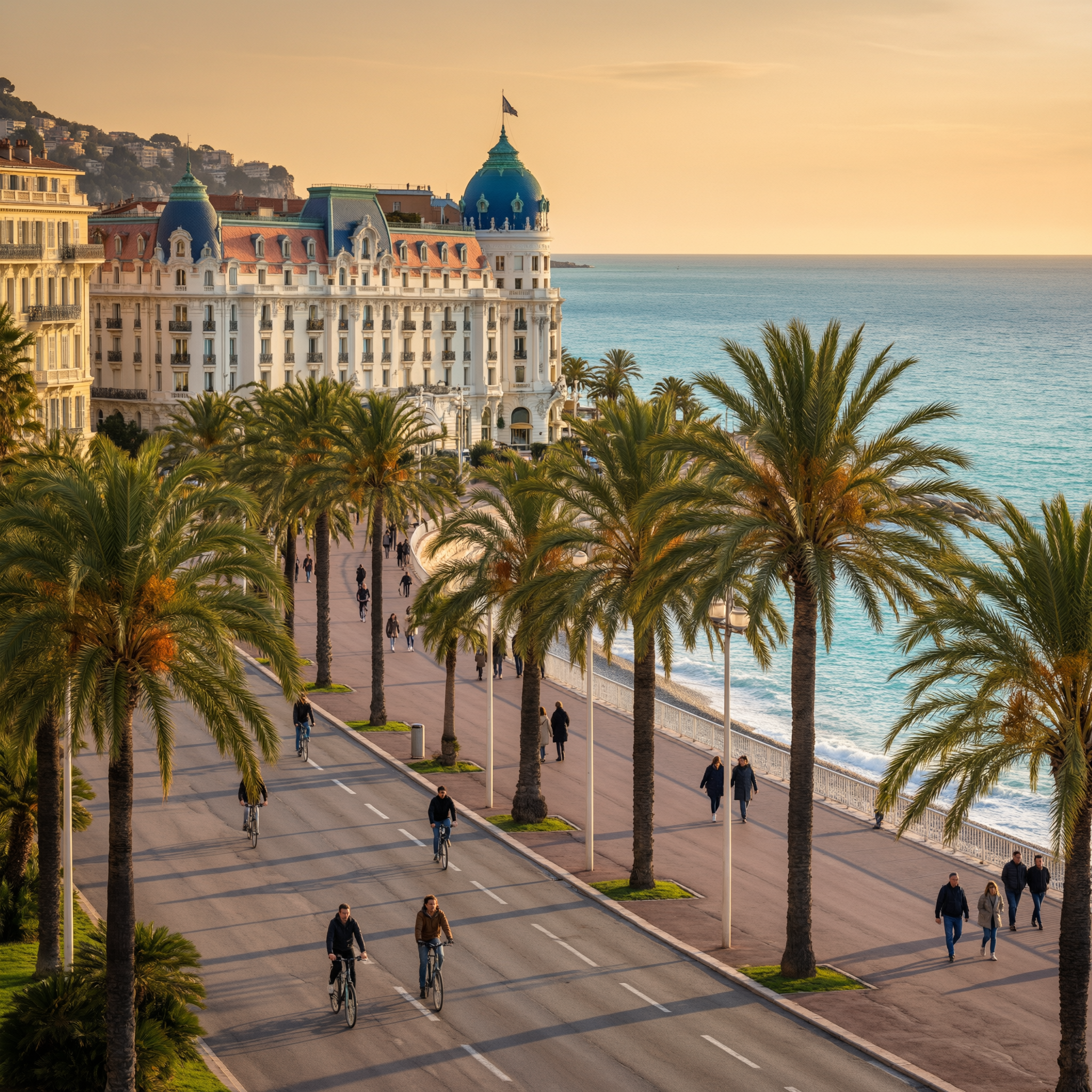
Walking the Promenade des Anglais feels like stepping into a scene from a Fitzgerald novel. On one side lies the Mediterranean; on the other, grand hotels. The mix of luxury and everyday life is striking, a playground for the wealthy that doubles as a genuinely public space. Yet amid the beautiful views and historic architecture, the memory of the 2016 attack lingers. How has this blend of beauty and tragedy shaped the identity of this famous stretch? A closer look reveals what lies beneath its glamorous surface.
Before you go: Visitor details can change. Check Nice to mark 10 years since Promenade des Anglais attack with three days of commemoration and Road deaths on Nice's Promenade des Anglais spark alarm over safety crisis before you go.
Historical Background
The Promenade des Anglais first took shape in 1820, thanks to Reverend Lewis Way. What began as a simple coastal path became a hallmark of Nice, particularly prized by the English aristocracy who wintered on the Riviera. Initially named 'Camin deis Anglés,' it served as a refuge for English elites escaping the northern cold. When Nice became part of France in 1860, the path was renamed 'La Promenade des Anglais,' cementing its place as a cosmopolitan landmark.
What is remarkable is how this promenade, running between the Mediterranean and rows of stately palm trees, evolved from a humble footpath into a symbol of leisure and refinement. The English influence persists, not just in the name but in the atmosphere, a legacy of the pursuit of comfort and open air. The promenade reflects the passage of cultures and time in equal measure.
More than a picturesque route, the Promenade des Anglais has served as the backdrop for grand events including stages of the Tour de France, adding further chapters to its long history. Each walk along it is a reminder of its enduring place in the life of the city.
Main Attraction of Nice

Strolling along the Promenade des Anglais, it is clear why it sits at the heart of Nice. This 7-kilometer stretch offers unbroken views of the sea and a relaxed yet animated atmosphere. As I took in the scene, several features stood out:
- The Seaside Pathway: Suited to a casual walk, a morning run, or rollerblading, the wide, smooth pavement offers a sense of space and freedom that is rare in a city centre.
- Events and Festivities: The Promenade hosts events such as the Nice Carnival, drawing crowds with its parades and elaborate floats. The energy during these occasions makes it a compelling reason to time a visit accordingly.
- Views of the Old Town: From certain points along the Promenade, the Old Town comes into view, its narrow streets, historic buildings, and busy markets offering a sharp contrast to the broad, open boulevard.
Despite the tragic attack in 2016, the Promenade des Anglais has regained its charm, ensuring visitors feel safe. Its mix of natural beauty, cultural vibrancy, and historical significance make it a unique destination.
Leading to Attractions

As I strolled down the Promenade des Anglais, I was struck by how naturally it connects to some of Nice’s most rewarding spots. Whether the historical heights of Castle Hill, the nearby museums, or the sculptures dotted along the route, the promenade offers a direct path to both cultural and historical highlights. The ruins of the Casino de la Jetée-Promenade stand as a bittersweet reminder of the promenade’s gilded past.
Access to Castle Hill
One of the most natural ways to reach Castle Hill is to follow the Promenade des Anglais east along the coastline into the Old Town, from where the climb begins. Known for its layered history and sweeping natural setting, the hill offers panoramic views over the Mediterranean and the city’s rooftops below.
The transition from the promenade to Castle Hill is gradual and easy to navigate. Depending on your pace, you can take a leisurely walk or a brisker climb. Along the way, you will encounter:
- Historic Ruins: The remnants of an old castle that once stood guard over Nice.
- Beautiful Gardens: Well-kept green spaces suited to a quiet break or a scenic picnic.
- A Waterfall: A welcome cool spot on warm days, adding an unexpected touch to the hilltop setting.
Castle Hill’s easy access from the Promenade des Anglais makes it a natural extension of any walk along the seafront. Whether the draw is history, greenery, or the views, the connection between the two enriches a visit to Nice considerably.
Nearby Museums and Sculptures
Continuing along the Promenade des Anglais after Castle Hill, you will find several museums and sculptures that add to the cultural texture of Nice. The Musée Masséna and the Museum of Fine Arts are both within easy reach. These institutions go beyond displaying art and artefacts, they offer a way into the stories and heritage that shaped the city.
The art extends outdoors, with sculptures including Neuf Lignes Obliques and a replica of the Statue of Liberty placed along the promenade. These works sit comfortably alongside the area’s grand architecture, including the ruins of the Casino de la Jetée-Promenade, a remnant of the era when this stretch was the preserve of European elites.
| Museum/Attraction | Key Feature | Distance from Promenade |
|---|---|---|
| Massena Museum | Art and History Exhibits | 5-minute walk |
| Museum of Fine Arts | European Art Collections | 10-minute walk |
| Neuf Lignes Obliques | Contemporary Sculpture | Along the Promenade |
| Statue of Liberty Replica | Iconic Landmark | Along the Promenade |
This combination of cultural experiences, set against the backdrop of historic hotels and the open sea, turns a simple walk into something considerably more engaging.
The 2016 Attack
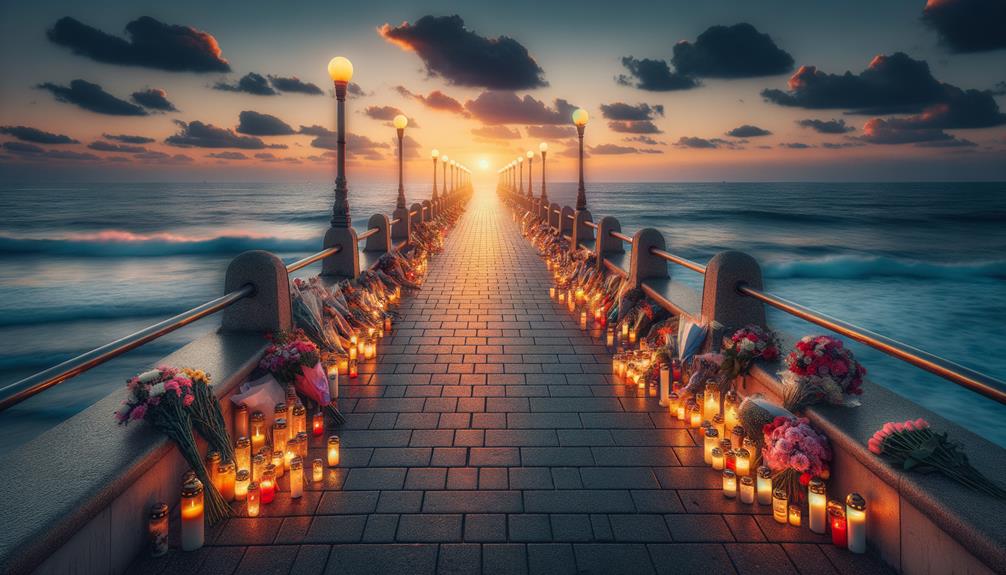
I vividly remember the shock of the Bastille Day attack in 2016, when a truck drove through the crowd on the Promenade des Anglais, killing 86 people, among them 10 children, and injuring 458 others. In the immediate aftermath, authorities installed barriers and bollards along the route. The promenade has since seen sustained investment in security, though questions about safety on the boulevard have continued in the years that followed.
Attack Overview
The Bastille Day celebrations in Nice on July 14, 2016, ended in catastrophe when a terrorist attack killed 86 people and injured 458 others. A day that symbolises French freedom and unity was overtaken by grief along the Promenade des Anglais.
That evening, a truck drove into the crowd gathered for the fireworks display, turning a festive occasion into chaos. The scale of the attack shocked the world and left a permanent mark on Nice. Key details of what happened:
- Timing: The attack took place during the Bastille Day fireworks, when families and tourists packed the promenade.
- Method: The attacker used a 19-ton truck to drive through pedestrians along a 1.7-kilometre stretch of the promenade.
- Aftermath: Security measures were rapidly introduced, including increased police presence and the installation of barriers along the promenade.
Walking along the Promenade des Anglais, I felt the weight of that night. The spirit of Nice endures, but the memory of the attack is a reminder of how suddenly ordinary life can be shattered.
Casualties and Impact
The 2016 attack on the Promenade des Anglais killed 86 people, including 10 children, and left 458 injured, a devastating toll in one of the most celebrated public spaces on the Baie des Anges. As I walked along the promenade, I felt a mix of sorrow and resilience that seems woven into the place now. The busy crowds and calm sea sit in quiet tension with what happened here.
The attack tore families apart and altered the collective life of Nice in ways that went far beyond the physical. The emotional and psychological wounds ran deep across the community. In the immediate aftermath, tourism fell sharply as fear settled over one of the French Riviera’s most famous addresses.
Gradually, people returned, drawn back by the enduring beauty of the Baie des Anges and the city’s cultural life. The tragedy remains a sombre presence in a community that has chosen to go on valuing freedom and public space.
Security Enhancements
After the 2016 attack, security measures were put in place along the Promenade des Anglais with considerable speed. Walking the promenade today, I noticed changes that reflect a sustained commitment to protecting the space while preserving its character. The response was both immediate and ongoing.
Three key measures stand out:
- Installation of Barriers: Sturdy bollards and barriers now line the promenade, preventing vehicles from entering pedestrian areas.
- Increased Surveillance: The city has significantly expanded its network of security cameras, providing continuous monitoring along the route.
- Emergency Protocols: New emergency response procedures have been established to allow faster, more coordinated action in the event of an incident.
As I walked past landmarks like the Hôtel Negresco, I sensed a balance between vigilance and openness. These measures represent a necessary adjustment to a changed reality. Additional traffic-calming measures, including new radar installations, have since been introduced in response to ongoing road safety concerns on the boulevard.
Security Measures

The security measures on the Promenade des Anglais, introduced after the 2016 Bastille Day attack, reflect a broader reckoning with safety in public spaces. In Nice, these changes have reshaped the promenade’s physical character. Bollards and barriers now line the path, positioned to prevent vehicles from reaching pedestrian areas. Their presence is noticeable, but they have been integrated with some care for the surrounding environment.
Walking the promenade, it is clear that these security features have been considered in their placement. They do not dominate the scenery, but they are not invisible either. The result is a careful balance between maintaining security and preserving the qualities that make the Promenade des Anglais worth visiting.
There is an unavoidable sadness in the need for these barriers, a permanent reminder of the vulnerability of open public spaces. At the same time, road safety on the promenade has remained a concern, with 19 deaths and 49 serious injuries recorded since 2019, prompting further traffic measures. The promenade endures as a symbol of the city’s public life, even as the work of keeping it safe continues.
Future Developments

Walking along the Promenade des Anglais, the question of what comes next for this stretch is never far away. The ruins of the historic Casino de la Jetée-Promenade remain a focal point of that conversation, though as of mid-2026 no official rebuilding timeline or confirmed project has been announced.
Among the developments worth watching:
- Casino de la Jetée-Promenade: The ruins of this once-celebrated landmark continue to attract interest, but any restoration or redevelopment remains unconfirmed. Check local and official city sources for updates.
- Art Installations: New sculptures and monuments have been proposed to add cultural depth to the walk, drawing on Nice’s long artistic history.
- Events and Activities: The promenade continues to host music festivals, art fairs, and public gatherings, maintaining its role as a meeting point for residents and visitors alike.
Ongoing maintenance has kept the promenade’s essential character intact. The nearby Palais de la Méditerranée illustrates how historical preservation and contemporary use can coexist, a model that any future development along the promenade would do well to follow. The continued focus on both safety and cultural life suggests the boulevard will remain central to Nice for years to come.
Scenic Viewpoints
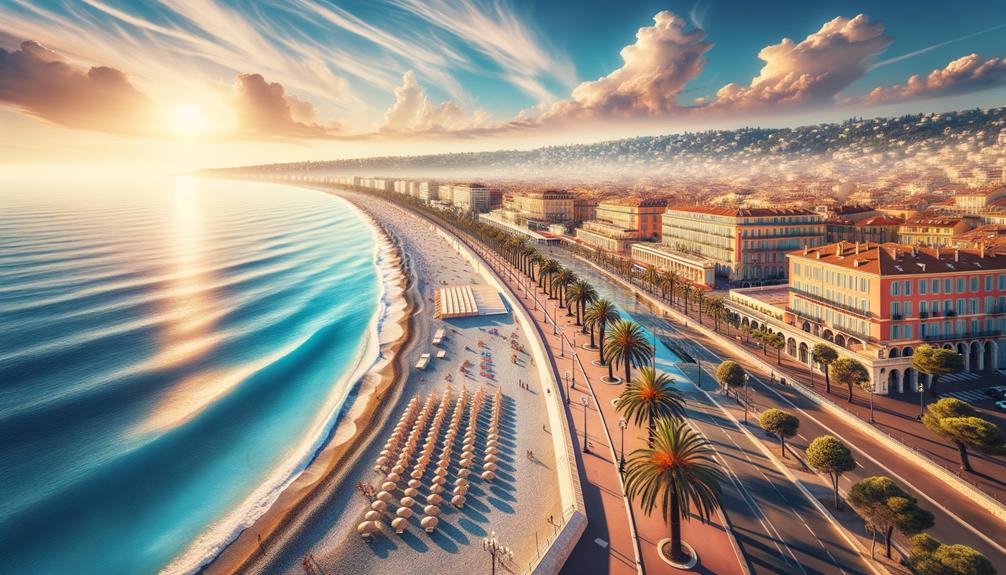
Beyond the promenade itself, Nice rewards those who look up. The Colline du Château, Castle Hill, sits on the eastern edge of the old town and offers some of the finest views in the city. As we made our way there, the wooded hill rose above the red-tiled rooftops and the broad arc of the Baie des Anges.
From the top, the panorama is genuinely arresting. The Mediterranean stretches out to the horizon, and the city spreads below in a sweep of colour and texture. The belle-époque villa set among the trees adds to the atmosphere, making the hill a welcome retreat from the activity of the streets below.
Walking east along Quai des États-Unis, the shift toward Colline du Château feels gradual and natural, as the open seafront gives way to the older, denser fabric of the city. The elevated vantage point allows you to read Nice’s geography clearly, from its historic core to the water’s edge.
Standing there, I felt the particular freedom that comes with height and open sky. The horizon seemed to extend without limit, and the noise of the city below faded. It is the kind of moment that stays with you long after leaving Nice.
Cultural Significance
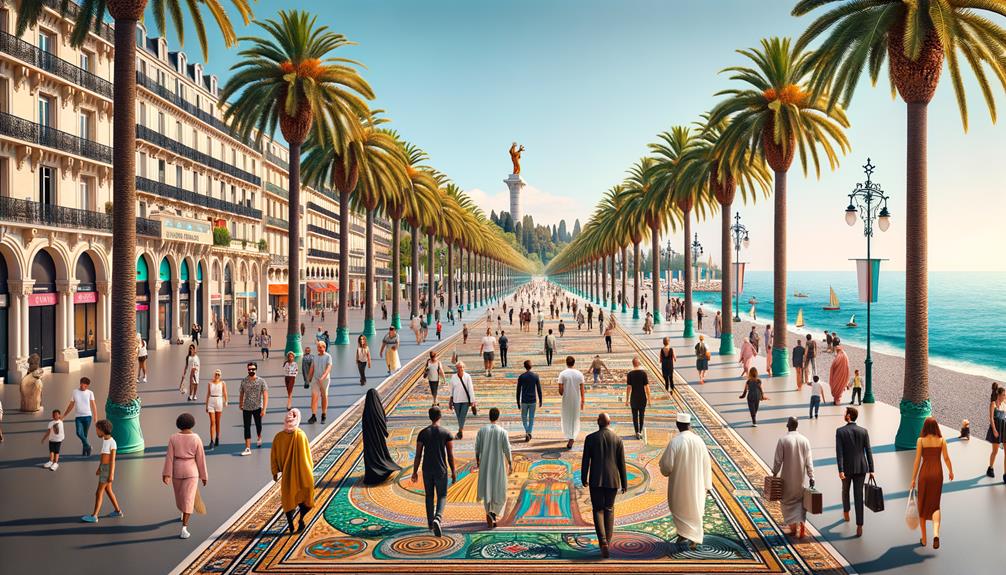
The Promenade des Anglais distils much of what makes Nice distinctive, its history, its art, and its architecture gathered along a single seafront boulevard. As I walked its length, I was struck by how much the promenade reflects the character of the city as a whole.
Three cultural highlights worth seeking out:
- Musée Masséna: This museum traces the history of Nice through art and artefacts spanning several centuries, an essential stop for anyone curious about the city’s past.
- Cathédrale Orthodoxe Russe St-Nicolas: With its distinctive onion domes and intricate decoration, this cathedral is a striking example of Russian Orthodox architecture and a reminder of the diverse influences that have shaped Nice over the centuries.
- Chapelle du Rosaire: Associated with the artist Henri Matisse, who designed its interior, this chapel draws art lovers from across the world. The space blends spiritual purpose with Matisse’s characteristic use of colour and line.
The Promenade des Anglais is not simply a scenic route; it is a living record of the city. Each section reveals another aspect of Nice’s layered culture, making it a rewarding destination for those who take the time to look closely.
Frequently Asked Questions
Why Are There so Many English People in Nice?
I have noticed a strong English presence in Nice, and it is rooted in history as much as preference. English visitors have been coming to the city since the 18th century, drawn by the mild winters, the light, and the Mediterranean setting. That tradition has never really stopped, and the city’s relaxed pace and warm climate continue to make it an appealing destination for British travellers.
Where to Go on the Promenade Des Anglais?
The views from Castle Hill are worth the climb and make a natural starting point. From there, a walk through the Old Town offers a change of pace and plenty of history. Along the promenade itself, look out for the outdoor sculptures and the ruins of the Casino de la Jetée-Promenade, which speak to the boulevard’s long and layered past.
How to Get From Nice Train Station to the Promenade Des Anglais?
The walk from Nice-Ville station to the Promenade des Anglais is relatively short, the streets between them are straightforward to navigate, though the exact time will depend on your pace and route. If you prefer not to walk, buses and taxis are available, and bike hire is another option for a more scenic approach. Check local transit information before your visit for current routes and schedules.
Where to Park to Go to the Promenade Des Anglais?
Parking near the Promenade des Anglais can be difficult, so I would recommend using a public car park rather than relying on street parking, which is limited and subject to restrictions. Some hotels and beach clubs also offer parking, though availability and pricing vary. It is worth checking your options before you arrive to avoid unnecessary delays.