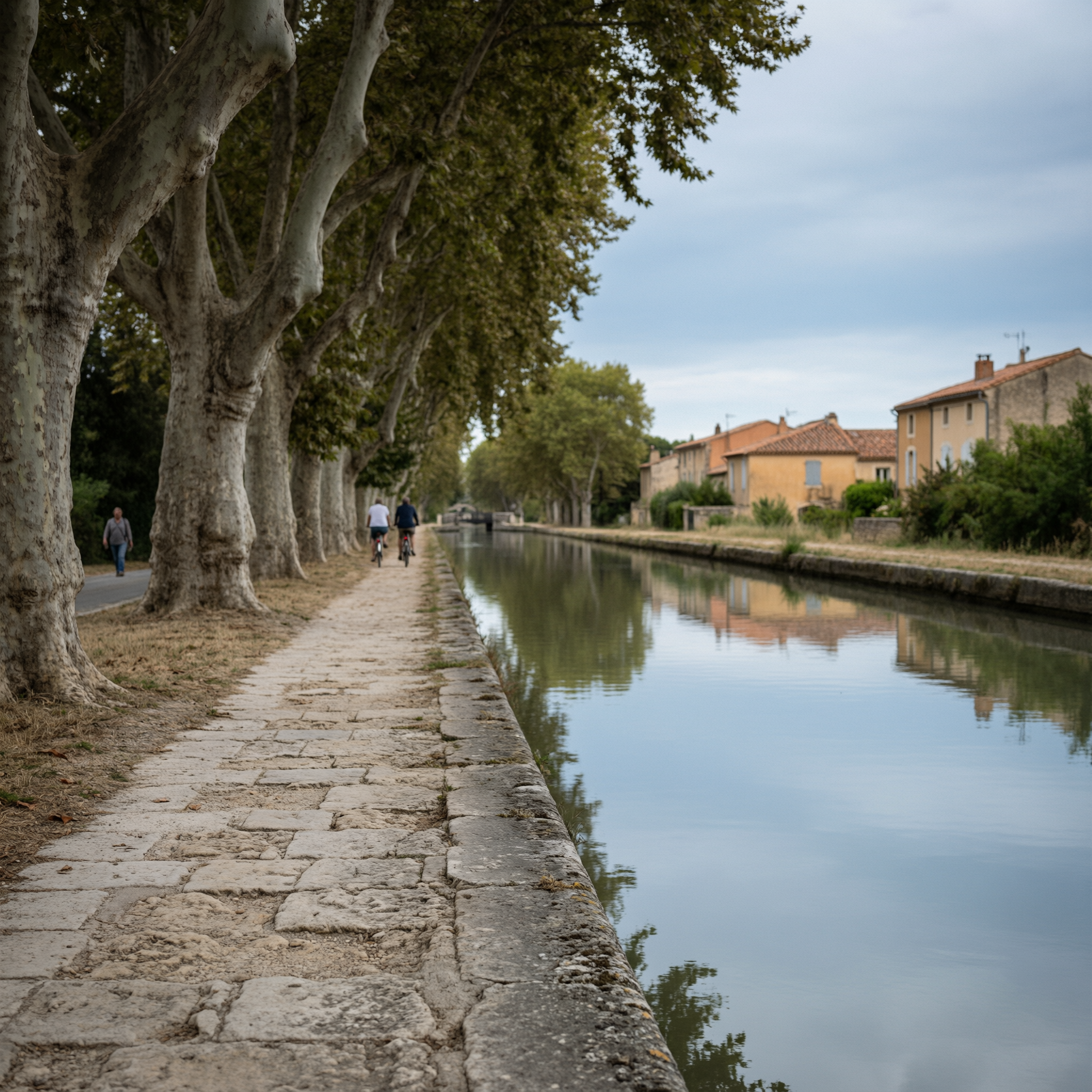
Standing on the edge of the Canal Du Midi, I reflect on the vision of Pierre-Paul Riquet, who made this marvel possible. The Fonseranes 9 Locks, with their eight chambers, manage a 25-meter height difference. As I wander along the 240 kilometers of waterway, each lock and structure tells stories of centuries past. There’s a certain magic here, drawing me deeper into the legacy left behind.
Before you go: Visitor details can change. Check Canal du Midi and Canal du Midi before you go.
Historical Significance
The historical importance of Béziers in the story of the Canal du Midi is significant. This town is where Pierre-Paul Riquet was born, whose vision and ingenuity brought the 17th-century engineering marvel to life. The Canal du Midi, a UNESCO World Heritage Site, stands as a testament to Riquet’s brilliance. The Fonseranes locks are a remarkable engineering feat, showcasing the project’s ambitious nature.
Béziers played a crucial role in the development of the Canal du Midi. The Orb Aqueduct, designed by engineer Urbain Magues and inaugurated in 1857, is another impressive structure, allowing the canal to cross the River Orb seamlessly. This engineering achievement transformed the Port of Béziers, leading to the creation of Port Neuf.
Reflecting on Riquet’s legacy, I note the statue in his honor and a plaque at his childhood home. These commemorations remind us of the spirit that once thrived here, forever linking Béziers with the story of the Canal du Midi.
Fonseranes 9 Locks
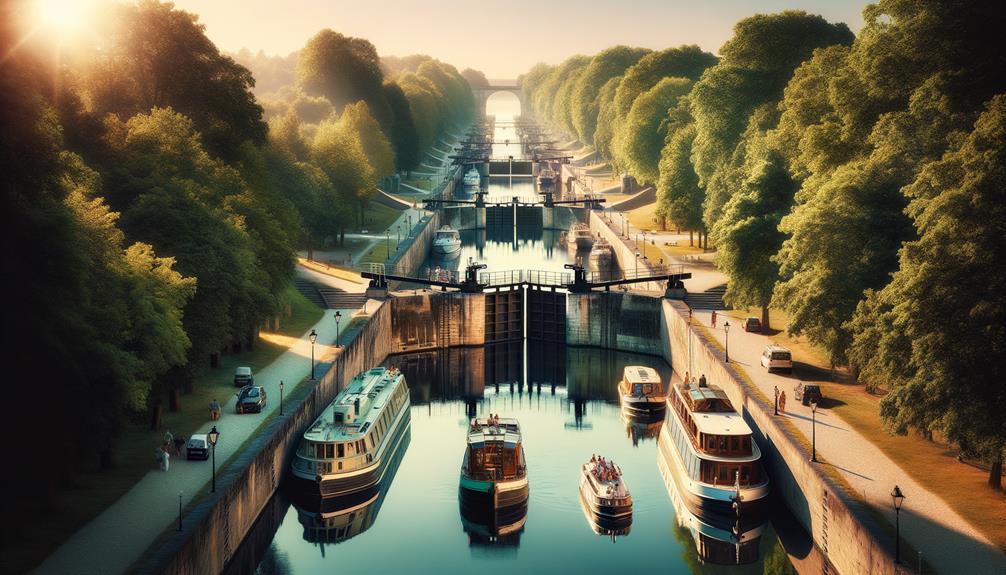
Walking up to the Fonseranes 9 Locks, I’m struck by the intricate design and sheer scale of this engineering marvel. Part of the Canal du Midi in Béziers, these locks are a testament to remarkable canal engineering. The locks consist of eight chambers, each crucial in helping boats navigate a 25-meter height difference. This historic monument, a UNESCO World Heritage Site, offers a unique waterway experience that feels like stepping back in time.
I admire the ingenuity required to create such a structure. Watching boats move smoothly through the series of chambers is captivating. Every detail, from the stonework to the water flow mechanisms, highlights the brilliance of its creators.
Here are a few things that evoke a sense of wonder and freedom:
- The smooth passage of boats – seeing them rise or descend 25 meters is awe-inspiring.
- The historical ambiance – feeling connected to centuries of canal travel and trade.
- The serene waterway experience – offering tranquility amidst engineering marvels.
- The panoramic views – standing atop the locks and taking in the sweeping vistas of Béziers and the surrounding landscape.
The Fonseranes 9 Locks are not just an engineering feat; they are a journey through history and human ingenuity.
Major Engineering Works
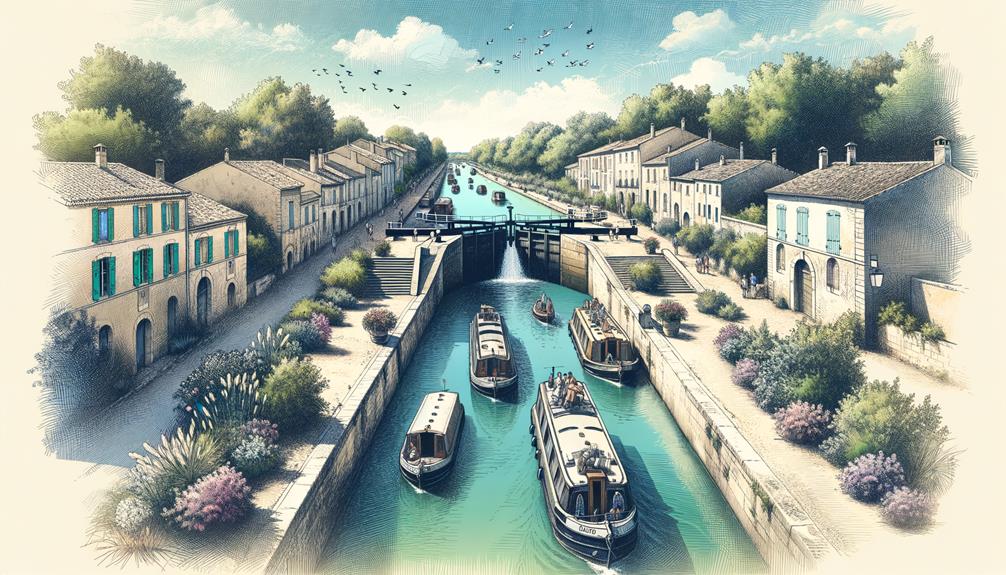
Standing in awe of the Fonseranes 9 Locks‘ intricate design, I realize these are just the beginning of the Canal du Midi‘s major engineering works. This UNESCO World Heritage Site showcases Pierre-Paul Riquet’s brilliance. The locks are an impressive feat of canal engineering, guiding boats through a series of steps while combining utility with elegance.
Further along, Riquet’s ingenuity shines at the Seuil de Naurouze. This watershed allows water to flow towards both the Mediterranean and the Atlantic, a crucial solution enabling the Canal du Midi to connect distant seas. It’s a testament to Riquet’s vision in overcoming geographical challenges.
As I continue, the Orb Aqueduct, designed by engineer Urbain Magues and inaugurated in 1857, stands as another marvel. It carries the Canal du Midi over the river Orb, modernizing navigation and preventing the river’s unpredictable floods from disrupting canal traffic. Nearby, the Port Neuf, which replaced the older downstream port, signifies Béziers‘ enhanced link to the canal.
Walking through Béziers, I feel Riquet’s enduring legacy, immortalized by his statue since 1838. Each engineering wonder along the Canal du Midi reflects a profound quest for connectivity and innovation, inviting us to explore freely.
Canal Du Midi Statistics
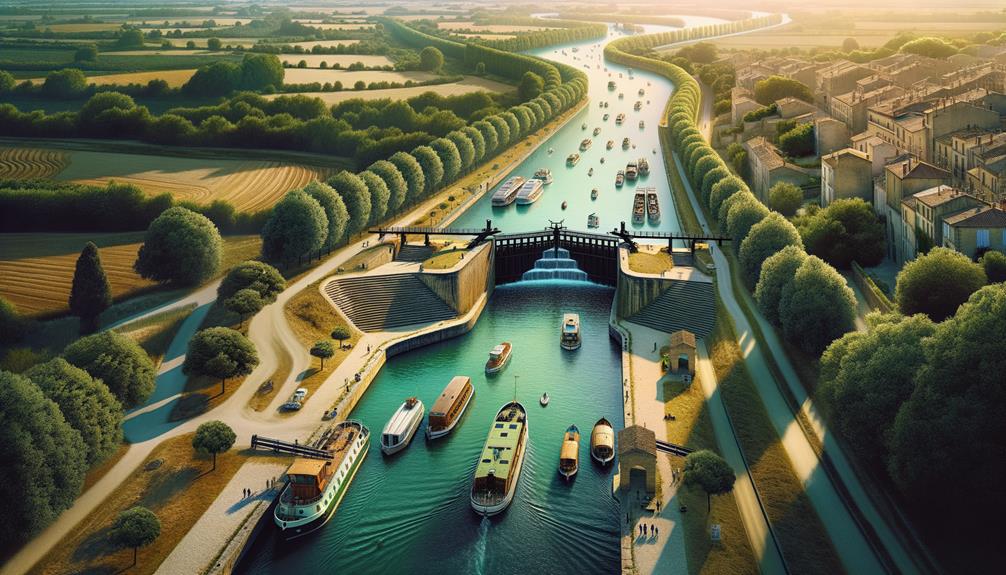
Admiring the Canal du Midi’s scale, I am amazed by its 240 km length. Built over 14 years by 12,000 dedicated workers, each kilometer reflects Pierre-Paul Riquet’s vision and the relentless effort to create this engineering marvel, now recognized as a UNESCO World Heritage Site.
The canal includes 328 structures, bridges, locks, and aqueducts, all crucial in linking the Garonne River to the Étang de Thau and the Mediterranean Sea. The 63 locks along the waterway are especially intriguing, as they control water flow and help vessels navigate different elevations.
Here are some key figures:
- 240 km – the total length of the Canal du Midi.
- 14 years – the time it took to complete this monumental construction.
- 63 locks – essential for managing water levels and navigation.
- 328 structures – a testament to the canal’s complex engineering.
Reflecting on these numbers, I feel a deep respect for the history and human effort that make up this extraordinary waterway.
Visiting in Spring

Springtime along the Canal du Midi is a burst of colors and scents, inviting me to soak in its beauty. In Béziers, the canal turns into a picturesque haven, with blooming flowers along the banks and trees swaying in the breeze. This season is perfect for leisurely walks along the towpaths or peaceful boat trips.
The Canal du Midi in spring offers a mix of nature and history. As I walk along the waterway, the sights and smells of blooming flowers create a magical atmosphere. The bright colors of the flowers are a treat for the eyes, making each step feel like walking through a living painting. Boat trips offer a fresh perspective, letting me glide past charming villages and lush landscapes, feeling the gentle sway of the water beneath me.
There are plenty of outdoor activities, from cycling to picnicking by the canal’s edge. Every moment here captures the essence of spring. The calm yet lively atmosphere of the Canal du Midi in Béziers during this season is something I’ll cherish, embodying the freedom and vibrancy of nature in full bloom.
Frequently Asked Questions
What Is the Significance of the Canal Du Midi?
The Canal du Midi is a UNESCO World Heritage Site that connects the Garonne River to the Étang de Thau and the Mediterranean Sea. Its engineering changed how people moved goods and connected communities, boosting local economies and becoming a part of the area’s identity.
How Long Does It Take to Walk the Canal Du Midi?
Walking the entire Canal du Midi, which stretches 240 km, usually takes around 15 to 20 days. I would aim to cover 15 to 20 km each day, enjoying the peaceful towpaths, quaint villages, and historical sites along the way. It’s a great way to soak in the region’s beautiful scenery and rich culture.
Can You Swim in the Canal Du Midi?
Swimming in the Canal du Midi isn’t allowed. Harmful microbes and conservation rules make it unsafe. Instead, consider enjoying the canal by boating or cycling along its picturesque paths.
What Is the Best Section of the Canal Du Midi?
The most captivating part of the Canal du Midi, for me, is where the historic locks and incredible engineering feats come to life. I was truly charmed by the beautiful scenery and detailed waterways that seem to invite endless wandering and contemplation.