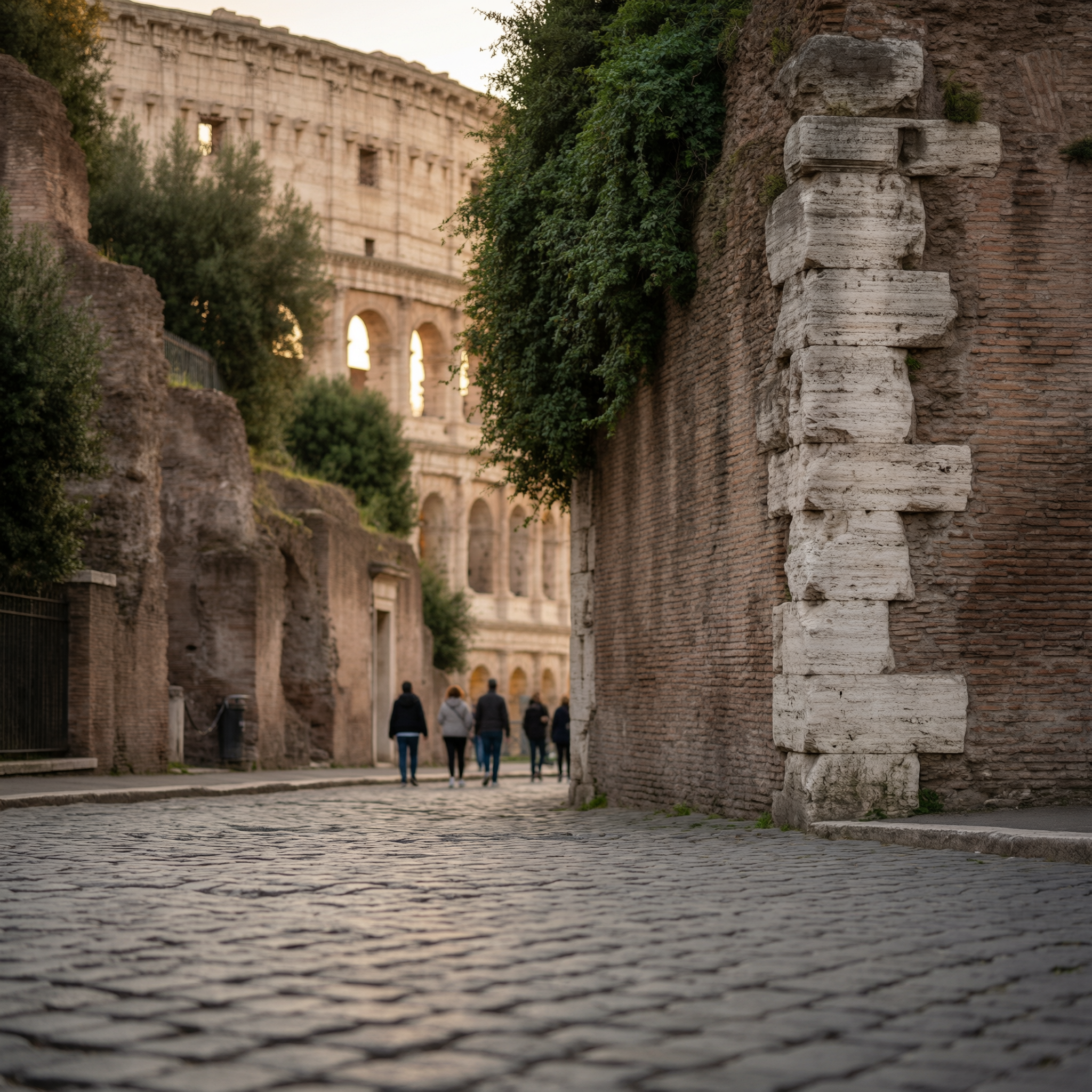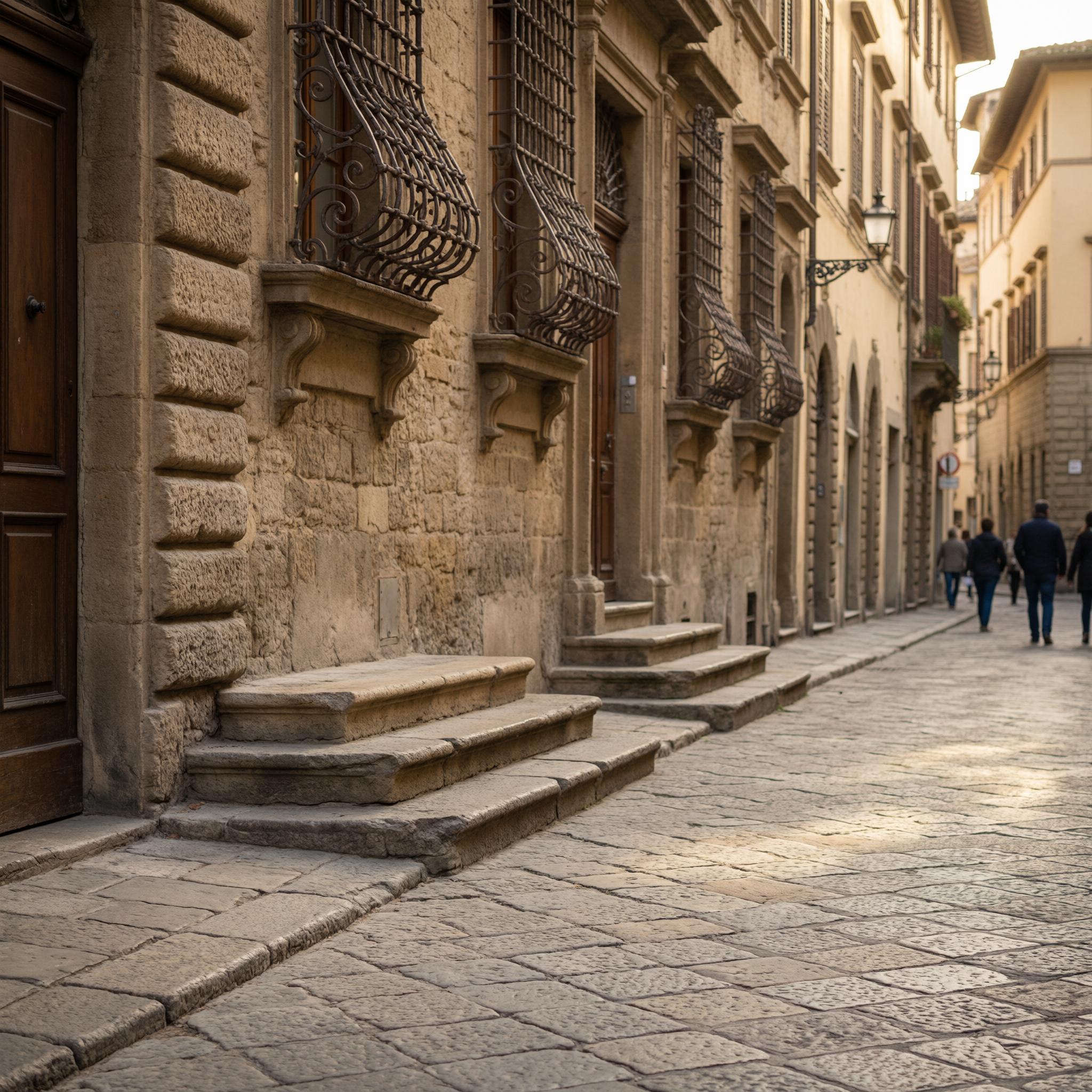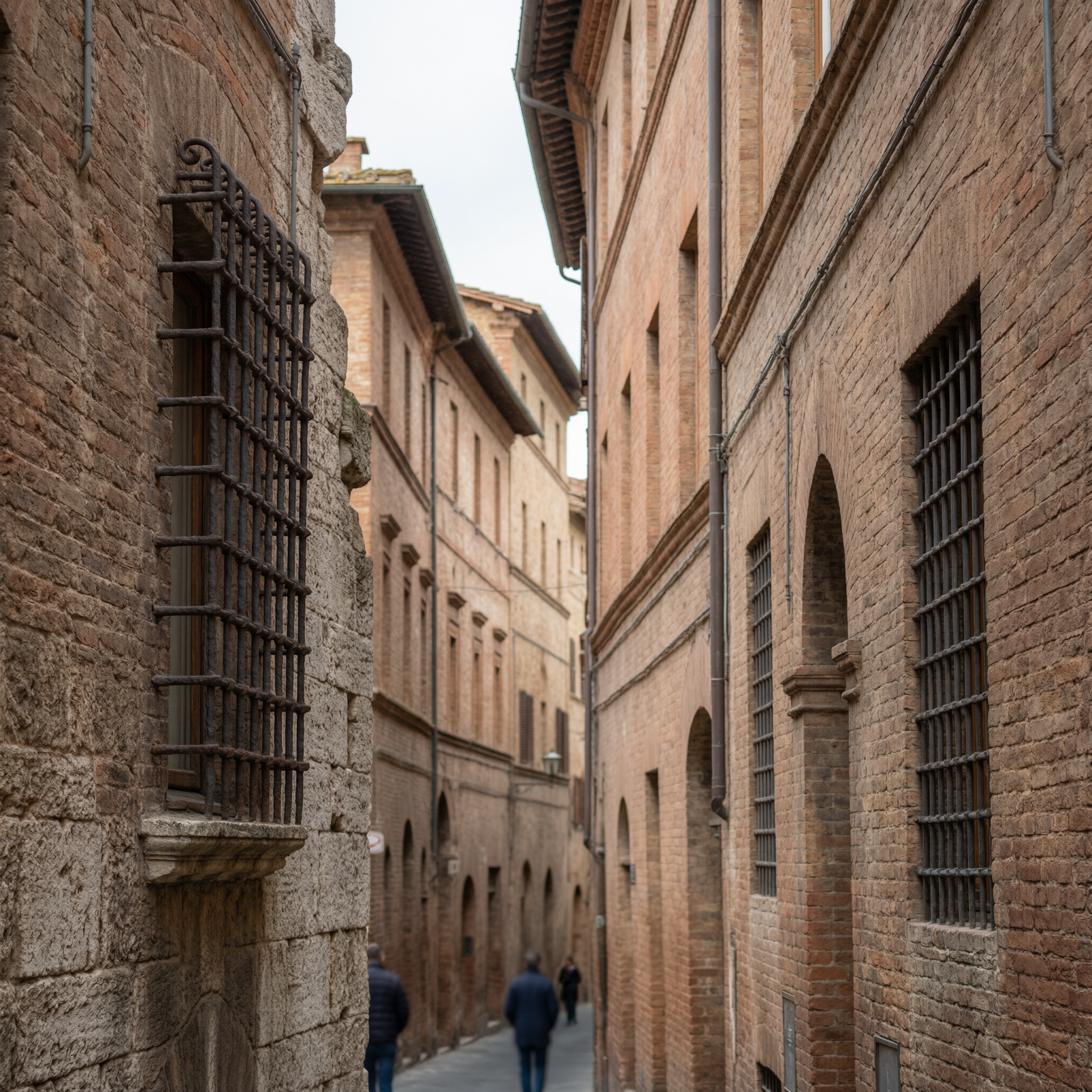
Strolling through Siena feels like wandering into a living piece of history, with each cobblestone carrying stories from centuries past. As I made my way through the winding streets, Piazza del Campo opened up before me, a shell-shaped square that has hosted the Palio and countless civic gatherings for centuries. The Siena Cathedral‘s Romanesque-Gothic facade drew me in, and the intricate mosaic floor inside spoke to the city’s deep artistic heritage. Yet it’s the standout spots, the ancient Fontebranda and the frescoes by Sodoma and Beccafumi in the Oratorio di San Bernardino, that whisper the quieter secrets of Siena’s enduring character. What other discoveries might these medieval streets hold?
Before you go: Visitor details can change. Check Palio di Siena – Wikipedia and Palio di Siena 2026: July 2 & Aug 16 Dates, Parade, Tickets & Tips before you go.
Siena's Historic Center
Tucked within its ancient walls, Siena’s historic center offers a journey through time via well-preserved medieval streets and landmark buildings. As I strolled through the narrow, winding roads, it felt as though the 14th century were still within reach. The city’s layout has largely escaped modern redevelopment, providing a rare window into the past. The cobblestone paths lead to the heart of Siena: Piazza del Campo, a remarkable square that fans out like a giant shell, drawing visitors to linger and take it all in.
Standing in the Piazza del Campo, I was struck by the symmetry and elegance of the surrounding buildings, especially the Palazzo Pubblico. This grand structure, with its imposing facade, stands as a testament to Siena’s civic history and cultural significance. The historic center, a UNESCO World Heritage Site, is bordered by ramparts that blend into the city’s current fabric, creating a coherent mix of old and new.
Exploring Siena’s historic center, I was drawn in by the stories embedded in its medieval architecture. Each alleyway, each worn stone seemed to carry traces of a bygone era, making me feel part of something genuinely old and extraordinary.
Iconic Landmarks
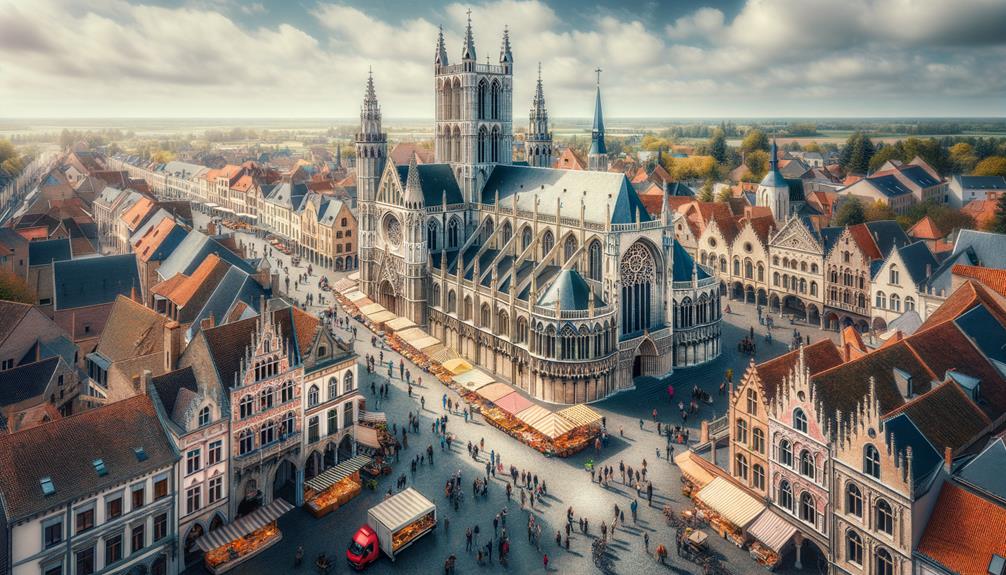
Strolling through Siena, I was struck by its iconic landmarks. The impressive Piazza del Campo, the layered beauty of the Siena Cathedral, and the soaring Torre del Mangia all carry the weight of a rich medieval past. Each site pulled me deeper into the city’s particular blend of history and artistry.
Piazza Del Campo
Piazza del Campo sits at the heart of Siena and stands as a masterpiece of 14th-century urban design. The imposing Torre del Mangia and the adjacent Palazzo Pubblico dominate the skyline, and the square’s distinctive shell shape, divided into nine sections representing the medieval Council of Nine, makes its civic ambitions immediately legible. Few public spaces in Italy feel quite so purposefully conceived.
Standing in Piazza del Campo, I was immediately struck by its shell-shaped design, which seems to draw you toward the center and invite you to stay. The gently sloping red-brick paving leads the eye naturally to the Fonte Gaia, a 15th-century fountain whose presence anchors the square.
- Torre del Mangia: Provides incredible views of Siena.
- Palio horse race: A thrilling event held here twice a year.
- Fonte Gaia: Contributes to a peaceful ambiance.
- Palazzo Pubblico: A historical treasure with stunning architecture.
Experiencing Piazza del Campo, especially during the Palio, is like feeling the heartbeat of Siena itself.
Siena Cathedral Marvels
Leaving the Piazza del Campo, the Siena Cathedral‘s Romanesque-Gothic facade drew me in with its dense sculptural detail. The exterior, pinnacled and populated with figures of prophets and patriarchs, announces the artistic ambition that continues inside. Once through the doors of the Duomo, the mosaic floor stopped me in my tracks: panel after panel of inlaid marble, each telling its own story through centuries-old imagery.
The interior holds an extraordinary concentration of art. Works by Donatello, Nicola Pisano, and Pinturicchio fill the sacred space, each contributing a distinct chapter to the cathedral’s history. Among them, Duccio di Buoninsegna’s Maestà, now displayed in the Museo dell’Opera del Duomo, stands as one of the defining works of medieval Italian painting.
The Museo dell’Opera del Duomo itself was eye-opening, housing many original works commissioned for the cathedral over the centuries. Each piece reflected Siena’s artistic ambitions and its place in Italian cultural history. As I moved through the complex, I realized that even a long afternoon here only scratched the surface of its depth. This wasn’t just a cathedral; it was a walk through the ages.
Torre Del Mangia
Standing at the base of the Torre del Mangia, I couldn’t help but be impressed by the 102-meter medieval tower rising above Piazza del Campo. As I began climbing the spiral staircase, each step seemed to echo with history. Built in the 14th century and completed in 1348, the Torre del Mangia remains one of the tallest towers of its era in Italy.
From the top, the view stretches in every direction:
- Siena’s Duomo: Its black-and-white marble striping visible above the rooftops.
- Piazza del Campo: The shell-shaped square below, host to the Palio horse race each July and August.
- Palazzo Pubblico: The Gothic civic palace that shares the piazza’s southern edge with the tower itself.
- Rolling Tuscan countryside: Vineyards and olive groves stretching toward the horizon.
Each vista offers a different angle on Siena’s layered history. Climbing the Torre del Mangia is one of the most direct ways to understand the city’s medieval scale and ambition.
Exploring Piazza Del Campo
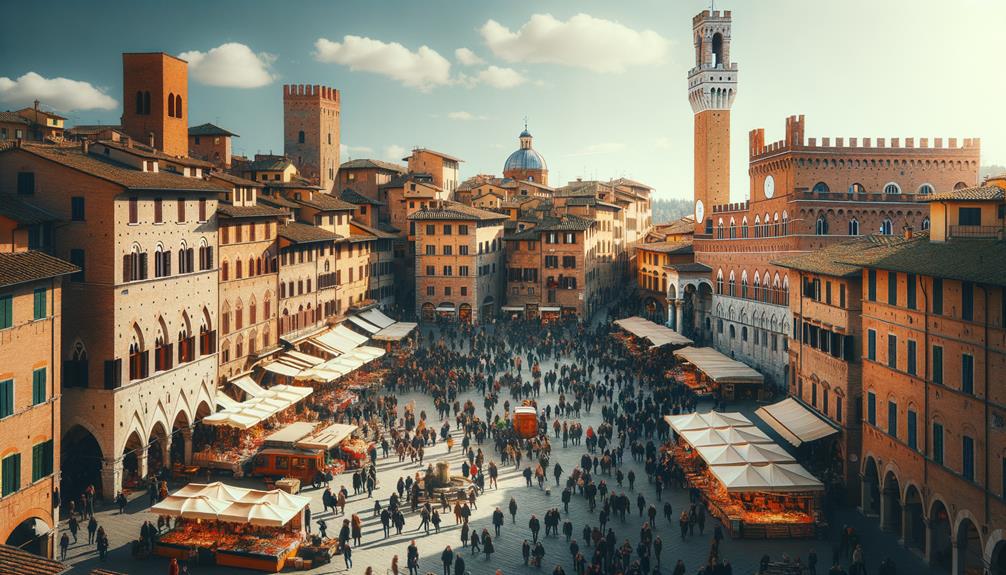
When I walked into Piazza del Campo, the medieval geometry of the square immediately drew me in. The Torre del Mangia and Palazzo Pubblico stood as unmistakable markers of Siena’s civic past. The slope of the brick paving and the sound of water from the Fonte Gaia gave the busy square an unexpected calm.
Historical Significance Explored
Stepping into Piazza del Campo, I was immediately struck by its expansive, shell-shaped design, a considered example of medieval urban planning that has endured for centuries. The square’s layout, intended to encourage civic gathering and social exchange, is apparent in every curve. Its nine sections, representing the Council of Nine that governed Siena during the city’s most prosperous period, give the space a legible political logic.
The Palazzo Pubblico anchors the square’s southern edge, with the Torre del Mangia rising above it as a symbol of medieval civic authority. The Fonte Gaia, a 15th-century fountain, adds the sound of water and a focal point to the piazza’s lower end.
- Medieval planning: The square’s nine-section layout reflects the governance structure of 14th-century Siena.
- Palazzo Pubblico: The Gothic civic palace that has represented Sienese authority since the 14th century.
- Fonte Gaia: A 15th-century fountain that adds both visual and historical depth to the piazza.
- Palio di Siena: The horse race, run on 2 July and 16 August, brings centuries of neighborhood rivalry into the square twice a year.
Visiting Piazza del Campo is one of the most direct ways to immerse yourself in Siena’s civic and medieval history.
Architectural Marvels Unveiled
Looking at Piazza del Campo, I’m struck by how confidently medieval architecture holds its own against the rhythms of contemporary life. The piazza’s shell shape, a product of 14th-century urban design, has a timeless logic to it. The Torre del Mangia and the Palazzo Pubblico stand as the square’s defining presences, their scale a reminder of the ambition that shaped medieval Siena.
Walking across the gentle slope, the sound of the Fonte Gaia fountain carries across the brick. The cafes, restaurants, and shops lining the perimeter give a sense of the piazza as a living space rather than a museum piece. The nine-section layout, representing the Council of Nine that once governed the city, is a detail that rewards a closer look.
Twice a year, this everyday setting becomes the arena for the Palio, a fiercely contested horse race among ten of the city’s 17 districts. Nearby, the Duomo and the Baptistery of San Giovanni add further layers to the experience, making Piazza del Campo a natural starting point for any serious exploration of Siena.
The Magnificent Duomo
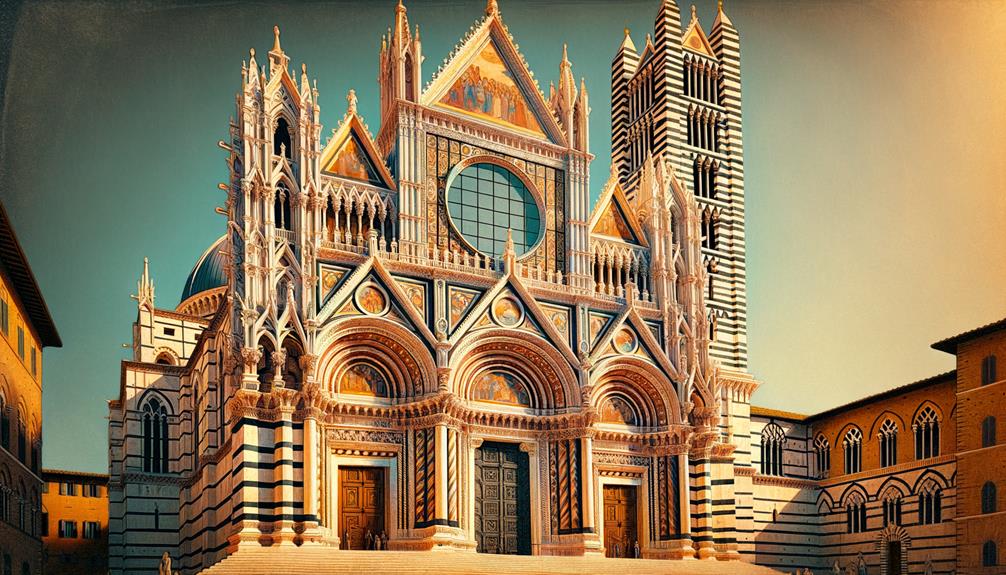
Sitting at the high point of Siena, the Duomo stands as a monument to the city’s medieval ambition and artistic output. This Romanesque-Gothic structure, with its pinnacled facade of white, green, and red marble, is dense with sculptural and decorative detail. As I stepped inside, the late Gothic interior, striped in black and white marble, made the scale of the undertaking immediately clear.
The interior holds an exceptional concentration of art: the celebrated mosaic floor, and works by Donatello, Nicola Pisano, Duccio, and Pinturicchio. Each section of the cathedral reveals something new, which is why it is consistently ranked among the finest medieval churches in Europe.
- Facade sculpture: Figures of prophets and patriarchs, each carefully carved, cover the exterior.
- Rose window: A prominent feature that draws light deep into the cathedral’s interior.
- Bell tower: The Duomo’s campanile rises above the cathedral complex; check the official cathedral site for current access details, as the height cited in some sources varies.
- Historical significance: Construction of the Siena Cathedral spanned centuries, weaving layer upon layer of Romanesque and Gothic craftsmanship into its walls, and today it shelters masterworks by Donatello, Pinturicchio, and Duccio.
Walking through the Duomo, I felt a strong connection to Siena’s past. Saint Catherine of Siena, the city’s most celebrated figure, is closely associated with the city as a whole, and her presence is felt throughout Siena’s religious sites.
Medieval Art and Frescoes
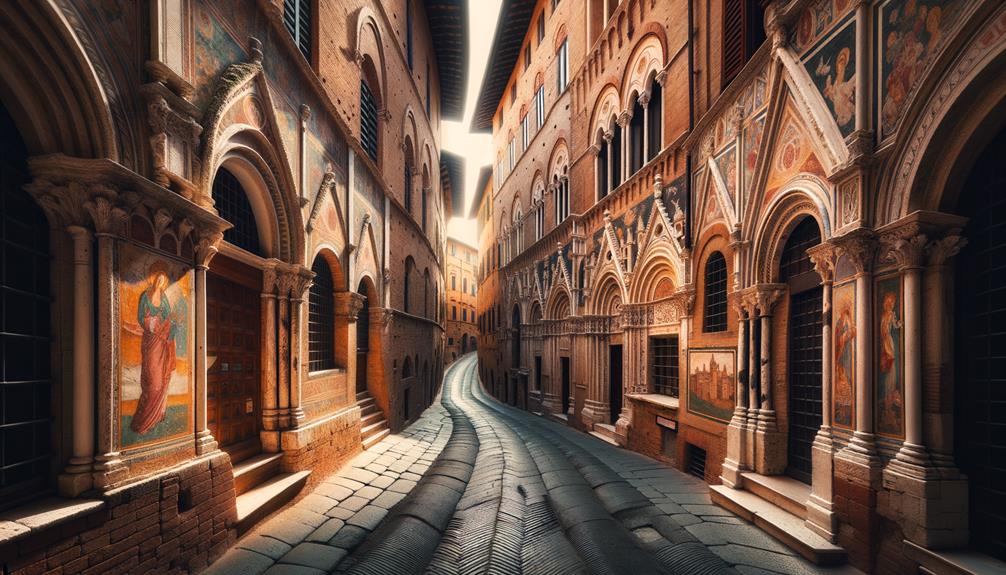
Siena’s medieval art is not confined to its cathedral. The fresco cycle of the Allegory of Good and Bad Government in the Palazzo Pubblico is among the most significant secular paintings to survive from the Middle Ages. Ambrogio Lorenzetti‘s depiction of civic virtue and its opposite tells a story that still reads with clarity and force.
The Piccolomini Library inside the Duomo is another highlight. Pinturicchio’s frescoes are vivid and detailed, tracing the life of Pope Pius II across a series of panels that fill the small room with color and narrative energy.
In the Basilica of San Domenico, works connected to the life of Saint Catherine of Siena give the church a particular devotional intensity. The cathedral’s sculptural program, which includes contributions from Nicola Pisano’s workshop, is notable for its dynamic forms and expressive range.
In Siena, art is encountered at every turn, in chapels, civic halls, and quiet oratories. These frescoes and sculptures offer a sustained picture of a city that invested heavily in beauty as a form of civic and spiritual expression.
Standout Spots
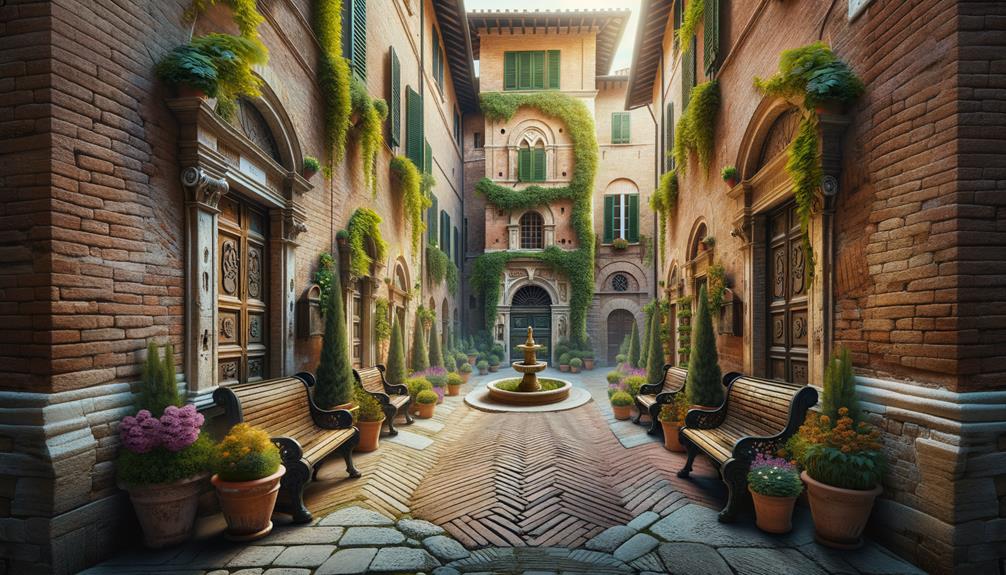
While Siena’s famous monuments attract most visitors, it’s the lesser-known spots scattered through the old town that reveal the city’s deeper character. Wandering through the narrow streets, I came across several places that felt genuinely off the main circuit.
One such place is Fontebranda, a medieval fountain and water system that stands as an example of Sienese hydraulic engineering. Standing beside it, you get a sense of how central water management was to the medieval city.
The Oratorio di San Bernardino is another find. The frescoes inside, by Sienese masters Sodoma and Beccafumi, are accomplished works that most visitors to Siena never see.
The Contrada Museums offer an intimate way into Siena’s neighborhood culture. Each of the city’s 17 contrade maintains its own collection of historical artifacts, costumes, and Palio memorabilia, though access varies by contrada and some collections are only open at certain times. It’s worth checking locally before visiting.
The crypt beneath the Siena Cathedral is a quiet discovery. Its frescoes, including a 13th-century Crucifixion, provide a contemplative contrast to the busier spaces above. Check the Opera della Metropolitana’s official site for current opening arrangements.
These less-visited corners reveal a side of Siena that repays the effort of seeking them out.
Experiencing the Palio
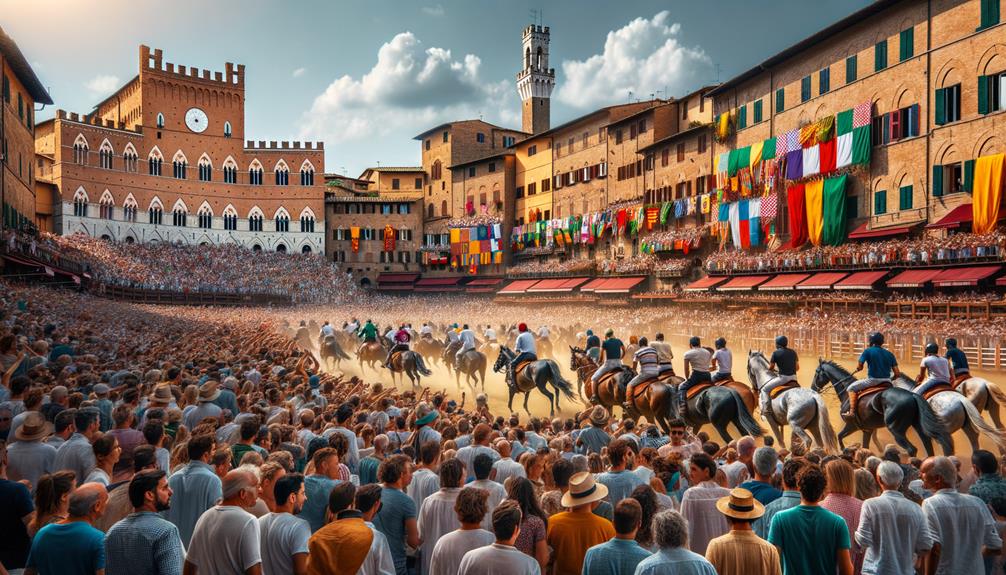
The Palio is unlike any other event in Italy. The energy in Piazza del Campo on race day is dense and physical, standing shoulder to shoulder with locals whose contrada identity is bound up in the outcome, the anticipation builds to something close to unbearable.
The race itself lasts just 75 to 90 seconds, three laps of the piazza at full gallop. Ten horses and jockeys, representing ten of Siena’s 17 contrade (seven assigned by right, three drawn by lot), compete with a ferocity that reflects centuries of neighborhood rivalry. Flags, drums, and the medieval pageant of the historical parade precede the race, giving the whole event a ceremonial weight that the sprint itself only intensifies.
A few practical points for anyone planning to attend:
| Sights | Sounds | Emotions |
|---|---|---|
| Medieval costumes | Roaring crowds | Adrenaline |
| Colorful flags | Galloping hooves | Excitement |
| Decorated horses | Drumbeats | Pride |
| Historic buildings | Trumpet calls | Unity |
| San Domenico backdrop | Cheering fans | Joy |
Walking back through Via Francigena, I felt a deep connection to Siena's history. The sense of freedom and celebration stayed with me, making the experience truly unforgettable.
Frequently Asked Questions
What Is the Emblem of Siena?
The symbol of Siena is the she-wolf, known as the Lupa, said to have nursed the city’s legendary founders. You’ll find it throughout the city, on the coat of arms, on the Palazzo Pubblico, and woven into the visual identity of several contrade.
What Is Siena, Italy Famous For?
Siena is known for its well-preserved medieval architecture, its concentration of Gothic and early Renaissance art, and the Palio horse race. As I wandered through its streets, I felt the weight of that history in the buildings, the contrada flags, and the neighborhoods still organized around centuries-old loyalties.
What Is the Medieval Town Near Siena Italy?
San Gimignano, a medieval hill town northwest of Siena, caught my eye as I wandered through its narrow streets. Its surviving medieval towers, once a forest of them competed for skyline dominance, and well-kept piazzas give it a character distinct from Siena’s. It makes a natural day trip for anyone based in the region.
Why Does Siena Have Walls?
Siena’s walls were built to defend the city and define its boundaries during a period of intense rivalry between Italian city-states. Walking through the old gates, I could feel how much those fortifications shaped the city’s identity, and how much of that distinct, self-contained character they helped preserve.