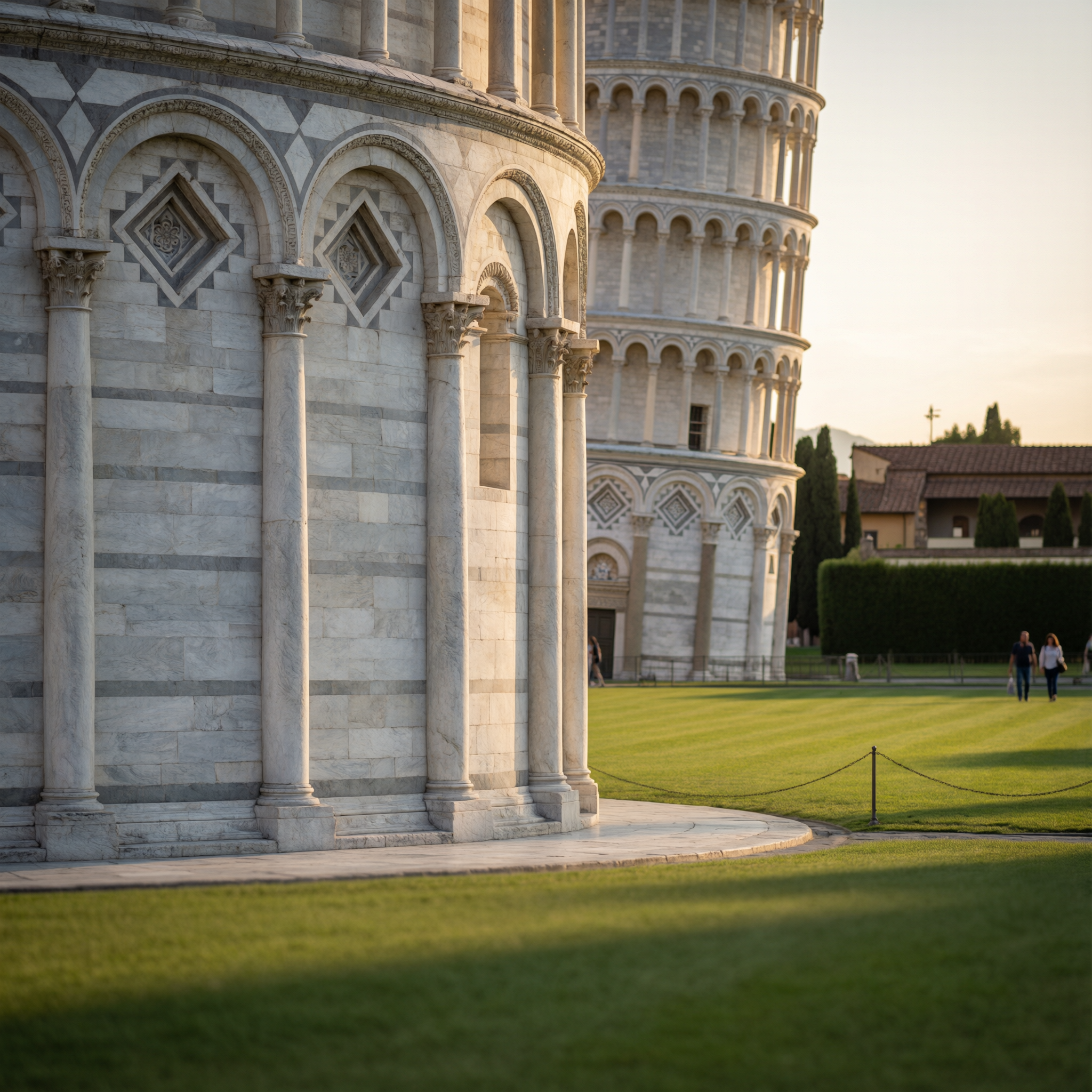
Seeing the Leaning Tower of Pisa for the first time felt like peering into history through a tilted viewfinder. This remarkable building, with its gentle yet obvious lean, tells a tale of ambition, miscalculation, and determination. Construction began in 1173 and stretched over nearly two centuries. Its Romanesque style, featuring graceful arches and colonnaded galleries, has weathered the years remarkably well. What caused the famous tilt, and how has the tower remained standing despite so many challenges? The answers are more surprising than most visitors expect.
Before you go: Visitor details can change. Check Tower – Opera della Primaziale Pisana (official site) and Leaning Tower of Pisa – Wikipedia before you go.
History and Construction
The Leaning Tower of Pisa‘s construction started in 1173 and stretched over nearly 200 years, repeatedly halted by conflicts between Italian city-states. From the outset it was intended as a free-standing bell tower that would match the grandeur of the adjacent cathedral. The builders could not have anticipated that the soft ground beneath it would give the structure its defining characteristic.
The tower is thought to have begun leaning during the early stages of construction, once the lower stories were complete, because the foundation, only about three meters deep, sat on a mix of clay, fine sand, and shells with a low bearing capacity. That unstable ground proved a formidable opponent from the start.
The pauses in construction were not solely caused by wars; they also gave builders time to grapple with the lean. Attempts were made to compensate, making the upper stories slightly taller on the sinking side, but the tilt persisted. In hindsight, those very interruptions may have allowed the soil to consolidate enough to prevent outright collapse, turning an engineering problem into the iconic structure we know today.
Architectural Design
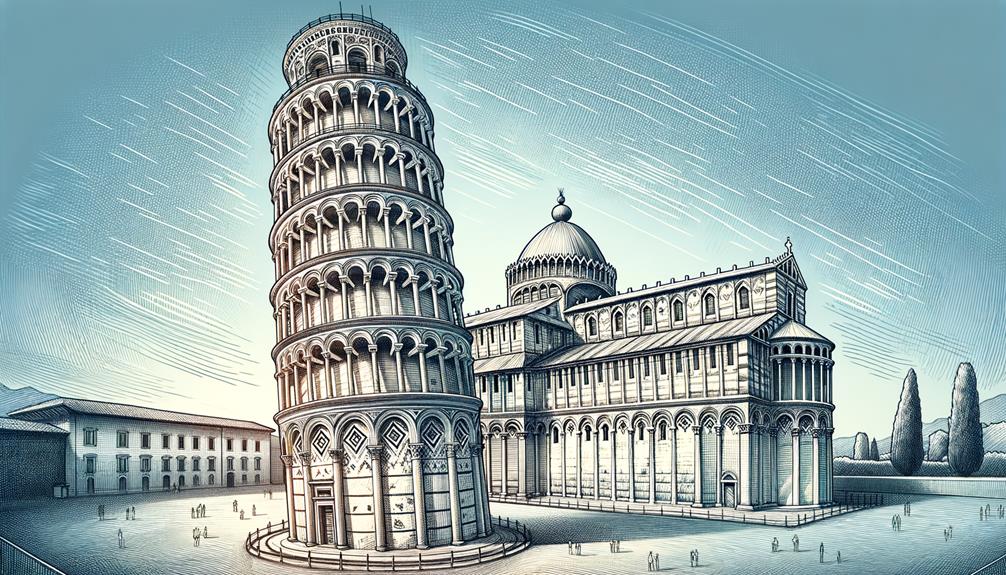
As we admire the Leaning Tower of Pisa‘s famous tilt, the intricate medieval Romanesque design that defines its beauty deserves equal attention. This style, widespread during the period of construction, favored grand, sturdy forms articulated with decorative arcading. Bonanno Pisano is associated with the tower’s construction, though the historical record of its architects remains incomplete and debated by scholars.
Built from white marble, the tower’s facade showcases the skill of its artisans across eight tiers of blind arches and open colonnades. Inside, a spiral staircase of 273 steps leads to the bell chamber at the top, offering a close-up experience of the tower’s lean with every turn.
Originally planned as a free-standing bell tower for Pisa’s Cathedral Square, the structure’s foundation, only about three meters deep, proved insufficient for the soft ground beneath it. That unintended flaw is precisely what draws visitors from around the world to see this architectural curiosity up close.
Leaning Phenomenon
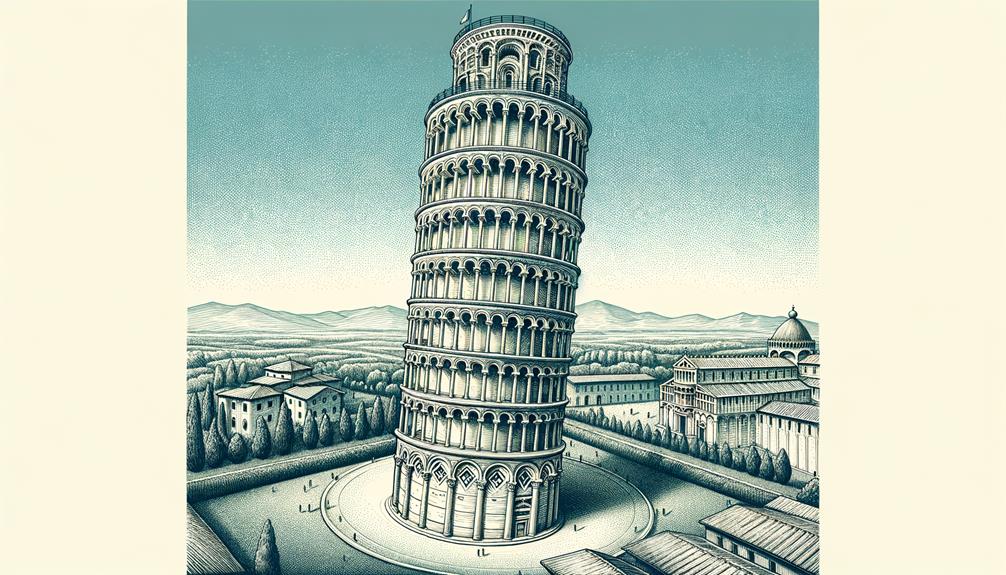
The Leaning Tower of Pisa‘s famous tilt, a consequence of its shallow foundation on soft ground, has intrigued engineers and visitors for centuries. When construction began in 1173, the soil’s inability to bear the tower’s weight evenly was not foreseen. By the time the lower stories were complete, the structure had already begun to sink on one side, establishing its well-known lean.
Over the centuries, many efforts have been made to preserve and stabilize the tower.
Medieval Fixes: Builders attempted to correct the tilt by adding taller columns and arches on the sinking side, but the lean persisted.
20th-Century Repairs: In the 1990s, engineers undertook a major stabilization project, extracting soil from beneath the higher side to reduce the tilt and make the tower safer for visitors. The tower was closed to the public from 1990 to 2001 during this work.
Modern Outcome: By the time the tower reopened in 2001, the tilt had been reduced by approximately 44 cm (about 17 inches), and engineers declared it stable for an estimated 200 years.
Ongoing Monitoring: Continuous checks ensure the tower remains within safe parameters, combining historical knowledge with modern engineering.
Standing beneath this structure, one can appreciate that its survival owes as much to careful stewardship as to the quirks of its founding soil.
Dimensions and Height
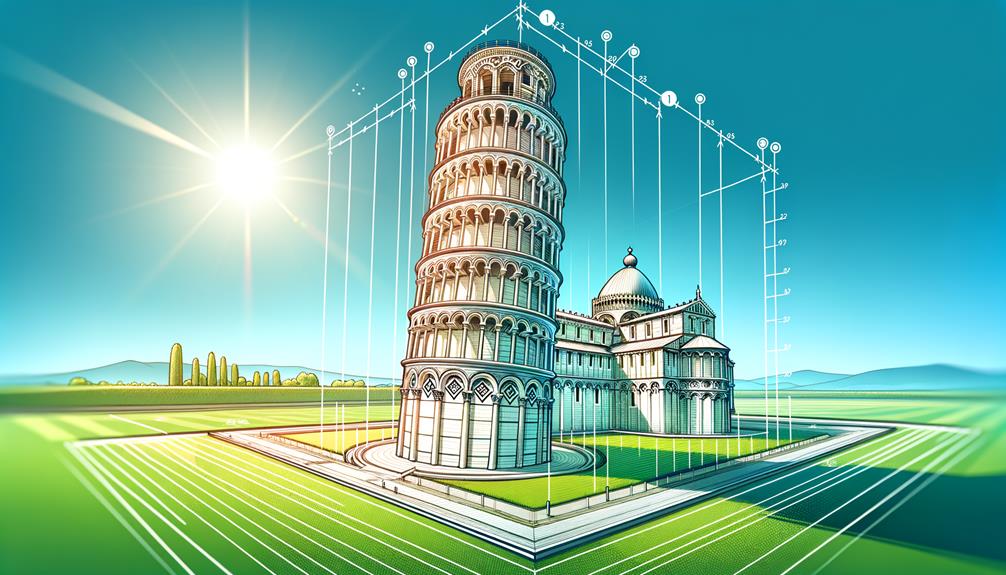
Despite its lean, the Leaning Tower of Pisa stands approximately 55.86 m on the low side and 56.67 m on the high side; the official operator lists a height of 58.36 m. Up close, the difference between the two sides makes the tilt immediately apparent.
Each tier of arches and columns adds to the tower’s elegance as you look upward. Climbing it feels like a walk through history, with every step offering a new perspective. The official step count is 273, and while the staircase is narrow and the lean perceptible underfoot, the view over Pisa and its surroundings at the top makes the effort worthwhile.
From the lower side, where the lean is most pronounced, to the higher side, the precision of the stonework never fails to impress. This is not simply a tower that went wrong; it is a testament to craftsmanship that endured despite an unplanned tilt, making it a symbol of both human ingenuity and the unpredictability of nature.
Staircases and Bells
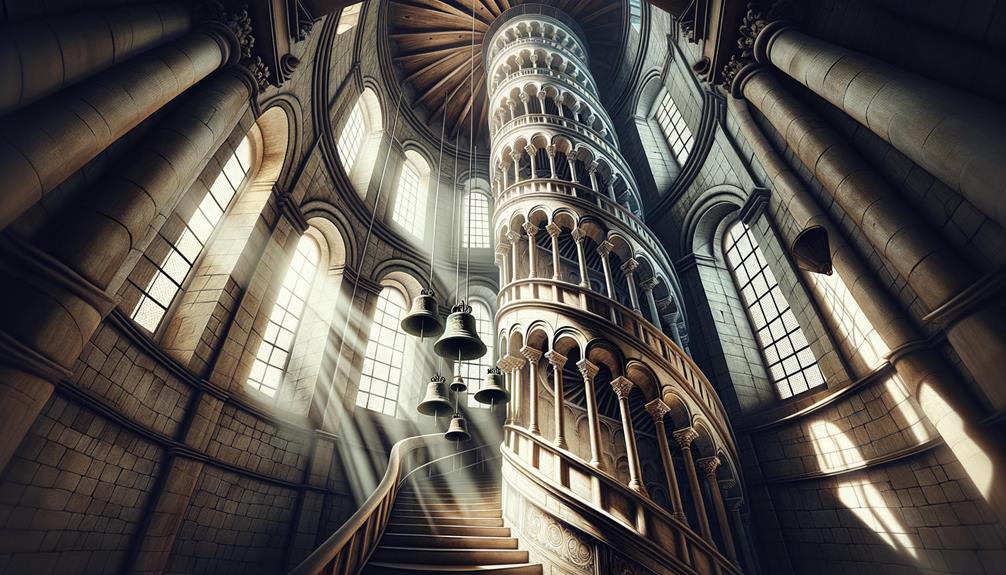
As I climbed the spiral staircase of the Leaning Tower, the 273 steps wound steadily upward. Each step brought me closer to the historic bell chamber, where seven bells have marked time over Pisa for centuries. The interplay between the staircase’s medieval engineering and the bells’ long history gives the climb a depth that photographs simply cannot capture.
Spiral Staircase Design
Winding its way up through ancient stone, the spiral staircase of the Leaning Tower of Pisa offers a close-up look at medieval engineering and architectural skill. As I climbed, each step seemed to carry the weight of the centuries, particularly the long gaps when construction halted and then resumed, leaving subtle changes in the stonework at every level.
The spiral staircase is more than just a way to reach the top; it's a journey through history. The narrow steps, worn down by countless feet over the centuries, lead me upward, highlighting the tower's endurance despite its famous tilt. At the top, I find the bell chamber housing seven historic bells, the largest of which was cast in 1655 and weighs around 3.5 tonnes, representing the tower's perfect blend of form and function.
- Whispers of History: Each step reflects the periods when construction resumed, most notably in the 14th century, leaving traces of different hands and eras in the stone.
- Architectural Skill: The spiral staircase is a fine example of medieval craftsmanship, its geometry carefully adapted to the tower’s cylindrical form.
- Sensory Experience: The seven bells provide a resonant backdrop to the visual journey upward.
- Timeless Journey: The Leaning Tower of Pisa’s staircase invites you to walk through history, one step at a time.
Number of Steps
As I counted each step on my way up, the Leaning Tower of Pisa‘s staircase revealed its full height across 273 steps. The stone treads, worn down by centuries of visitors, twist upward through the tower’s core. With every turn, the lean becomes more perceptible, a constant, physical reminder of what makes this structure unlike any other.
The climb, though physically demanding on narrow and uneven steps, feels like a passage through time. When I paused to catch my breath and looked out through the narrow windows, the Piazza dei Miracoli spread out below, the cathedral, the Baptistery, and the green lawns of the square all visible at once. As I neared the top, the staircase narrowed further, adding to the sense of anticipation.
Reaching the top, I was met with sweeping views of Pisa and the surrounding countryside. The step count, which had seemed daunting at the base, became a quiet measure of persistence, and the panorama made every one of those 273 steps worthwhile.
Bell Chamber History
Stepping into the bell chamber, you are immediately struck by the seven historic bells arranged in the uppermost tier. Each bell has its own name and distinct tone, and together they have rung out over Pisa for centuries. The chamber sits at the crown of a tower that began leaning during its own construction, making the climb to reach it feel all the more earned.
Standing among the bells, I thought about the generations of builders, engineers, and craftspeople whose work, spanning nearly two centuries of construction, made this chamber possible. The winding staircase below feels like a physical record of that long effort, each section reflecting a different era of the tower’s complicated history.
When visiting the bell chamber:
- Historic Bells: Seven bells occupy the chamber; the largest was cast in 1655 and weighs approximately 3.5 tonnes.
- Staircase Adventure: Climbing the 273 steps is physically demanding but rewarding.
- Architectural Significance: The chamber represents the tower’s original purpose, a campanile for Pisa Cathedral, and the centuries of craftsmanship required to complete it.
- Panoramic Views: The bell chamber offers some of the best views of the Piazza dei Miracoli and the city beyond.
The bell tower, despite its lean, stands as a testament to human creativity and persistence across nearly two centuries of interrupted construction.
Conservation Efforts

Significant effort has gone into stabilizing the Leaning Tower of Pisa and halting any further tilt. Walking around the base, I found myself thinking about the engineering ingenuity that has gone into keeping this structure standing, work that is far less visible than the tower itself but every bit as impressive.
By the late 20th century the tower’s lean had reached a point where it was closed to visitors. Engineers addressed the problem primarily through controlled soil extraction beneath the higher side, combined with counterweights, gradually coaxing the structure back toward vertical. When the tower reopened in 2001, the tilt had been reduced by approximately 44 cm (about 17 inches), and the structure was assessed as stable for an estimated 200 years.
Looking at the tower now, I see more than an architectural curiosity. It is also a record of human perseverance, the determination to preserve a flawed but irreplaceable piece of history. The conservation work demonstrates that even the most precarious landmarks can be safeguarded when engineering and careful stewardship work together. The Leaning Tower of Pisa endures as a symbol of both resilience and ingenuity.
Earthquake Survival

I’ve always been struck by how the Leaning Tower of Pisa has remained standing through multiple earthquakes over the centuries. Its structural design and the particular properties of the soil beneath it appear to work together in ways its original builders could not have planned, dissipating seismic energy in ways that more rigidly founded structures cannot.
Structural Design Strength
It is remarkable that the Leaning Tower of Pisa, despite its pronounced tilt, has withstood numerous earthquakes over the centuries, a testament to the skill of its medieval builders.
- Foundation: Though only about three meters deep, the foundation incorporates a dense arrangement of stone and marble that helps distribute the tower’s weight, contributing to its stability during seismic events.
- Internal Structure: The tower’s hollow interior and spiral staircase help dissipate seismic energy, reducing the structural impact of ground movement.
- Construction Materials: The walls combine limestone, marble, and mortar, materials that provide both strength and a degree of flexibility, allowing the tower to absorb and withstand earthquake forces.
- Earthquake Survival: The tower has survived multiple significant earthquakes over its 800-year history. Researchers have noted that the same soft soil responsible for the lean also appears to act as a natural buffer against seismic shock, a phenomenon that continues to be studied.
Looking at the tower today, it is hard not to be impressed by its enduring resistance to forces that have toppled far more conventionally built structures.
Soil Foundation Properties
The Leaning Tower of Pisa‘s ability to withstand earthquakes is closely tied to its unusual soil foundation. The foundation sits just three meters deep in a mix of clay, fine sand, and shells, ground with a low bearing capacity that caused the tower to sink unevenly and lean over time.
What makes this soil notable is that it is not purely a liability. While the soft ground is responsible for the tower’s famous tilt, it also appears to absorb and dissipate seismic energy, cushioning the structure against the full force of ground movement in ways that denser, more rigid foundations would not.
Fluctuating underground water levels can cause the soil to settle unevenly, which has historically worsened the lean. Nonetheless, the Leaning Tower of Pisa has survived multiple significant earthquakes across its long history, a counterintuitive outcome that researchers attribute in part to the same unstable ground that makes it lean.
Famous Visitors

The Leaning Tower of Pisa has drawn curious visitors for centuries, among them artists, scientists, writers, and heads of state. Its combination of architectural ambition and accidental drama has made it one of the most recognizable structures in the world.
One figure with a genuine connection to the tower is Galileo Galilei, who was baptized in the nearby Baptistery. The story that he dropped cannonballs from the tower to demonstrate his theories of gravity is widely repeated but is considered a legend rather than a documented event, his actual experiments were conducted differently. The tower’s association with him nonetheless reflects how deeply it is woven into the history of science and culture.
The tower continues to attract visitors from every corner of the world. Its place within the Piazza dei Miracoli, alongside the Cathedral, the Baptistery, and the Camposanto, makes it the centrepiece of one of Italy’s most visited historic squares.
- Michelangelo – Admired the tower's unique architecture.
- Scientists and Scholars – The tower has long attracted researchers studying its structural behaviour and seismic resilience.
- Galileo Galilei – Conducted gravity experiments.
- Modern Celebrities – Frequently visit, adding to its appeal.
Each generation of visitors adds to the Leaning Tower of Pisa’s living legacy, ensuring it remains a focus of curiosity and admiration.
Climbing Experience
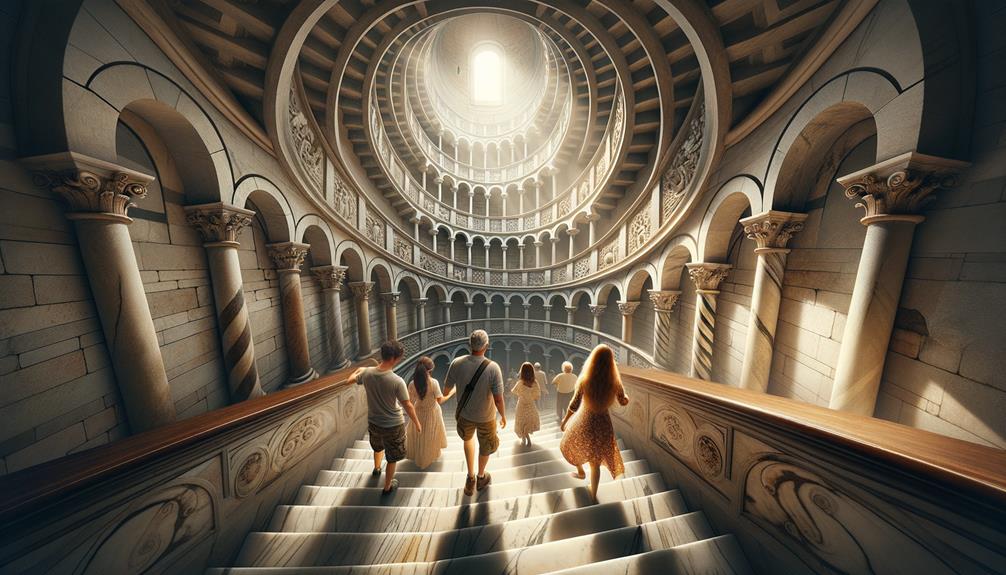
As I started my climb up the Tower of Pisa, I couldn’t help but notice the worn marble steps, each one a record of centuries of footfall. The modern safety railings offered reassurance without detracting from the atmosphere. That combination of historical texture and practical safety made the ascent both exciting and comfortable.
Historical Climbing Path
Climbing the Leaning Tower of Pisa, I was aware of the worn stone beneath my feet and the long line of visitors who had made the same ascent over the centuries. The tower was closed to the public from 1990 to 2001 while engineers carried out stabilization work; its reopening restored an experience that feels both privileged and timeless. Knowing the effort that went into making the climb safe again gave each step an added sense of significance.
Inside, the air was cool and slightly damp, with a soft echo accompanying each step. As I made my way up, the view through the narrow windows gradually expanded, revealing the full sweep of the Piazza dei Miracoli below. Reaching the top felt like a genuine reward for the effort.
To make the most of your climb:
- Wear comfortable, closed-toe shoes – The steps are steep and the marble can be slippery.
- Take your time – Appreciate the historical significance.
- Bring a camera – The views are breathtaking.
- Book tickets in advance – On-site sales are limited; check the official site before visiting to secure your slot.
Safety Measures Overview
Climbing the Leaning Tower of Pisa, I noticed how carefully handrails and non-slip surfaces had been integrated into the historic fabric of the staircase. It was clear that considerable thought had gone into making the experience safe without erasing its character. The structure felt secure, a direct result of the extensive stabilization work completed before the tower reopened in 2001.
The tower was closed to the public from 1990 to 2001 while engineers addressed its dangerous lean through soil extraction and counterweighting. The outcome is evident not only in the tower’s reduced tilt but also in the safety measures now woven throughout the climb. Maintaining the historical character of the staircase while meeting contemporary safety standards was no small achievement.
Throughout my climb, I felt at ease knowing these features were quietly doing their job. The handrails were particularly welcome on the steeper sections, and the non-slip surfaces allowed me to focus on the views rather than my footing. The safety work stands as a good example of how careful planning can make a historic landmark genuinely accessible without diminishing what makes it special.
Fun Facts

The Leaning Tower of Pisa has been tilting for over 800 years, capturing the imagination of millions with its distinctive slant. Known in Italian as the Torre Pendente di Pisa, it is the bell tower of Pisa Cathedral and forms part of the Piazza dei Miracoli, a UNESCO World Heritage Site that also includes the Cathedral, the Baptistery, and the Camposanto. The tower’s survival through centuries of natural forces and human intervention makes its story all the more compelling.
Here are some facts worth knowing before you visit:
- Accidental Lean: The tower began tilting during construction in the 12th century because the shallow foundation could not support its weight evenly on the soft clay, sand, and shell soil beneath it. The lean was never part of the design.
- Closed for Stabilization: The tower was closed to visitors from 1990 to 2001 while engineers reduced the tilt by approximately 44 cm (about 17 inches) through controlled soil extraction. It is now assessed as stable for an estimated 200 years.
- Galileo Legend: According to popular tradition, Galileo Galilei, who was baptized in the nearby Baptistery, dropped objects from the tower to study gravity. Historians regard this as a legend rather than a documented event, but his genuine scientific work on falling bodies remains one of the great achievements of the era.
- Stabilization Efforts: The 1990s engineering project reduced the tower’s tilt by approximately 44 cm (about 17 inches), bringing it back to roughly the angle it held in the early 19th century and ensuring it remains safe for visitors for generations to come.
Frequently Asked Questions
What Are 5 Interesting Facts About the Leaning Tower of Pisa?
When I think about the Leaning Tower of Pisa, five facts stand out. It is over 800 years old and leans because of unstable soil beneath a shallow foundation. It has survived multiple significant earthquakes, took nearly two centuries to build due to wars and engineering challenges, and it was originally designed, and still functions, as the bell tower for Pisa Cathedral.
Why Did the Leaning Tower of Pisa Take 200 Years?
Construction stretched over nearly 200 years because of repeated interruptions. Wars between Italian city-states halted work on several occasions, key personnel changed across generations, and the tower’s progressive lean created ongoing uncertainty about how best to proceed. Those pauses may ultimately have helped: the soil had time to consolidate, which likely prevented the structure from toppling entirely.
Why Is the Leaning Tower of Pisa so Famous?
The tower’s fame rests on its unintended tilt, which transformed a flawed engineering project into one of the world’s most recognisable landmarks. It draws millions of visitors each year, not despite its imperfection, but because of it. It stands as an enduring reminder that accidents of history can carry as much meaning as deliberate achievements.
How Many Steps Are in the Pisa Tower?
I climbed all 273 steps of the Pisa Tower, each one worn smooth by centuries of visitors. The lean of the tower is perceptible throughout the ascent, making it a genuinely unusual physical experience, and the views from the top make every step worthwhile.