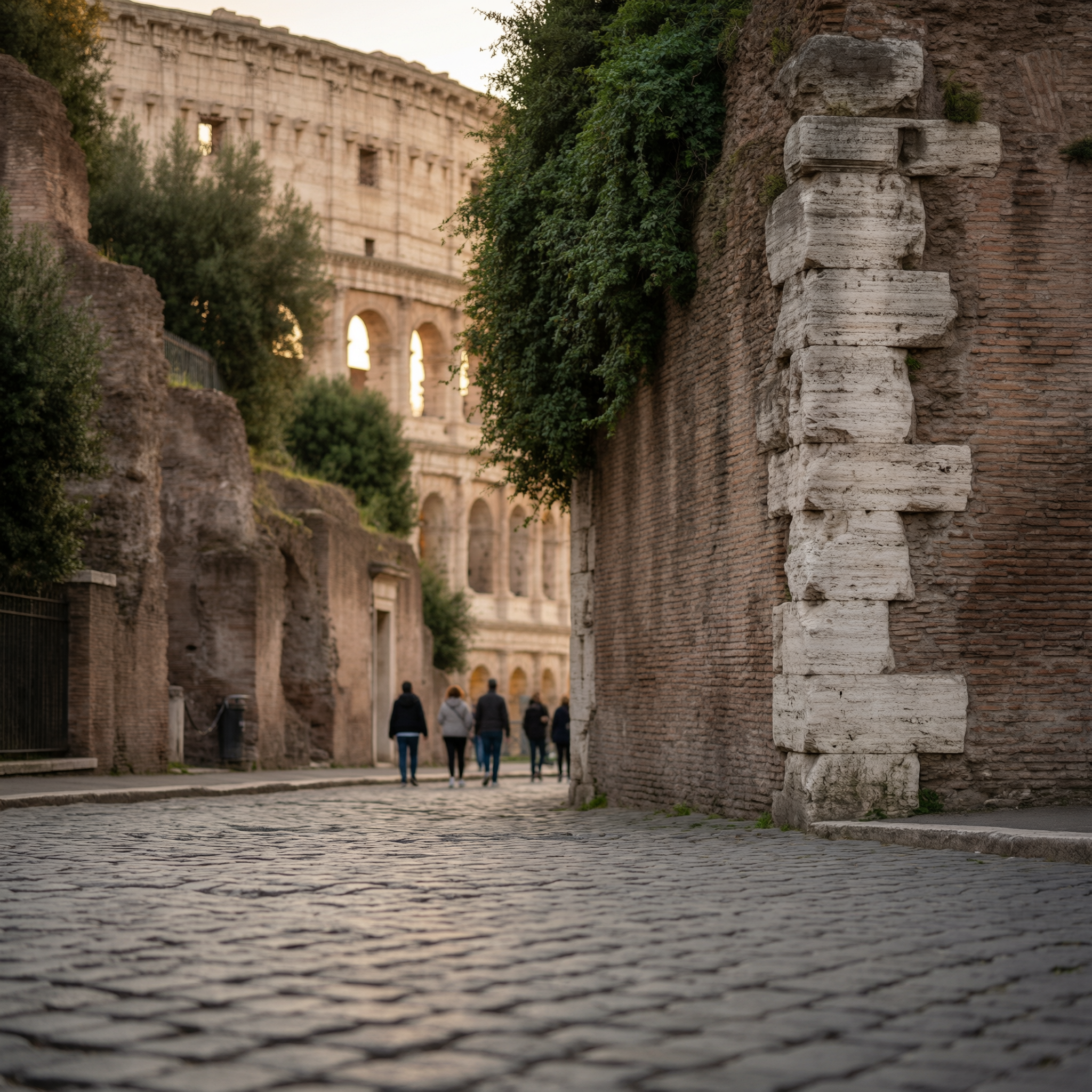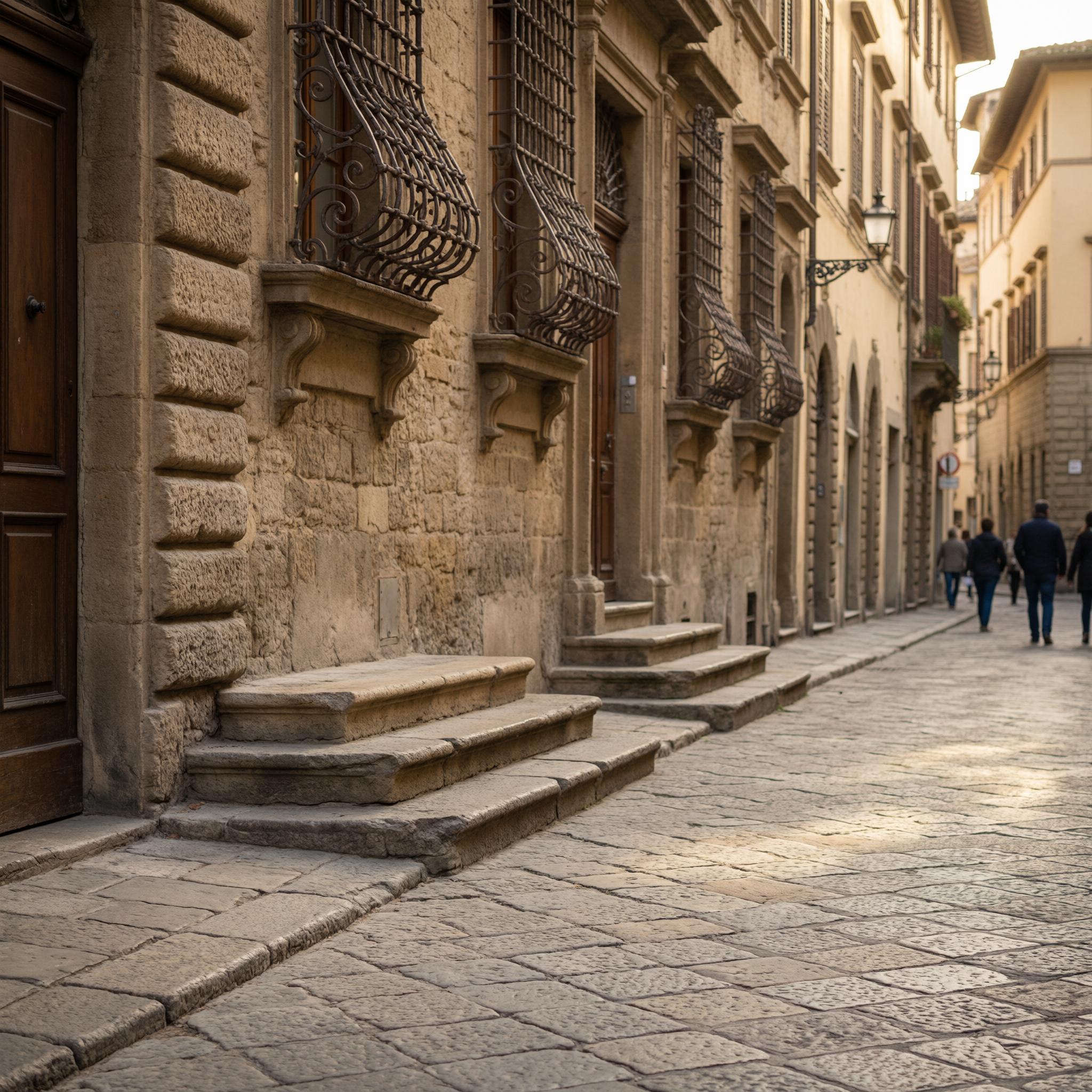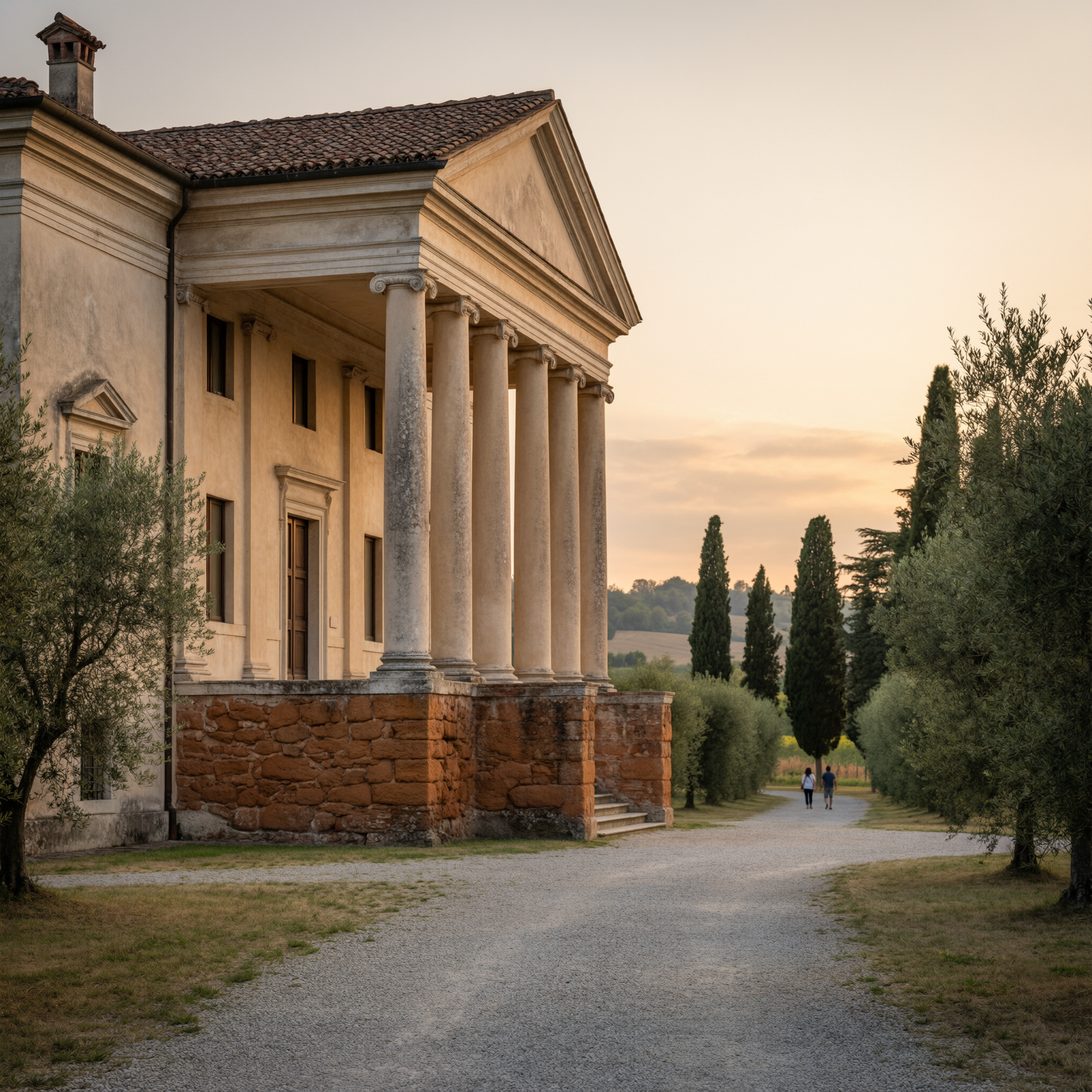
Strolling through Vicenza, I was immediately taken by the Palladian Villas, each radiating a distinctive blend of elegance and symmetry. La Rotonda‘s harmonious design and Villa Emo’s restrained classicism each narrate tales of Renaissance innovation and the lives of the Venetian elite. The frescoes in Villa Barbaro, located in Maser, in the broader Veneto region, left me spellbound, as did the interiors of Villa Malcontenta, near Mira along the Brenta Riviera. As I wandered through beautifully kept gardens, I couldn’t help but imagine the lives once lived within these walls. There’s so much more to learn about these architectural masterpieces.
Before you go: Visitor details can change. Check Organizza la tua visita – Sito del Patrimonio Mondiale UNESCO Vicenza and The Palladian Villas – Italia.it before you go.
La Rotonda
La Rotonda, with its harmonious symmetry and sweeping views, stands as a defining work of Renaissance architecture just outside Vicenza. Approaching Villa Almerico Capra, known as La Rotonda, designed by Andrea Palladio, I felt a quiet sense of awe. The villa’s perfect proportions and classical restraint speak directly to Palladio’s mastery. It is like stepping into a serene, ordered world where every element earns its place.
Standing at the entrance, I took in the panoramic views that extend in every direction. The central dome, reminiscent of the Pantheon in Rome, drew my eyes upward and invited reflection. Each of the four identical facades, with their stately columns and pediments, offered a different angle on Palladio’s vision.
Wandering through the interior, I was struck by the seamless blend of form and function. The rooms are filled with natural light, each one a geometric study that speaks to Palladio’s understanding of space and proportion. La Rotonda is more than a villa; it is an argument in stone for the idea that beauty and utility need not be in conflict.
Villa Emo
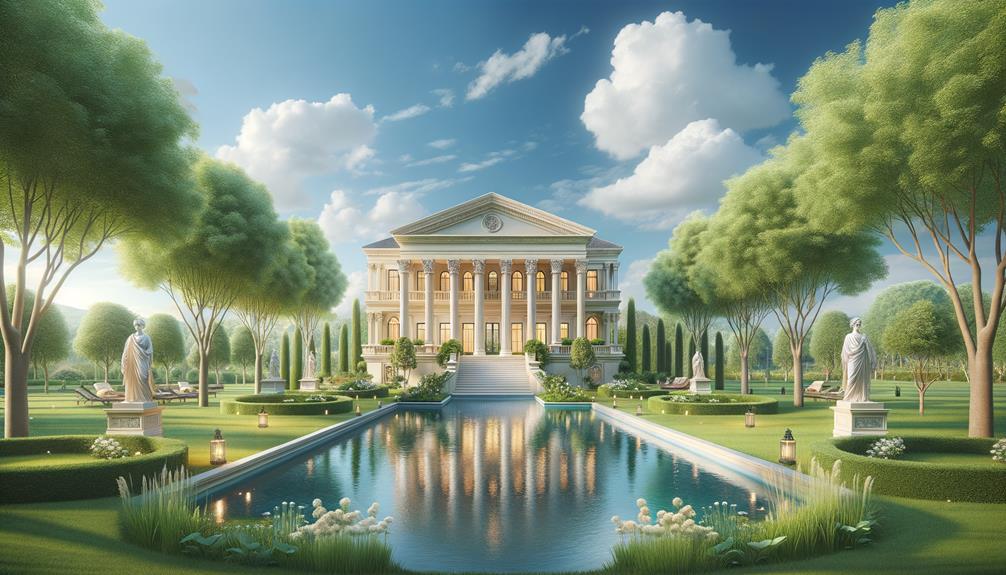
Step into Villa Emo, located in Fanzolo di Vedelago, in the Veneto region rather than Vicenza itself, and the elegant simplicity that Andrea Palladio achieved in this country estate becomes immediately apparent. The blend of beauty and practicality is clear as you walk through this Palladian masterpiece. Wide, welcoming porticos announce Palladio’s talent for merging functionality with aesthetic purpose.
The villa’s symmetry is the first thing that catches the eye, exemplifying Palladio’s conviction that useful spaces can also be beautiful ones. Walking through the central hall, you encounter frescoes depicting scenes of rural life, adding warmth and a sense of history to the peaceful setting. Sunlight streams through large windows, casting soft shadows on the terracotta floors.
What stands out most is how Villa Emo feels both impressive and approachable. The surrounding farmland, integral to its design, is a reminder that this was a working estate. Yet the villa itself is a testament to architectural innovation and enduring beauty. Every detail, from the classical columns to the carefully judged proportions, reflects Palladio’s expertise.
Villa Godi Malinverni
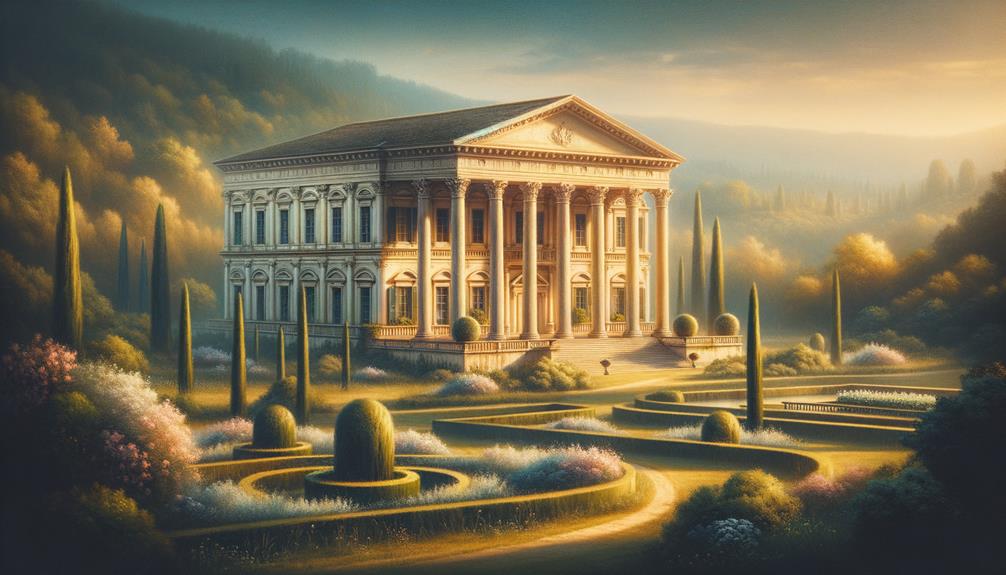
Among the Palladian villas near Vicenza, Villa Godi Malinverni stands out as a testament to Palladio’s early architectural talent. I was struck by its balanced proportions and the quiet atmosphere it radiates. As one of Palladio’s first documented projects, this villa offers a window into the beginnings of his architectural development. Walking through its grand halls and frescoed rooms, you can sense the echoes of history.
Strolling through Villa Godi, I found myself thinking about how Palladio’s style evolved from these early experiments onward. The guided tours are engaging, offering genuine insight into the villa’s history and the creative thinking behind it. The frescoes and the villa’s graceful, symmetrical design convey a feeling of balance that is both uplifting and grounding.
The surrounding landscape, with its rolling hills and well-kept gardens, adds to the villa’s lasting appeal. Visiting Villa Godi is more than seeing a building; it is experiencing a piece of history that still feels alive. Every corner invites you to pause, reflect, and appreciate the enduring qualities of Palladian architecture.
Villa Barbaro
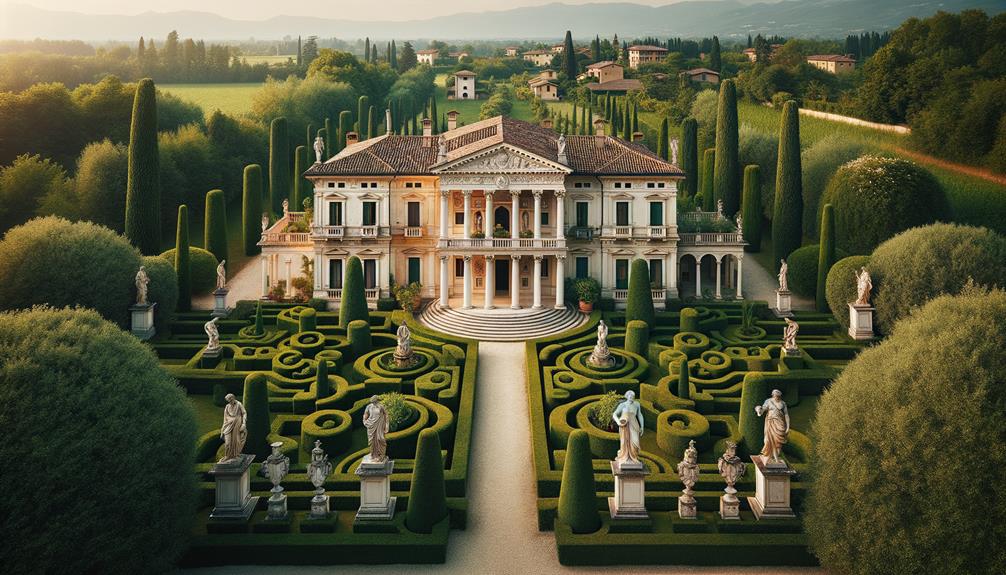
When I first arrived at Villa Barbaro, situated in Maser, in the Veneto region, I was immediately impressed by its grand design. Palladio’s skill is evident in the symmetrical façade and classical pediment. Inside, Paolo Veronese’s frescoes transported me with their beauty and remarkable state of preservation. The surrounding gardens, carefully landscaped, offer a peaceful contrast to the villa’s architectural confidence.
Architectural Masterpiece Details
Villa Barbaro is a compelling testament to Palladio’s architectural skill, blending classical elegance with inventive design. As I wandered through its grounds, I was struck by the harmonious proportions and symmetry that characterize his work. Unlike more inward-looking villas, Villa Barbaro opens itself to the landscape, creating a genuine dialogue between architecture and its natural setting.
The villa’s façade, with its Ionic columns and pediments, carries a quiet authority. Each element is carefully considered, reflecting Palladio’s command of classical principles. The grand central hall, with its high ceilings and generous windows, draws in natural light and creates an airy, open space that encourages both movement and contemplation.
As I explored the villa, I noticed how each room flows naturally into the next, maintaining a sense of continuity throughout. The intricate cornices and elegant staircases reflect his inventive spirit. Villa Barbaro is more than a building; it is a living monument to the staying power of Palladian architecture, where every corner tells a story of careful thought and creative ambition.
Frescoes and Interior Art
Walking into Villa Barbaro, I was struck by the extraordinary frescoes covering its walls and ceilings, each telling a story of myth and grandeur. Painted by Paolo Veronese, these works depict scenes of classical mythology and pastoral life, sitting in close conversation with Palladio’s architectural framework. The frescoes animate the walls, drawing you into a world of artistic richness and historical depth.
The interior art of Villa Barbaro is exceptional by any measure. Each room presents a different narrative, with figures that seem to press forward from their frames. These frescoes are not mere decoration; they are central to the villa’s character, inseparable from its elegance and grandeur.
Reflecting on my visit, I felt as though the art allowed me to move through time. The mix of mythological themes and pastoral calm offers a rare kind of escape, a journey through history and imagination, making Villa Barbaro a true masterpiece of fresco painting and interior design.
Surrounding Gardens Overview
Villa Barbaro’s gardens complement the artistic richness inside. As I strolled through the greenery, I was struck by how naturally the gardens extend the villa’s architectural logic. The scent of blooming flowers filled the air, and the gentle rustling of leaves added a peaceful undercurrent to the visit.
These gardens are not simply decorative; they reflect the same careful planning evident in the architecture itself, embodying the Palladian ideal of harmony between nature and human creativity. While each villa across the Veneto has its own garden character, Villa Barbaro’s stands out for its considered design and calm atmosphere.
| Element | Description |
|---|---|
| Pathways | Winding gravel paths leading to fountains |
| Fountains | Central features, adding a touch of elegance |
| Flower Beds | Colorful arrays, meticulously arranged |
| Sculptures | Classical statues, enhancing the aesthetic |
| Viewpoints | Scenic spots offering panoramic views |
Reflecting on my visit, I came to see the gardens of Villa Barbaro as more than a backdrop, they are an essential part of the villa’s identity, preserving a moment when art and nature were understood as a single, unified endeavor.
Villa Malcontenta
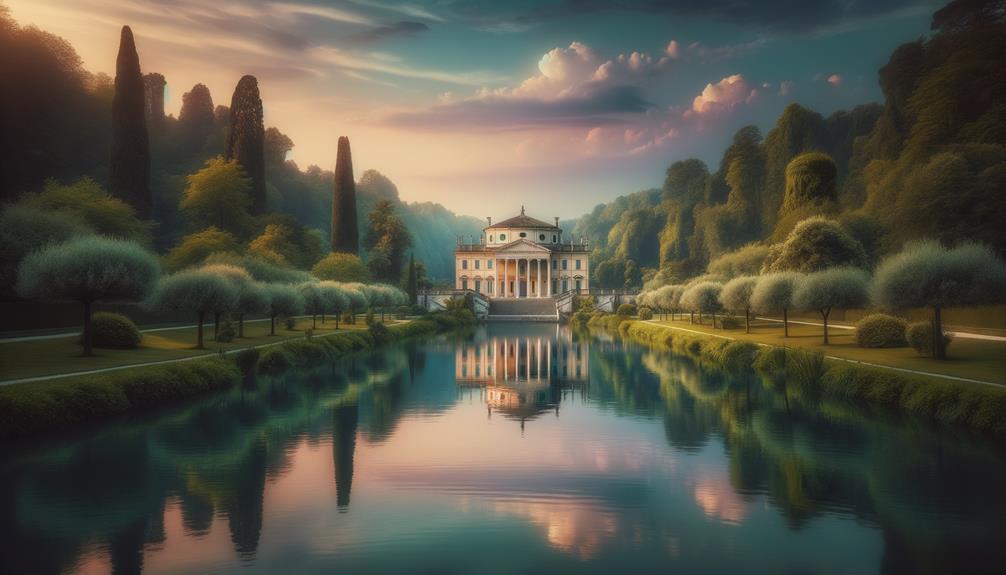
As I walked up to Villa Malcontenta, located near Mira along the Brenta Riviera, well outside Vicenza, its grand columns and imposing façade immediately commanded attention. Built in the mid-16th century for the Foscari family, the villa is a striking example of the period’s ambition, and its frescoes by Giovanni Battista Zelotti add considerable artistic depth. The villa was designed by Andrea Palladio himself and ranks among his most celebrated works; thinking about its historical importance, I found myself admiring how it has endured as a symbol of Renaissance aspiration.
Architectural Design Highlights
Bathed in the soft, golden light of the Venetian sun, Villa Malcontenta presents a confident example of 16th-century Veneto architecture, blending elegance with functionality. Approaching it, I couldn’t help but admire its symmetry and the understated grandeur of its façade. The experience brought to mind other great buildings of the region, including Palladio’s Basilica Palladiana in Vicenza, another expression of his enduring architectural vision.
The villa’s façade, with its graceful columns and balanced proportions, evokes a sense of calm. Each element seems deliberately placed, creating spaces that feel both grand and welcoming. The way natural light moves through the interior emphasizes the villa’s connection to its surroundings.
Inside, the frescoes by Giovanni Battista Zelotti add considerable artistic complexity, turning the villa into a painted environment of real quality. The rooms, with their high ceilings and intricate details, make it easy to imagine the refined lifestyle of the Foscari family for whom it was built. Villa Malcontenta is an enduring monument to the beauty of thoughtful design and the pursuit of architectural ambition.
Historical Significance Overview
Exploring the history of Villa Malcontenta, you quickly see how much it reflects the cultural and social currents of the Venetian Republic. Built in the mid-16th century for the noble Foscari family near Mira on the Brenta Riviera, not in Vicenza, the villa showcases a remarkable blend of classical Roman architecture and Renaissance style, designed by Palladio himself at the height of his career.
Villa Malcontenta captures the aspirations and wealth of the Venetian elite. It is more than a building; it symbolizes the ambition of a flourishing maritime republic. Though grand and impressive, it also served as a working farm, illustrating the mix of luxury and practicality common to Veneto country houses of the period.
Walking through its halls today, you can almost hear the echoes of grand social gatherings and sense the quieter moments of its past inhabitants. Villa Malcontenta is a piece of living history, encapsulating a significant period in the Venetian Republic’s cultural life.
Renting a Villa
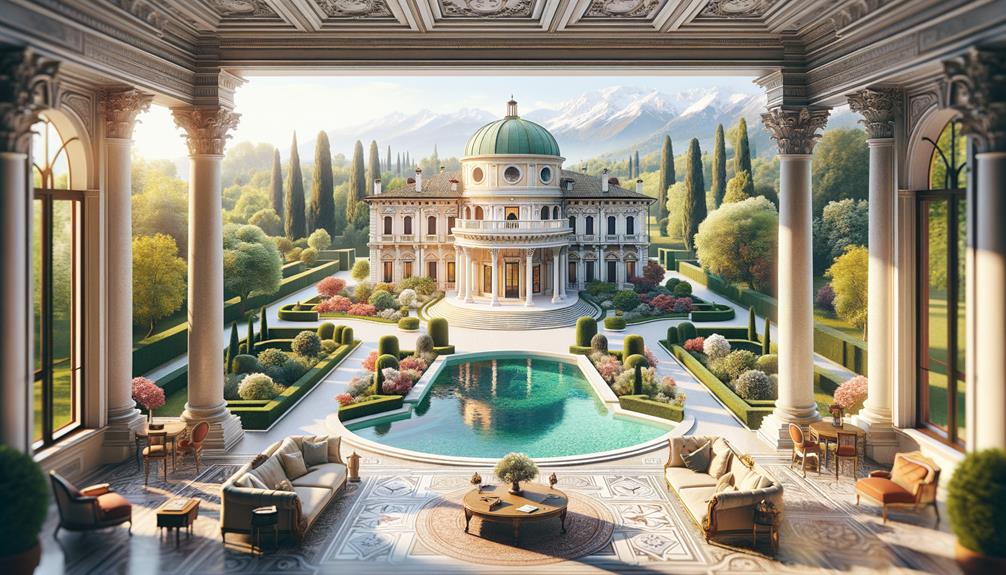
The idea of staying in a historic Veneto villa, waking up surrounded by frescoes and formal gardens, has obvious appeal. However, the Palladian villas of the Veneto are primarily museums or private residences, and verified short-term rental options are limited. The properties listed below have been associated with accommodation in the region, but availability, terms, and classifications change; check current official tourism sources before making any plans.
Villa Serego Alighieri, a wine estate in the Valpolicella Classico area with historical ties to Dante Alighieri’s descendants, is one property sometimes mentioned in this context. Its architecture and setting are undeniably striking. Verify current visitor and accommodation options directly with the estate.
Cadi Lista, described as a 16th-century hunting lodge within a private wine estate near Padua, is another property that has been cited as offering stays. Its rustic character and vineyard surroundings give it a distinct atmosphere. Confirm current availability and details before visiting.
Villa Contarini, a grand Baroque palace near Padua, is surrounded by parklands and lakes. It has a long and layered history. Check official sources for current opening arrangements and any accommodation options.
Each of these properties offers a different window onto the Veneto’s architectural heritage, but prospective visitors should verify all details independently before booking.
Other Notable Villas
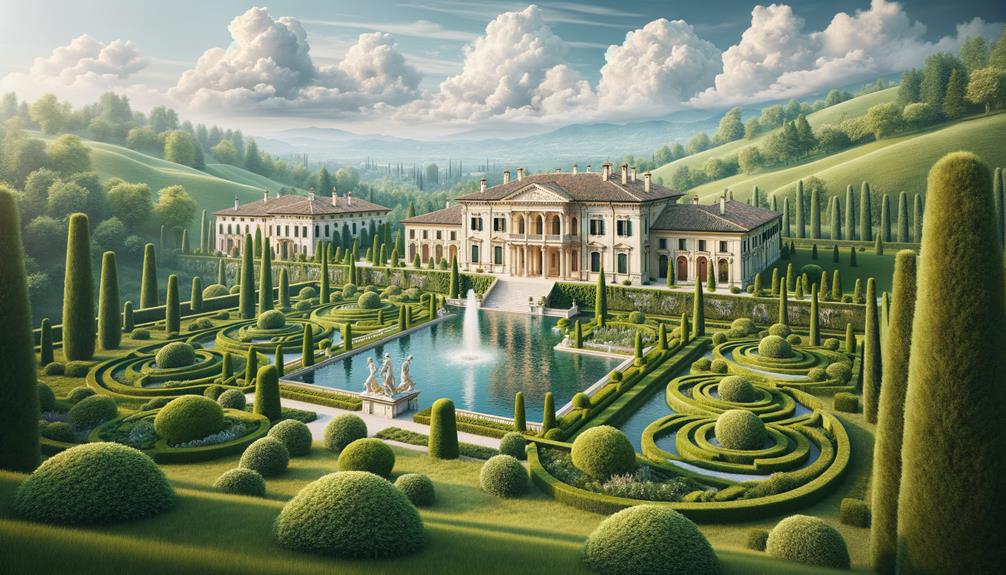
The Veneto region holds several other remarkable Palladian and historic villas beyond the most-visited sites, each with its own character and historical background. These lesser-known properties make a rewarding extension to any tour centered on Vicenza.
First among them is Villa Serego Alighieri, located in the scenic Valpolicella Classico area. This wine estate impresses with its architecture and carries a history tied to the descendants of Dante Alighieri.
Then there is Villa Pisani, near Stra on the Brenta Riviera, often called the ‘Versailles of the Veneto.’ This large Baroque palace holds important artworks from the 18th and 19th centuries, and walking through its majestic halls feels like stepping back in time.
Villa Contarini, near Padua, is another highlight. Surrounded by parklands and lakes, its grand Baroque design comes with a layered and sometimes controversial history, adding depth to any visit.
Further into the countryside, you will find Cadi Lista. Associated with Dario Variotari, a painter in the tradition of Veronese, this 16th-century hunting lodge sits within a wine estate and offers a quieter, more intimate experience.
Lastly, Villa Saraceno combines Renaissance and rural elements with considerable grace. Located in the southern Veneto near Finale di Agugliaro, rather than in the Vicenza countryside proper, it balances architectural elegance with a working-farm atmosphere, making it a worthwhile stop on any extended villa tour.
Frequently Asked Questions
What Is the Most Famous Palladian Villa?
I think the most widely recognized Palladian villa is Villa La Rotonda, formally known as Villa Almerico Capra, just outside Vicenza. Its precise symmetry and four identical porticoed façades make it instantly recognizable, and it has influenced architects around the world for centuries. It is a building that rewards careful looking.
Can You Stay in a Palladian Villa?
Most of the UNESCO-listed Palladian villas are either museums or private residences and are not available for short-term rental. A small number of historic Veneto properties in the broader region do offer accommodation, but I’d recommend verifying any specific listing through official tourism sources before making plans, as availability and classifications change.
How Many Palladian Villas Are There?
I've always been fascinated by Palladian villas. The UNESCO World Heritage Site recognizes 24 of these masterpieces by Andrea Palladio across the Veneto region. Each villa showcases a unique mix of classical elegance and Renaissance innovation, a true testament to architectural creativity.
What Is a Palladian Villa?
A Palladian villa is an architectural gem inspired by ancient Rome. These buildings combine symmetry, balance, and simplicity, creating a timeless haven for anyone who appreciates beauty and tranquility.