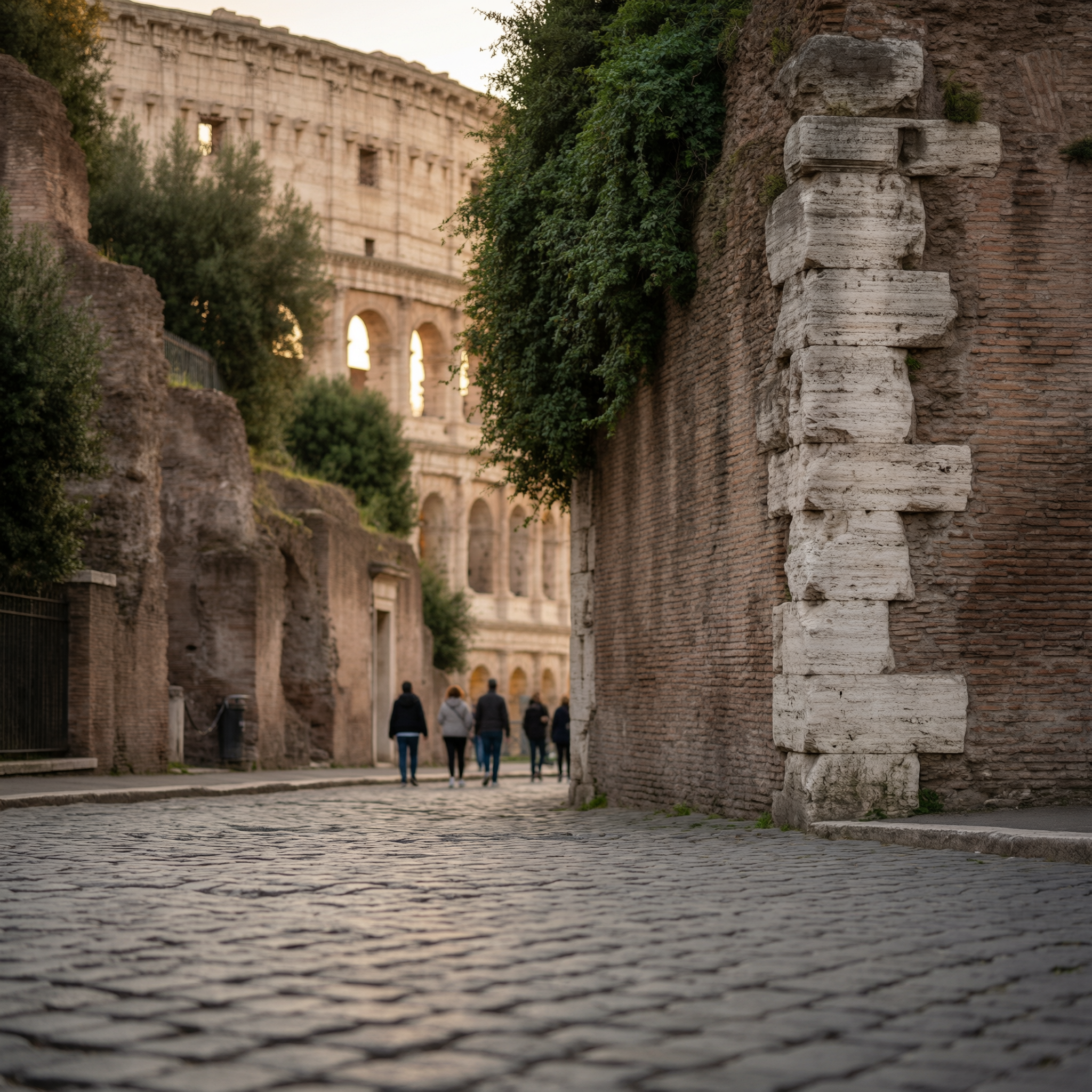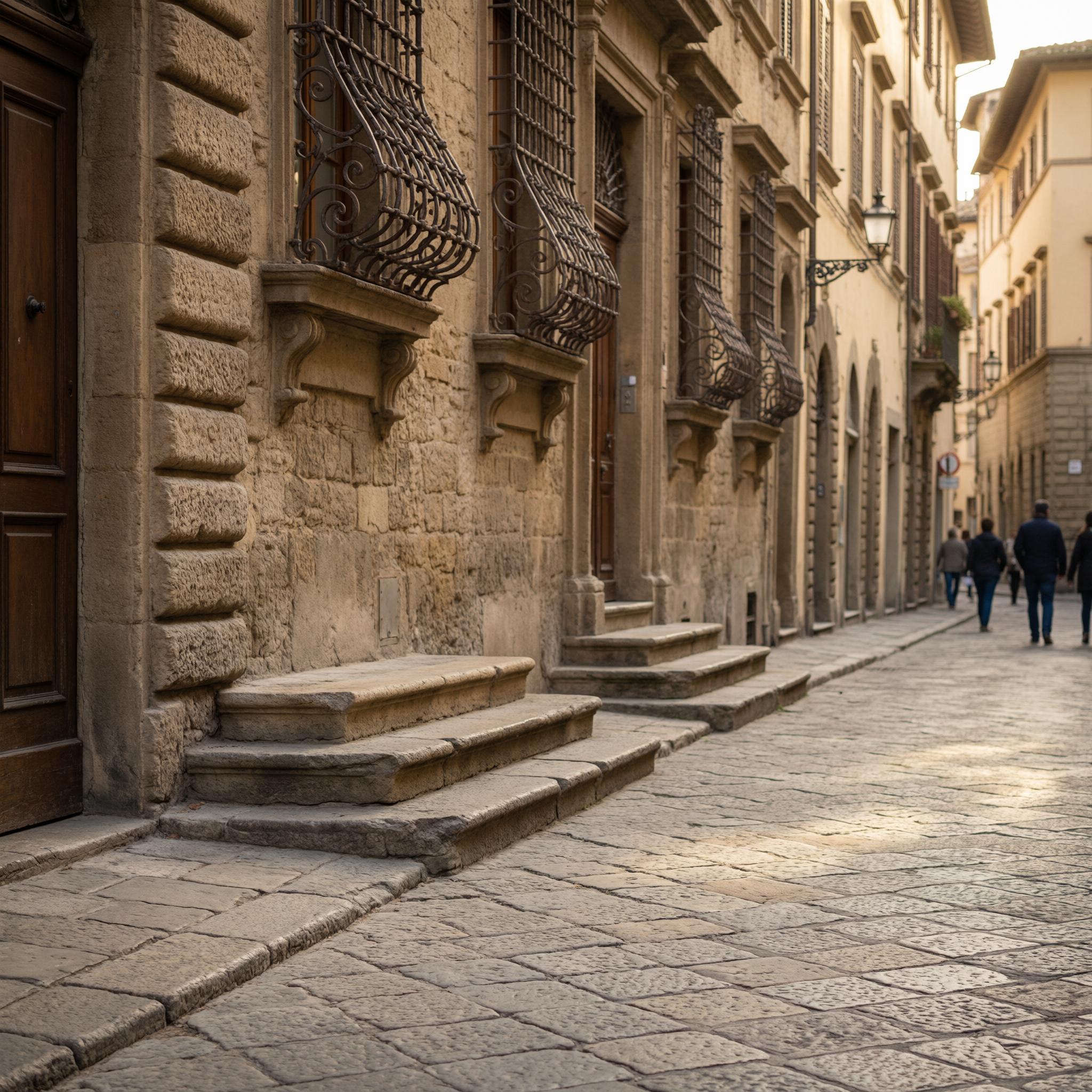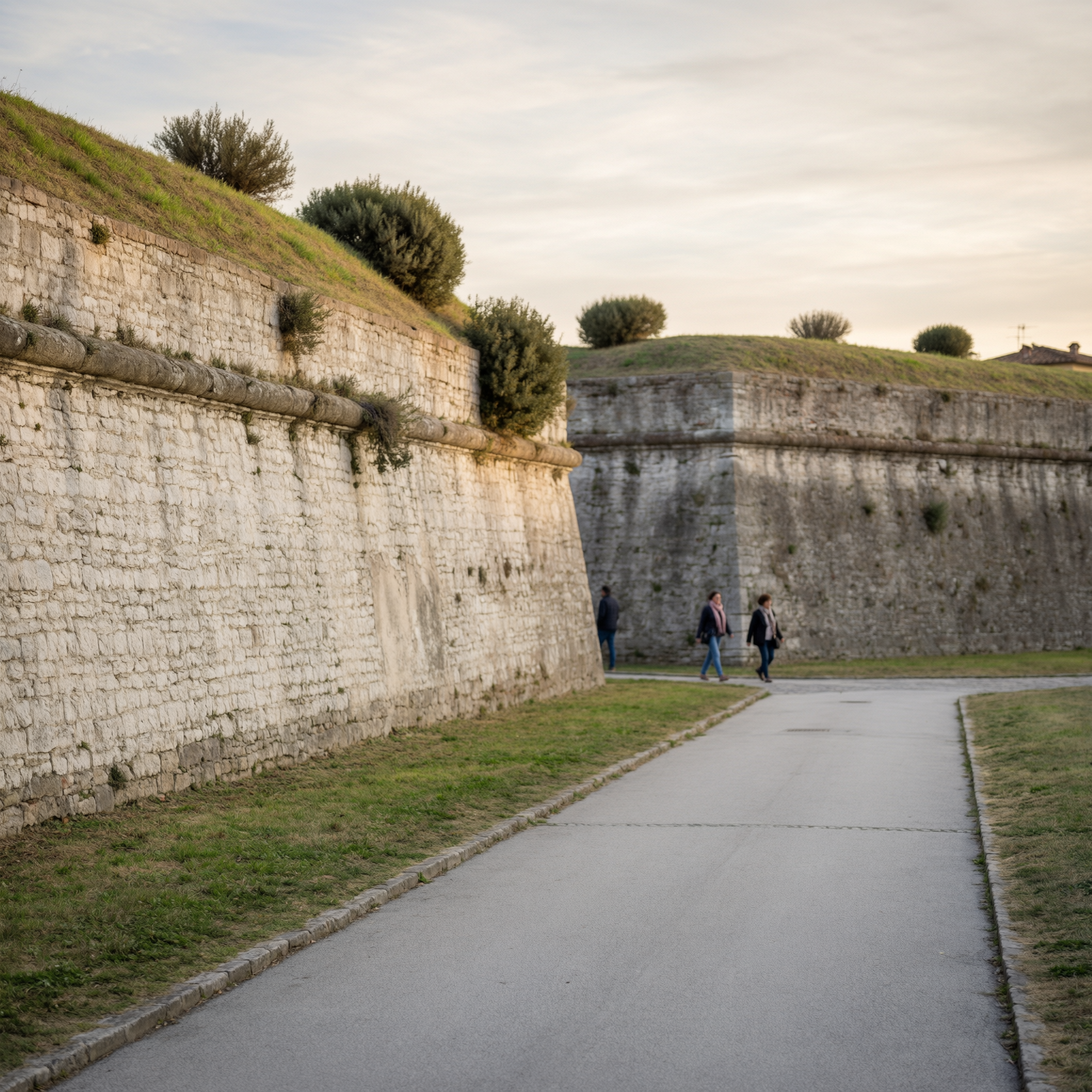
I've always wondered whether walking along Lucca's historic walls really lives up to its reputation. As I strolled along the tree-lined promenade, the city spread out below me in every direction, and the scale of the fortifications became genuinely impressive. The Renaissance stonework underfoot, the broad grassy ramparts, the succession of bastions curving ahead, none of it felt like a museum piece. Each turn offered a new view of the rooftops and the distant Tuscan hills. It's more than just a walk; it's a chance to read the city from above, and there's more to the walls' story than most visitors expect.
Before you go: Visitor details can change. Check Mura di Lucca – Infopoint (Official Tourism Bureau) and Mura di Lucca (Official City of Lucca) before you go.
History of Lucca's Walls
Walking along the Mura di Lucca, I felt a genuine connection to the city's layered past. Lucca has had several wall circuits over the centuries, the earliest dating to Roman times, but the circuit visitors walk today is not that ancient ring. The extant walls are a Renaissance achievement, built between the mid-sixteenth and mid-seventeenth centuries as the fourth and final defensive perimeter.
The Renaissance fortifications we see today were built between the mid-1500s and mid-1600s, and I find it remarkable that they have survived completely intact to the present day. Walking atop these broad earthwork ramparts, I can feel the extraordinary scale of what the city’s engineers achieved, a full 4.2 km circuit that remains one of the finest examples of fortification alla moderna in all of Europe.
Standing at Porta San Donato, I admired the gate that once controlled one of the city's main entrances. The nearby Cathedral of San Martino adds to the historic atmosphere, its Romanesque facade visible from the ramparts. Walking the perimeter, I appreciated the interplay of open green space and solid masonry, a reminder of how seriously Lucca once took its independence. Every step on the Mura di Lucca felt like moving through a city that has always known its own worth.
Exploring the Bastions
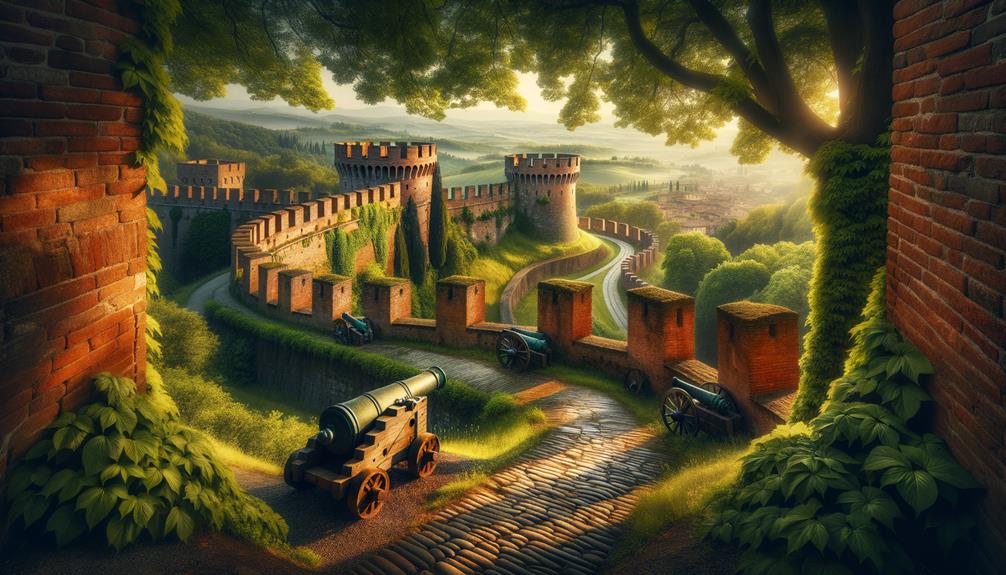
Walking along the bastions, I was struck by their scale and the sweeping views of Lucca's roofscape and surrounding countryside. The walls wrap the entire old town in a continuous 4.2 km circuit, and each of the 11 bastions projects outward at an angle, giving you a slightly different sightline at every turn. From the ramparts, the city's towers, bell towers, and terracotta rooftops arrange themselves into a compact, readable panorama.
Baluardo Santa Maria is among the more spacious bastions, with open lawns and good views across the city. It's a place where the walls' dual identity, military engineering and public park, feels most apparent. With every step, I appreciated the open sky and the quiet that settles over the promenade even on busy days.
| Bastion | Highlights |
|---|---|
| Baluardo Santa Maria | Panoramic city views |
| Baluardo San Paolino | Historic cannons |
| Baluardo San Martino | Secluded green spaces |
The walls themselves are a testament to Lucca's long-held determination to remain independent. Each bastion has its own character, shaped by its position in the circuit and the trees that have grown up around it over centuries. Whether I was scanning the distant Apuan Alps or picking out familiar landmarks in the old city below, walking the walls felt like occupying a privileged vantage point between the city and the wider landscape.
Activities on the Walls
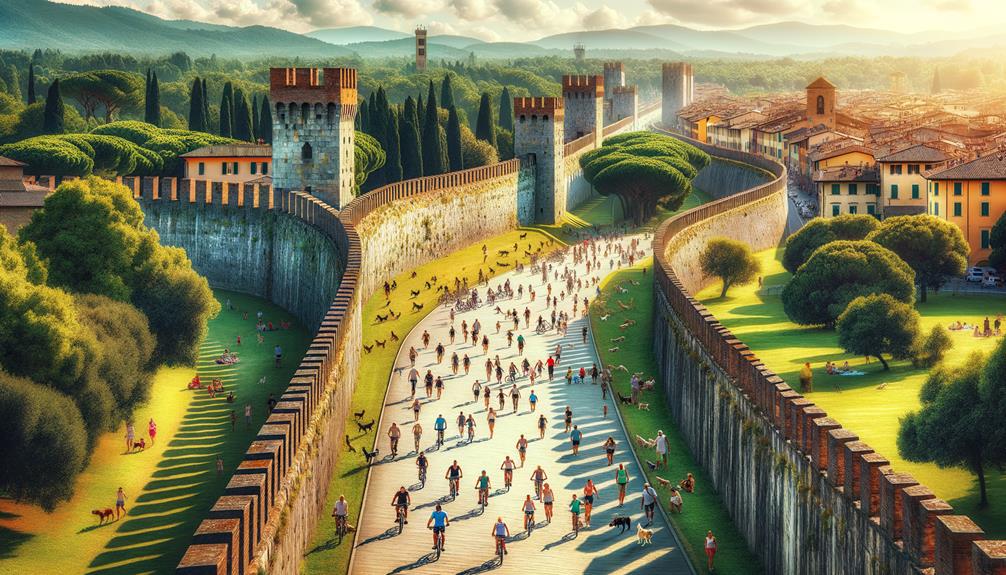
Walking along the walls, I couldn't help but notice how they come alive with everyday activity. Locals and visitors find their own rhythms on this raised promenade. The Mura di Lucca functions as a genuine urban park, free to enter, open to all, and busy at almost any hour.
The path is broad, shaded by a double row of trees for much of its length, and shared by walkers, cyclists, and dog-owners moving at their own pace. The atmosphere is relaxed rather than hurried, and there's room for everyone.
- Cycling: A popular choice, with a smooth, mostly flat path and open views.
- Dog-walking: A favourite among locals exploring Le Mura at any time of day.
- Picnicking: Plenty of spots with children's play equipment.
- Cafés and Museums: Rest stops like the Museum of Money and various cafés.
As I continued, the panoramic views of the old city and the Tuscan landscape kept drawing my eye. Passing near Palazzo Pfanner, whose baroque gardens are just inside the walls, I felt the easy connection between the promenade above and the city life below.
Scenic Views and Photography
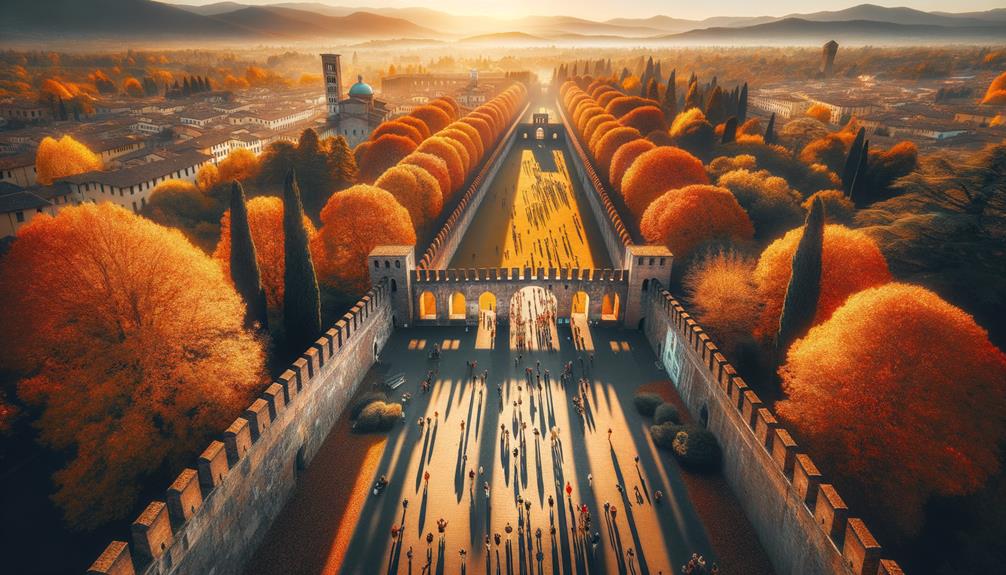
As I moved along the walls, the photographic possibilities kept multiplying. From Porta Santa Maria to Porta San Pietro, the panorama shifts constantly, rooftops, towers, gardens, and the Tuscan hills beyond. The circuit is long enough that the light changes noticeably as you walk, which rewards patience with a camera.
Standing on the ramparts near the northern stretch, I was struck by how the stone fortifications contrast with the lush tree canopy growing up around them. Each bastion offers a slightly different angle on the city. The church of San Frediano, with its gilded mosaic facade, is visible from the walls nearby and worth a closer look at street level, it's one of the most photographed facades in Lucca.
To help fellow visitors make the most of the light, here's a table of top photography spots:
| Location | Best Time | Key Features |
|---|---|---|
| Porta Santa Maria | Morning | Soft light, fewer people |
| Porta San Pietro | Sunset | Warm hues, dramatic shadows |
| Delle Mura | Afternoon | Green landscapes, historic walls |
| San Frediano | Late Afternoon | Illuminated mosaics, detailed shots |
| City Overviews | Anytime | Panoramic views, cityscape beauty |
Each spot offers a distinct perspective on the city, and the full circuit rewards those who take their time rather than rushing the loop.
Nearby Attractions
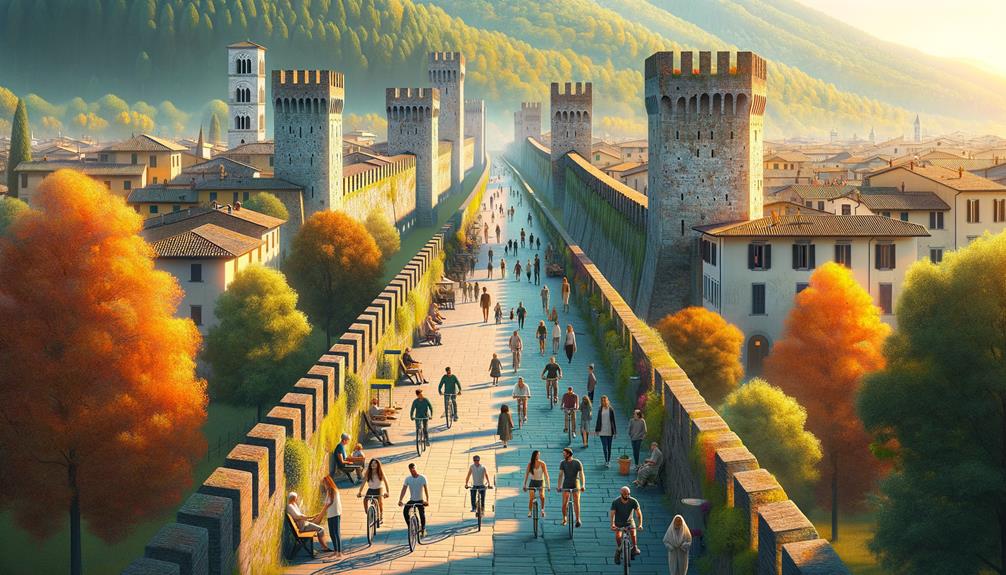
Wandering through the historic walls of Lucca, I found that the nearby attractions offer a rich mix of history, culture, and architectural interest. Each descent from the ramparts into the old town felt like stepping into a different chapter of the same story.
One of my favourite spots is the Piazza Anfiteatro, built on the footprint of the Roman amphitheatre. The arches now house restaurants and shops, and the oval piazza retains the shape of the ancient arena in a way that's immediately legible. The Cathedral of San Martino is another highlight, known for its Romanesque facade and the medieval labyrinth carving inside, well worth a visit in its own right.
While exploring near the walls, I also checked out:
- Palazzo Pfanner: A seventeenth-century palazzo whose baroque garden sits directly against the inner wall, making it uniquely visible from the ramparts above.
- Palazzo Mansi: Featuring richly decorated rooms and an art collection that reflects Lucca's mercantile prosperity.
- Puccini Birthplace: A small museum in the house where Giacomo Puccini was born, celebrating the composer's life and work.
- Via Francigena: The ancient pilgrimage route passes through Lucca, and sections of it make for a rewarding walk beyond the city walls.
The combination of intact medieval streetscape and well-preserved monuments makes Lucca one of the most satisfying towns in Tuscany to explore on foot. Its position between Florence and Pisa makes it a natural addition to any itinerary in the region.
Frequently Asked Questions
How Long Does It Take to Walk Around the Wall in Lucca?
The full circuit is 4.2 km, and at a leisurely pace, stopping to take in the views, read the landscape, and rest on one of the many benches, most people allow around 45 to 60 minutes. The path is largely flat and shaded, making it comfortable even in warmer months.
How to Access Lucca’s Walls
I got into the Lucca walls through one of the four main gates: Porta San Pietro, Porta Santa Maria, Porta San Donato, or Porta Elisa. Each has its own character and drops you into a different part of the old town.
How Long Does It Take to Cycle Around the Walls of Lucca?
Cycling the full 4.2 km circuit is considerably quicker than walking, though the exact time depends on how often you stop and how much traffic you encounter from other users. The path is shared with walkers and dog-owners, so a relaxed pace is both courteous and more enjoyable. Bike hire is available in the city; check locally for current options and rates.
Is One Day in Lucca Enough?
Is one day enough to take in Lucca properly? I wandered the narrow streets, climbed the walls, and found time for the Piazza Anfiteatro and a long lunch. A single day gives you a solid introduction, but the city rewards a slower pace, a second day would let you explore the churches, palazzi, and quieter corners that a rushed visit inevitably misses.