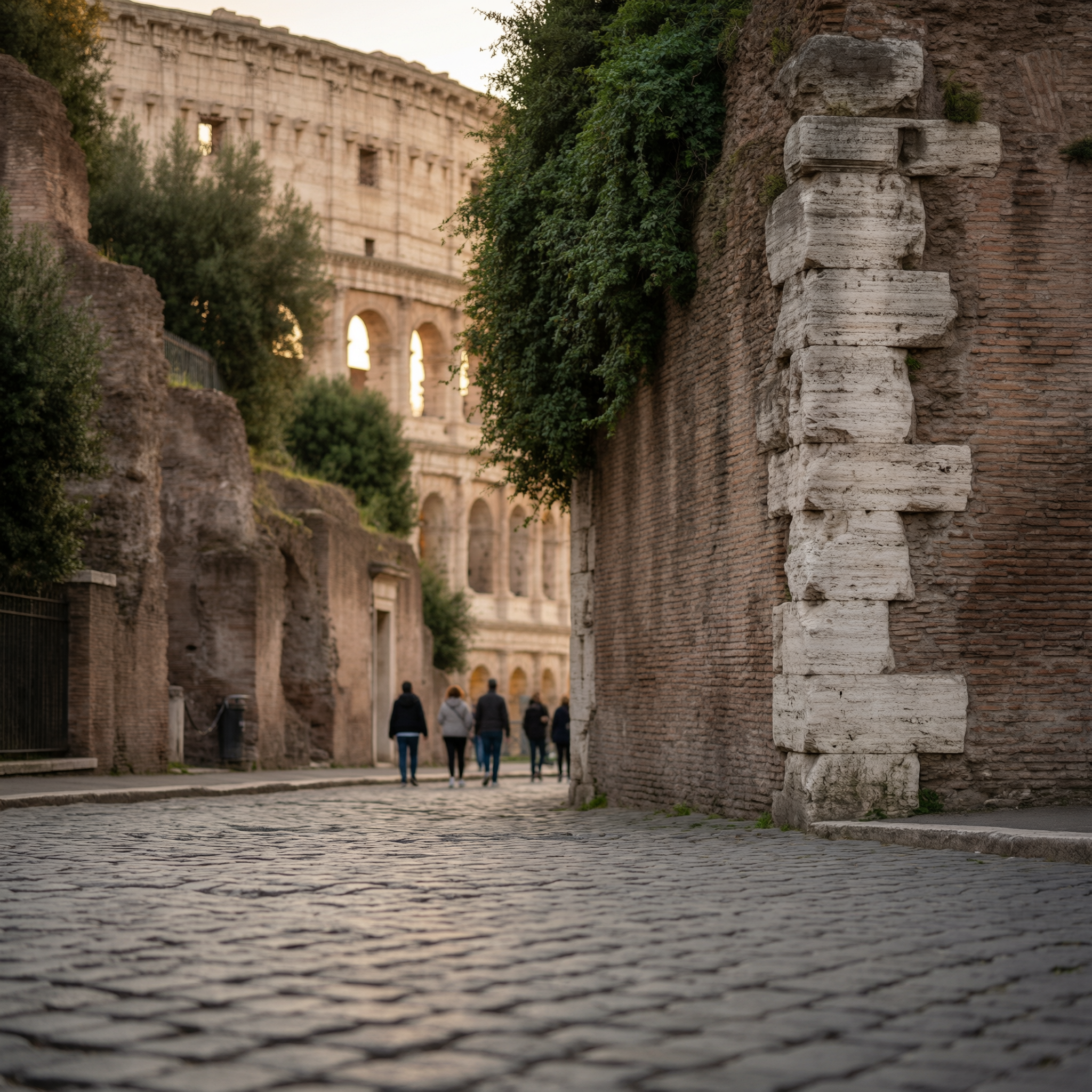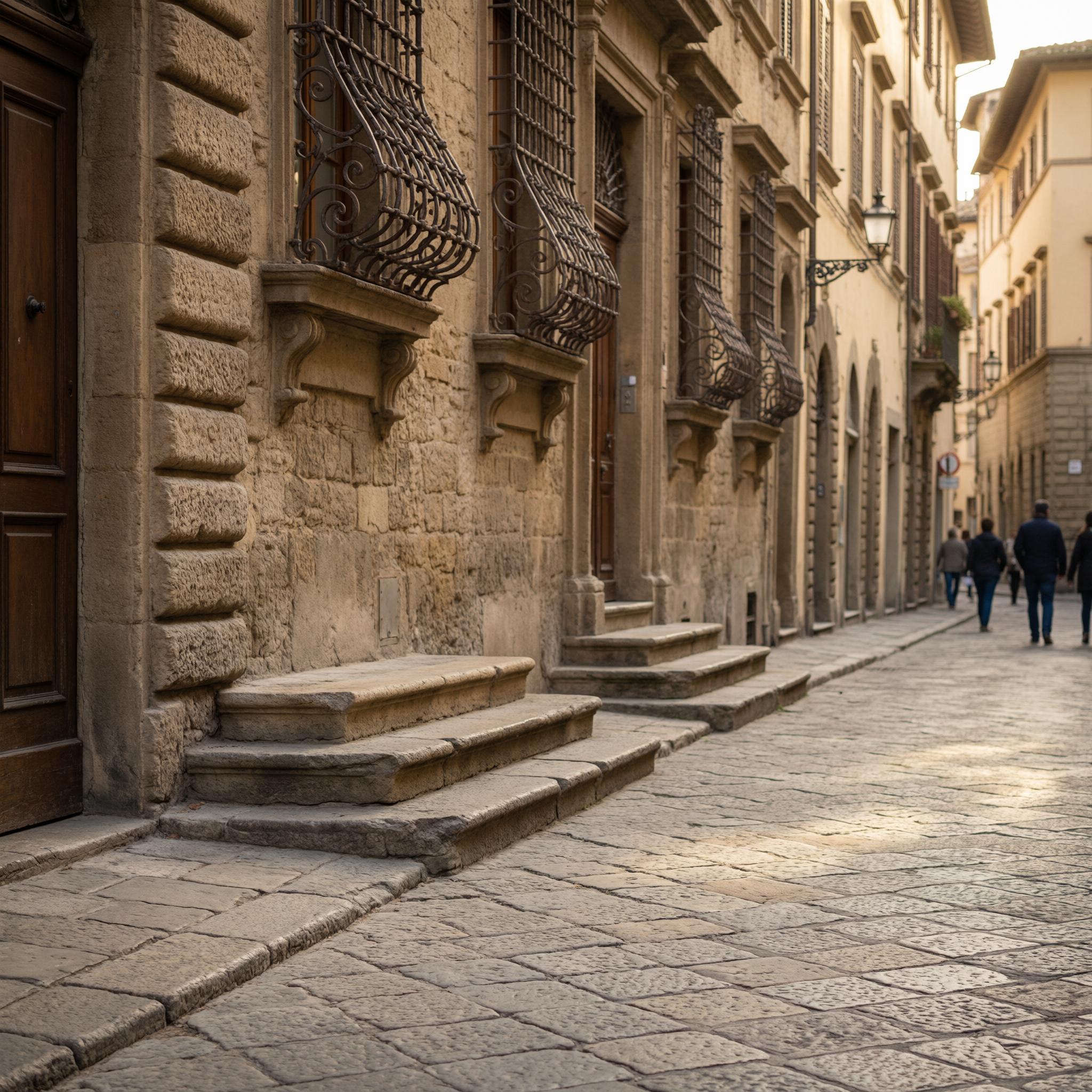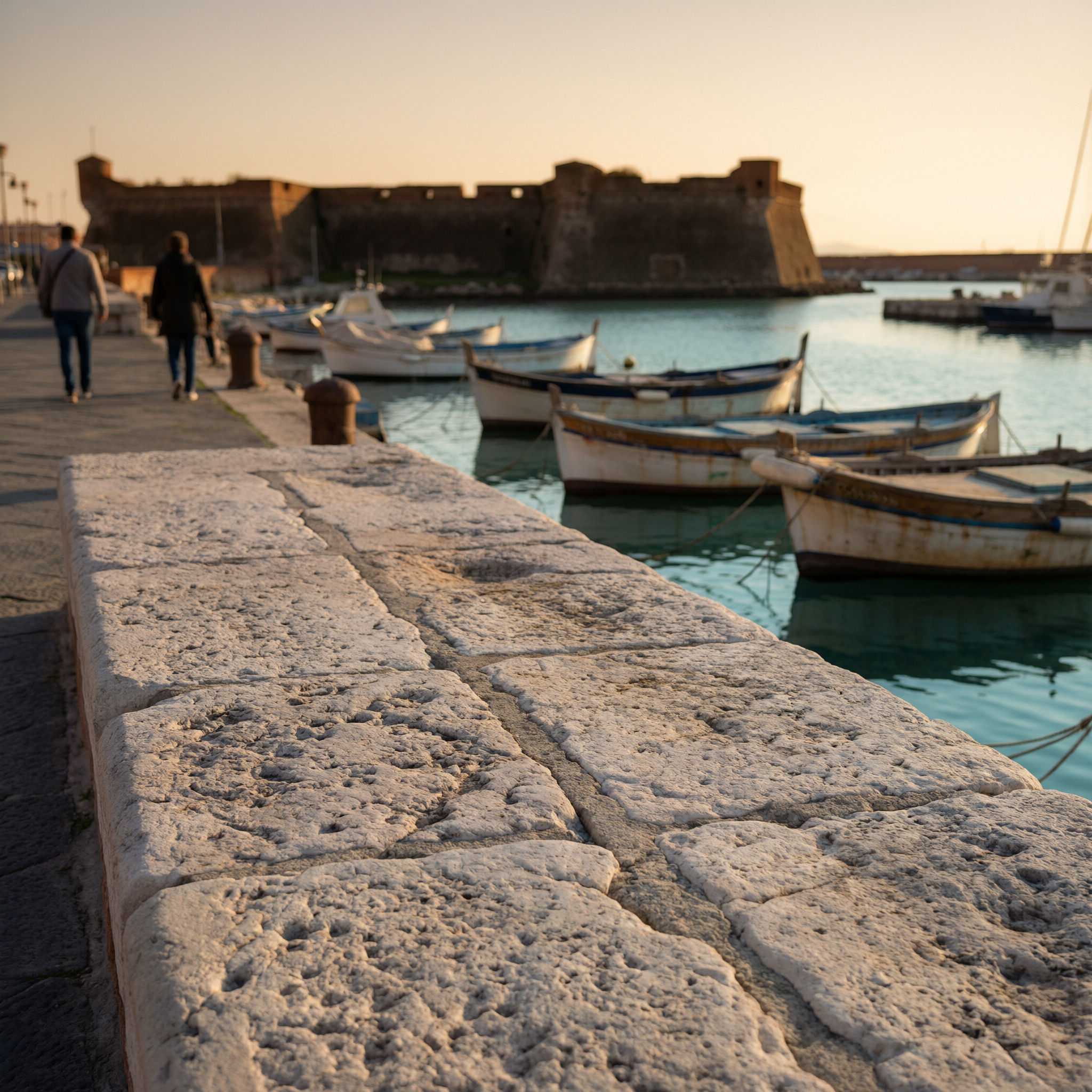
Livorno’s coastal charm is quietly captivating. Walking along the Terrazza Mascagni, the checkerboard promenade stretches out to meet the Ligurian Sea, its rhythm steady and unhurried. The harbor mixes sleek yachts with weathered fishing boats, each carrying its own history. When I first saw the Fortezza Vecchia, its ancient stones seemed to carry the weight of the Grand Dukes who once commanded this coast. And that’s just the beginning, wait until you try the local seafood, which can turn even a simple meal into something memorable.
Before you go: Visitor details can change. Check Terrazza Mascagni – Città di Livorno (Official) and Terrazza Mascagni (2026) – Nomads Travel Guide before you go.
Seafront Promenade
Have you ever walked the Terrazza Mascagni in Livorno? The sound of the waves and the striking pattern of over 34,000 black-and-white tiles underfoot, covering some 8,700 m², combine to create an atmosphere unlike any other promenade. It stretches along the waterfront, offering open views of the Ligurian Sea. I remember my first walk there, feeling the salty breeze and watching the horizon dissolve into blue. The checkerboard tiles beneath my feet made me feel as though I had stepped into a grand outdoor ballroom.
Both locals and visitors are drawn to the Terrazza Mascagni for its beauty and peacefulness. It’s more than a walkway; it’s a gathering place framed by the sea. Families picnic on the grass, couples walk hand in hand, and children run ahead, their laughter mixing with the sound of the waves.
One of my favorite spots on the promenade is near the Acquario di Livorno, where nature and human craft sit side by side. Walking further, I could make out the Porto Mediceo in the distance, a reminder of Livorno’s enduring maritime heritage. The Terrazza Mascagni captures the town’s spirit as well as any single place can.
Historic Porto Mediceo
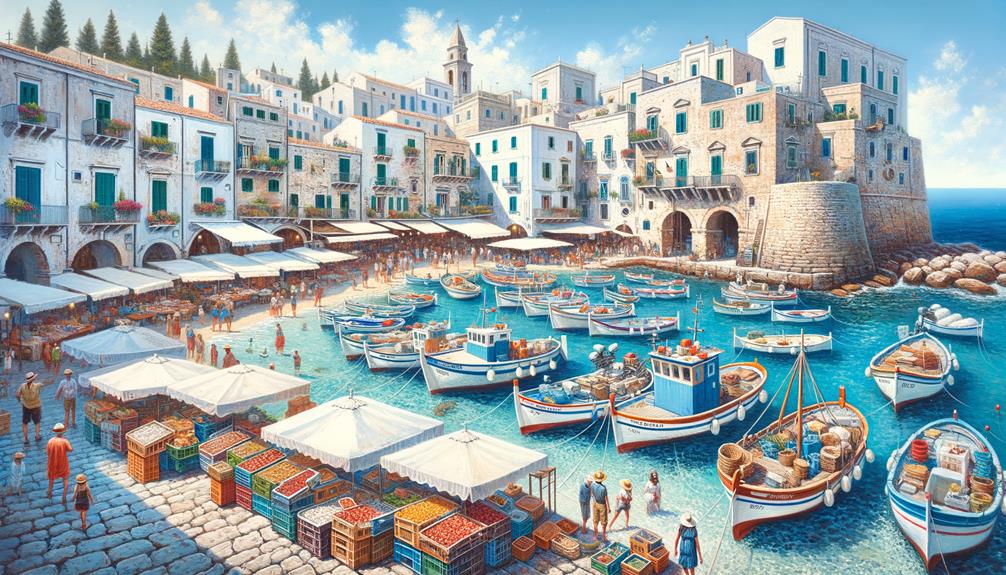
Strolling through the historic Porto Mediceo, I was struck by the maritime history that seemed to echo in every creak of the wooden docks and flutter of sail canvas. Once a prized possession of the Medici family, this port carries you back in time.
The Fortezza Vecchia stands guard over the harbor, offering a glimpse into Livorno’s strategic past through walls that speak of Grand Dukes and their ambitions. This fortress, at the heart of the historic center, anchors the city’s long story.
- Harbor views: Modern yachts alongside traditional fishing boats make for a scene that is both timeless and alive.
- Waterfront promenade: Walking here, I felt the town’s pulse, a blend of historic character and everyday energy.
- Historical markers: Plaques and statues recall Livorno’s days as a free port, open to merchants and travelers from across the Mediterranean.
- Local eateries: Eating fresh seafood by the harbor, I tasted the legacy of a city built on the sea.
Exploring Porto Mediceo, I felt a sense of timeless connection to the Medici legacy and to Livorno’s maritime spirit.
Amerigo Vespucci Ship
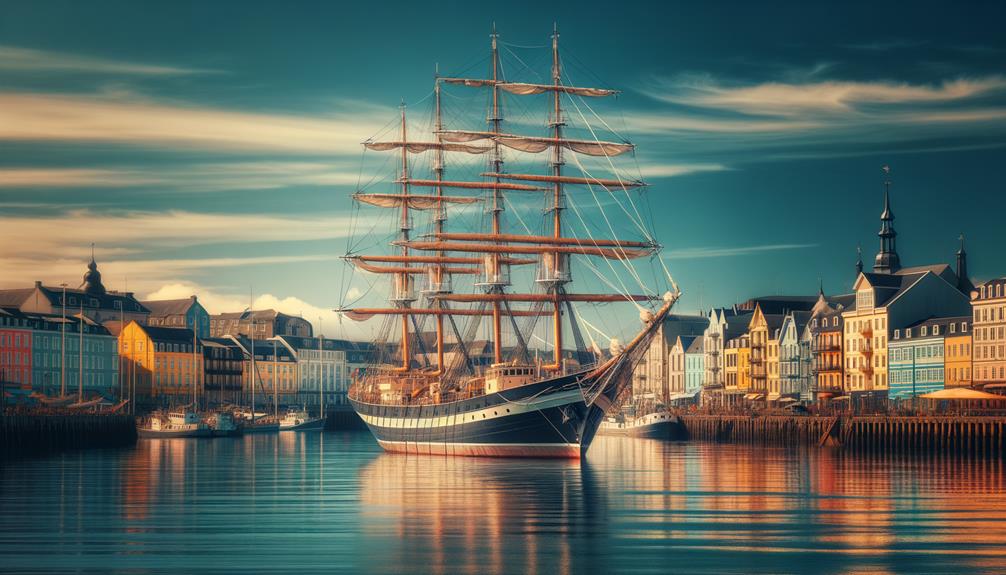
I recall standing on the docks in Livorno, looking up at the Amerigo Vespucci with its tall masts and intricate rigging. Built in 1930, this vessel is a proud symbol of Italy’s maritime history. Walking its decks, I felt a deep respect for the cadets who have learned their craft aboard her.
Historical Significance
When the Amerigo Vespucci is docked in Livorno harbor, she stands as a symbol of Italy’s seafaring legacy. I remember standing on her deck, feeling the weight of history beneath my feet. Named after the famed explorer, the ship captures the spirit of adventure that once flowed through the canals of Venezia Nuova and the lively Piazza Grande.
Strolling through Livorno, history surfaces at every turn. The Fortezza Vecchia, built under the Medici, is a reminder of when Livorno was a crucial stronghold. The Church of Santa Caterina, which stands in the Venezia Nuova district, speaks to the city’s resilience across the centuries.
- Fortezza Vecchia: A symbol of Medici ingenuity.
- Piazza Grande: The historical heart of Livorno.
- Venezia Nuova: Canals that reflect a maritime past.
- Church of Santa Caterina: A landmark of the Venezia Nuova district, symbolizing the city’s endurance.
I once climbed to the Santuario di Montenero, where the view spans Livorno’s historic landmarks. Each site tells part of the town’s long story and its deep connection to the sea.
Visitor Experience
Stepping onto the Amerigo Vespucci, it is hard not to feel a surge of admiration. Every polished brass fitting and well-kept deck plank speaks to Italy’s naval tradition. As a working training vessel, the ship docks at Porto Mediceo intermittently, check current schedules before planning a visit, as she is not permanently stationed there.
I still remember my first visit clearly. Walking along the deck, I was drawn upward by the towering masts and the intricate rigging that seemed to carry the memory of countless voyages. Italian Navy personnel guiding the tour shared stories of the ship’s life as a training vessel, and you could almost feel that history in the wooden frame beneath your feet.
The ornate cabins and the galley offered me a glimpse into the lives of those who have sailed her. Each room, reportedly restored during a mid-2010s refurbishment, exudes a blend of elegance and practicality. The engine room reminded me of the ship's dual capabilities, traditional sailing and modern propulsion.
After the tour, I wandered through the port, thinking about the broader journey Livorno invites, from its harbor out toward Florence and beyond, grateful for this particular meeting of history and place.
Nuova Venezia Canals
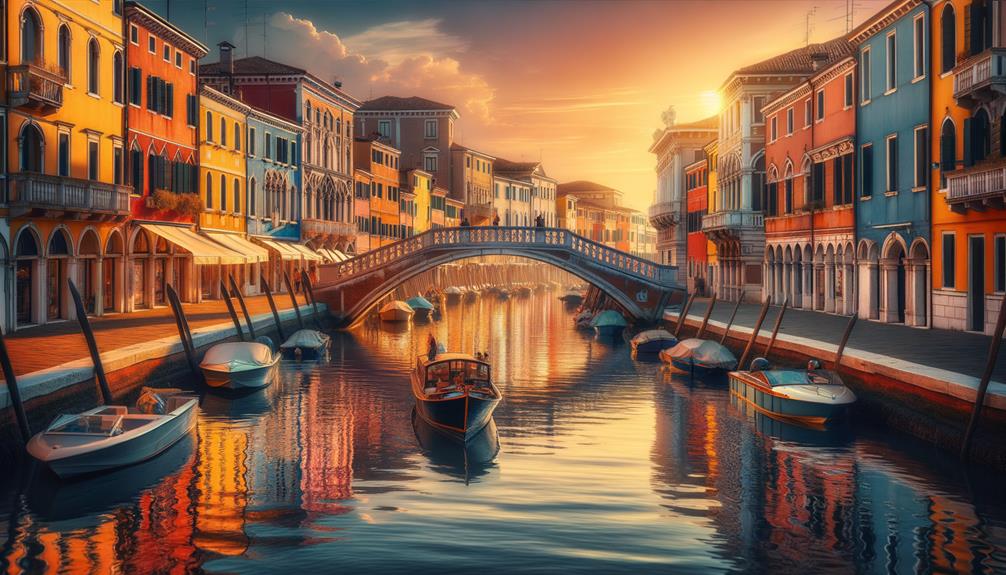
Strolling through the Venezia Nuova canals, I was struck by how these 17th-century waterways offer a quiet window into Livorno’s maritime past. They wind through the neighborhood’s heart, their reflections carrying the mood of another era.
A boat tour is the most rewarding way to explore this watery network. As the boat slips under the arches near Piazza della Repubblica, the sense of stepping back in time is genuine. The route circles the Fortezza Nuova, revealing angles of the fortress that are impossible to appreciate on foot.
- 17th- and 18th-century buildings line the canals: The architecture tells stories of merchants and sailors who shaped the city.
- The Church of Santa Caterina of Siena: A notable landmark of the district, with an interior worth pausing to appreciate.
- Via Grande: A short walk away, this busy street blends everyday Livorno with layers of historical character.
- Stone arches of Piazza della Repubblica: These arches frame the canals and make for some of the most photogenic spots in the city.
Venezia Nuova is not simply a point on the map; it is an experience of a city that has always lived alongside its water.
Santuario di Montenero
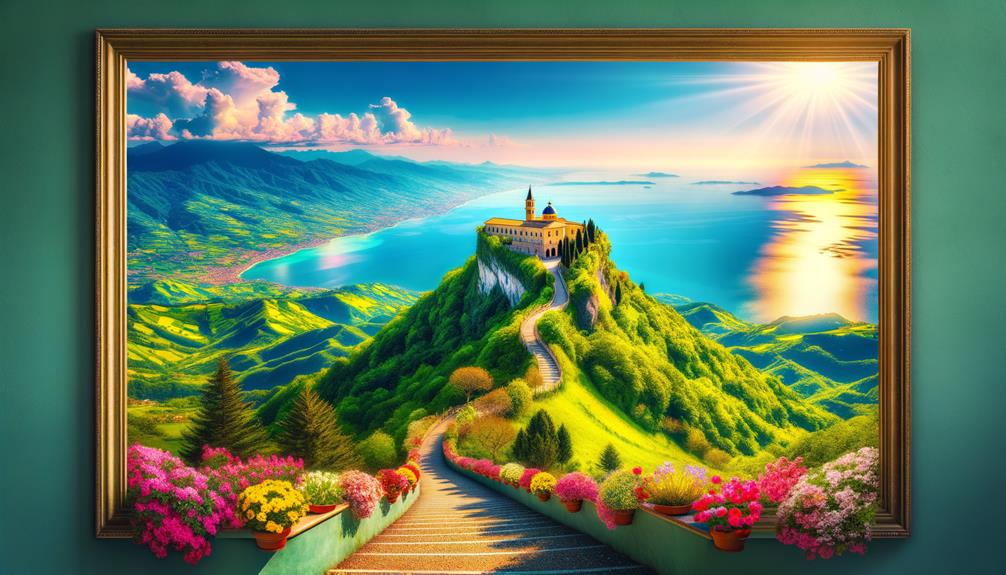
When I visited the Santuario di Montenero, I felt the depth of its history, from its modest origins to its eventual elevation to a basilica. Riding the historic funicular up to the shrine, the views of Livorno opened up below me. As the sun dropped toward the horizon, the sanctuary’s terrace offered a scene that was both spiritually calm and visually arresting.
Historical Significance and Legacy
The Santuario di Montenero, perched on a hillside above Livorno, has drawn pilgrims since the 14th century. Dedicated to Our Lady of Grace, it is woven into Tuscany’s religious and cultural life. Visiting is as much about personal reflection as it is about connecting with the region’s history.
Walking through the shrine, the sense of accumulated time is palpable. The original sanctuary was established after a miraculous image of the Virgin Mary was reportedly found in 1345. That image, now housed in a Baroque-style church built in the 17th century, has become a focal point of Livorno’s Catholic identity.
- The revered 14th-century painting of the Madonna di Montenero, believed to be from the Pisan school, draws worshippers from across the region.
- The church’s striking facade and grand dome are among the area’s most notable architectural features.
- Pilgrims from across Tuscany and beyond make their way to Montenero, reinforcing its standing as a major pilgrimage site.
- The sanctuary’s enduring presence reflects Livorno’s historical ties with Pisa and its broader cultural significance.
For those seeking quiet and spiritual comfort, the Santuario di Montenero remains a place apart.
Scenic Views and Location
From the heights of the Santuario di Montenero, the views of Livorno’s coastline and the Ligurian Sea are genuinely impressive. Sitting roughly 250 metres above sea level, the shrine offers a perspective that rewards the climb. Below, the city spreads out toward its busy harbor, all framed by open water.
I remember my first visit, riding the long-established funicular from the base of the hill. The steady ascent built anticipation, and stepping onto the observation terrace at the top did not disappoint. On very clear days, visitors report being able to make out the distant outline of Corsica on the horizon, a detail worth hoping for.
As the sun sets, the coastline takes on shades of gold and deep red. It is no surprise that the Santuario di Montenero draws photographers and anyone who appreciates a well-timed evening view. Standing there, the connection between this hilltop and the sea below feels entirely natural.
Fortezza Vecchia
Fortezza Vecchia
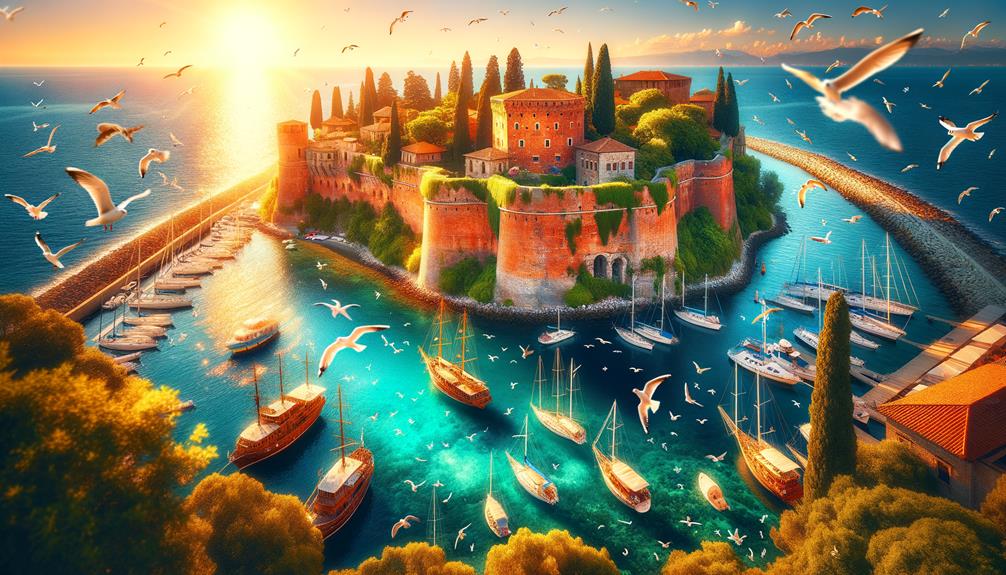
Fortezza Vecchia stands along Livorno’s coastline as a record of centuries of architectural growth and strategic importance. The fortress blends medieval and Renaissance elements in a way that draws you in from the moment it comes into view.
As I passed through its ancient gates, the Mastio di Matilde, a round tower at the heart of the structure, immediately caught my eye. This tower, originally part of an 11th-century castle, is Livorno’s oldest surviving medieval feature. Climbing to the top, I was met with sweeping views of the busy port and the city below.
Inside the fortress, I came across the small church of San Francesco, built in 1530. Its plain exterior gives way to a serene interior, offering a quiet pause within the fortress’s imposing walls. The site as a whole offers:
- Historical tours: Guided walks through its layered past.
- Scenic viewpoints: Broad views from the Mastio di Matilde.
- Architectural highlights: Distinctive elements from different periods of construction.
- Cultural events: Occasional concerts and exhibitions held within the walls.
Every corner of Fortezza Vecchia carries a piece of Livorno’s story, from its medieval foundations to its Renaissance additions. It is essential for anyone with an interest in the city’s history.
Museo Civico Giovanni Fattori
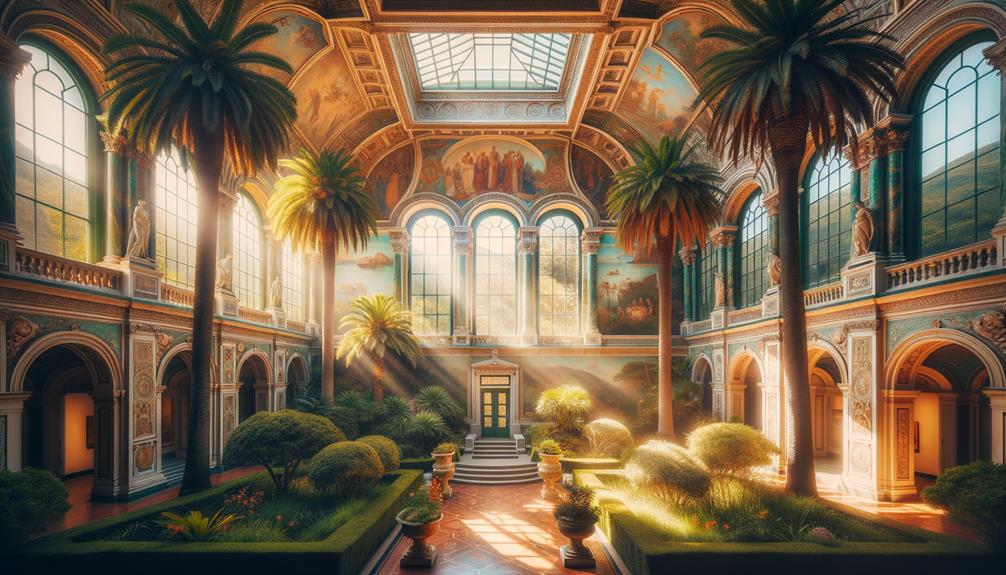
Set within the handsome 19th-century Villa Mimbelli, the Museo Civico Giovanni Fattori is dedicated to the works of Giovanni Fattori and the broader Macchiaioli movement. Stepping through the entrance, I felt as though I had moved back in time, surrounded by the art and atmosphere preserved within this Livorno landmark.
Moving through the rooms, I was struck by Fattori’s evocative landscapes and his perceptive portrayals of Italian life. The Macchiaioli artists, often seen as Italian forerunners to the Impressionists, used bold brushwork and direct observation to bring their subjects to life. The villa itself, with its detailed frescoes and gardens, added considerably to the experience.
One work that stayed with me was Fattori’s Campagna di Toscana, which distilled the Tuscan countryside into something essential. The museum also mounts temporary exhibitions that bring in both local and international perspectives. It is open Tuesday to Sunday; admission is typically free for visitors under 18 and on the first Sunday of each month, though it is worth confirming current terms on the official museum page before your visit.
Livorno Market
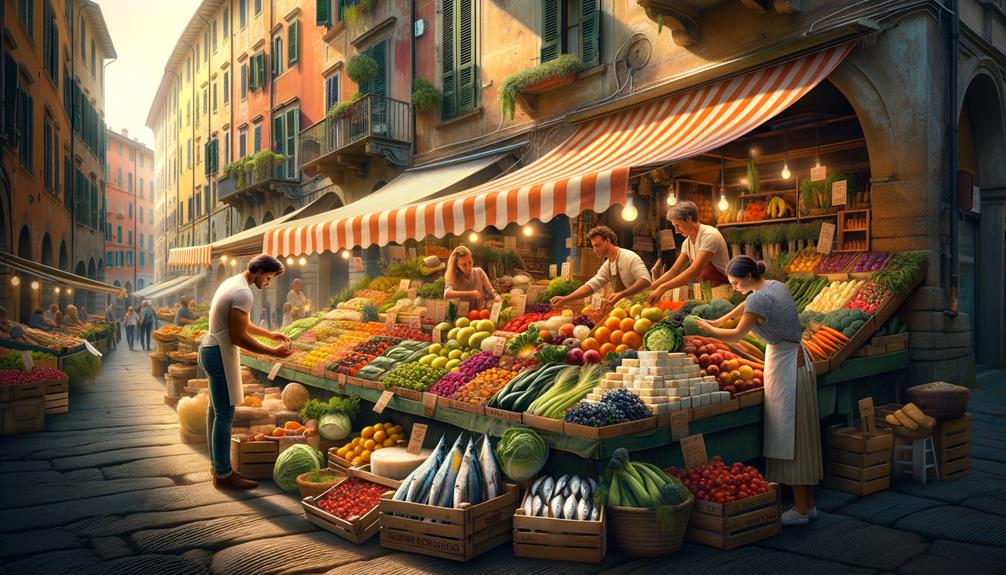
As soon as I walked into the Central Market in Livorno, I was met by the sights and smells of fresh produce, meats, and local specialties. Located near Piazza Cavour, this 19th-century marketplace is central to Livorno’s food culture. The chatter of vendors and regulars gave the whole place an easy, lived-in energy.
I wandered through the stalls, approximately 200 in all, offering:
- Fresh seafood landed from the nearby Ligurian Sea
- Artisan cheeses and cured meats showcasing the flavors of the region
- Seasonal fruits and vegetables, ideal for a picnic or a self-catered meal
- Spices and herbs that hint at Livorno’s long history as a trading port
It was easy to lose track of time. I spoke with a cheese vendor who shared something of his family’s history in the market, stretching back several generations. The outdoor section nearby was equally lively, with fresh flowers adding color to the stalls.
Talking with the people who work here made me feel genuinely connected to the city. The Central Market is not simply a place to shop; it is where Livorno’s daily life and culinary tradition meet.
Frequently Asked Questions
How Do You Spend a Day in Livorno?
I’d start with a morning walk along the Terrazza Mascagni, taking in the sea views at a relaxed pace. After that, lunch at a local trattoria with fresh seafood is hard to beat. The afternoon is well spent wandering the canals of the Venezia Nuova district. To close the day, the harbor at sunset, with the light catching the water and the boats, is as good as Livorno gets.
Is There a Free Beach in Livorno?
If you're looking for a free beach in Livorno, Spiaggia della Rotonda is worth a visit. I've spent entire days there enjoying the sunshine and lively atmosphere, taking in the crystal-clear waters along this stretch of the Ligurian coast.
Is Livorno, Italy Worth Visiting?
Without question. I wandered its markets, ate well by the harbor, and spent time among the Medici-era canals. The unhurried atmosphere and open coastline made for a genuinely satisfying visit.
Can You Walk From Livorno Cruise Port?
The city center is generally walkable from the cruise port, and I enjoyed the stroll through the streets near the waterfront. That said, distances and route conditions can vary depending on where your ship docks, so it is worth checking with the port or your cruise line for current guidance before setting off, and comfortable shoes are always a good idea.