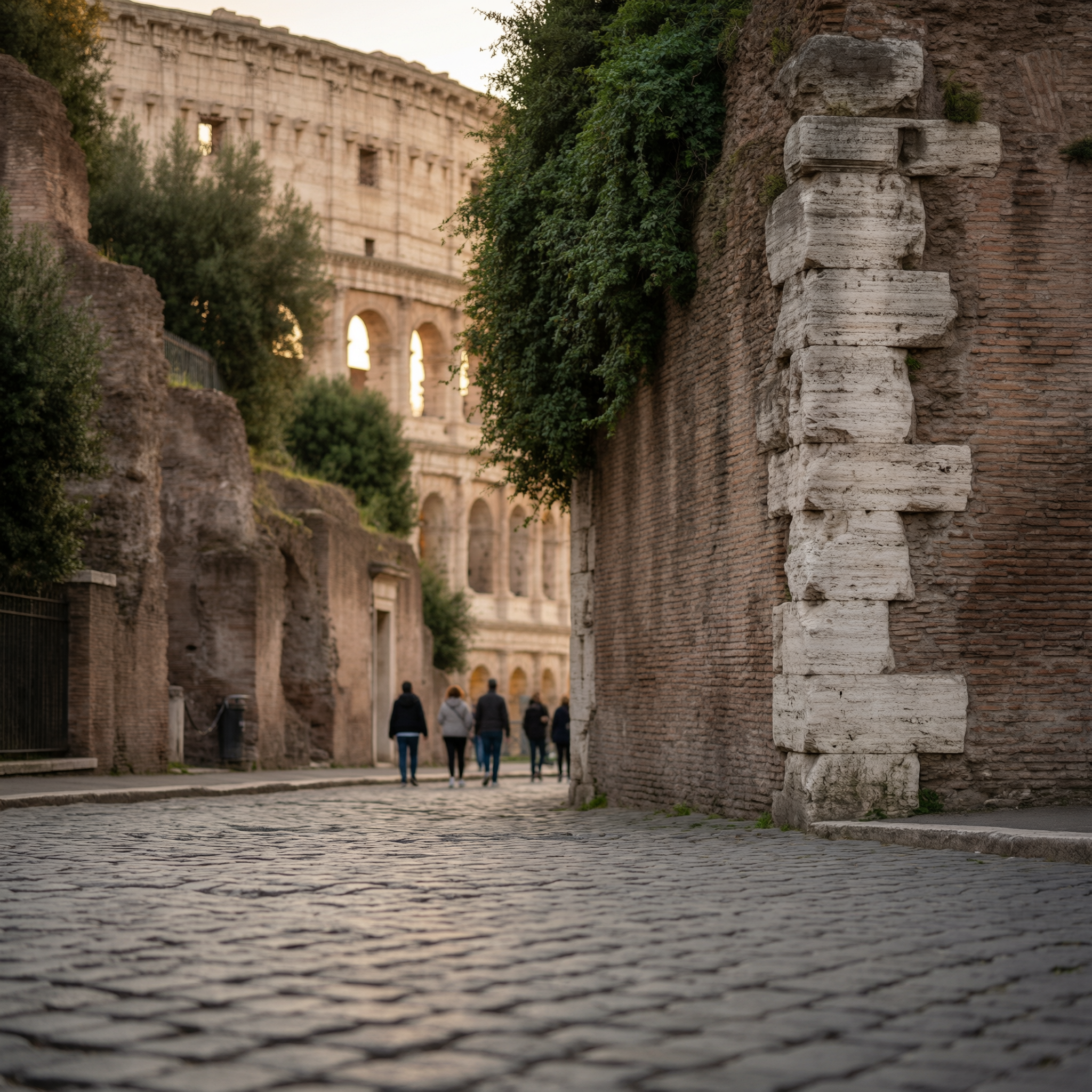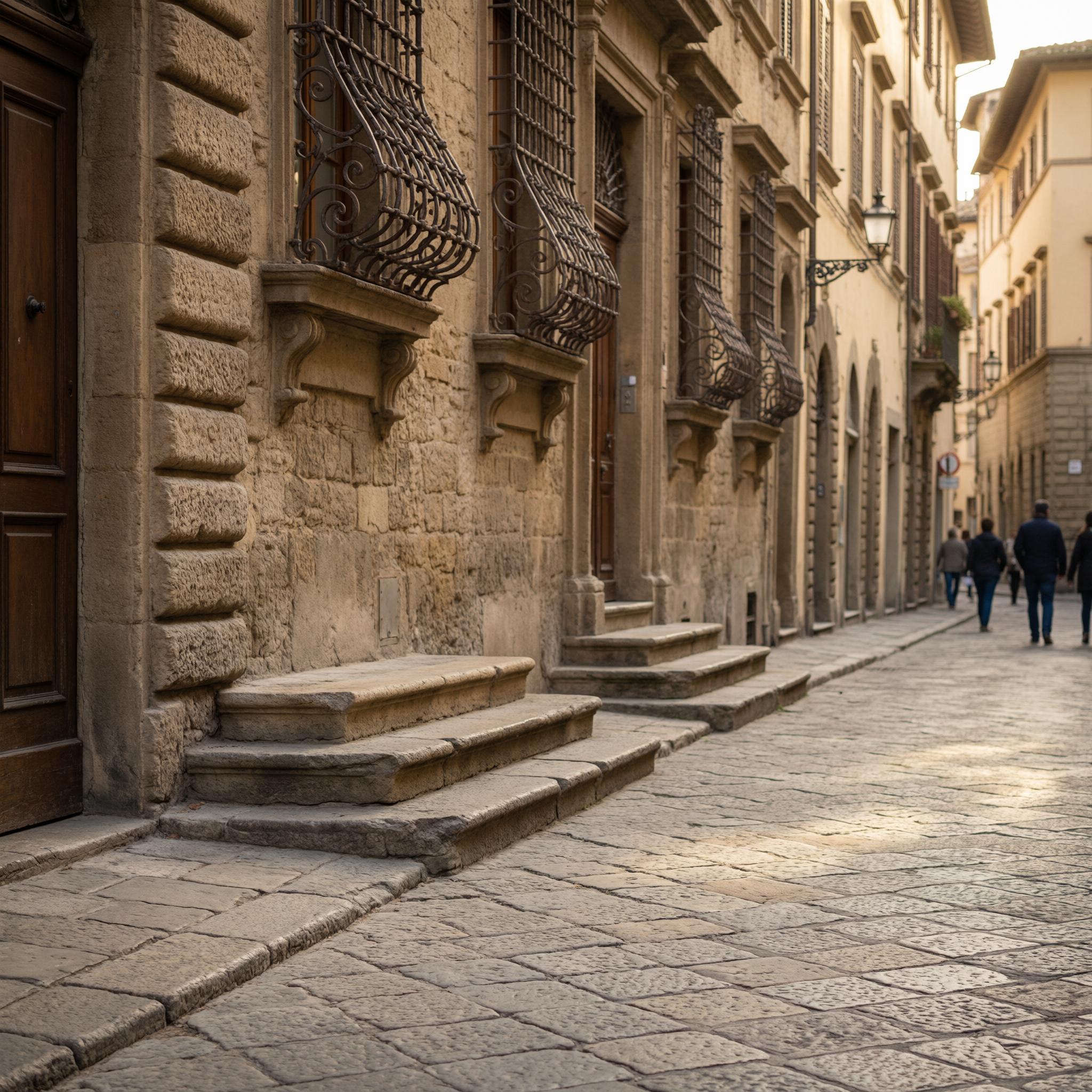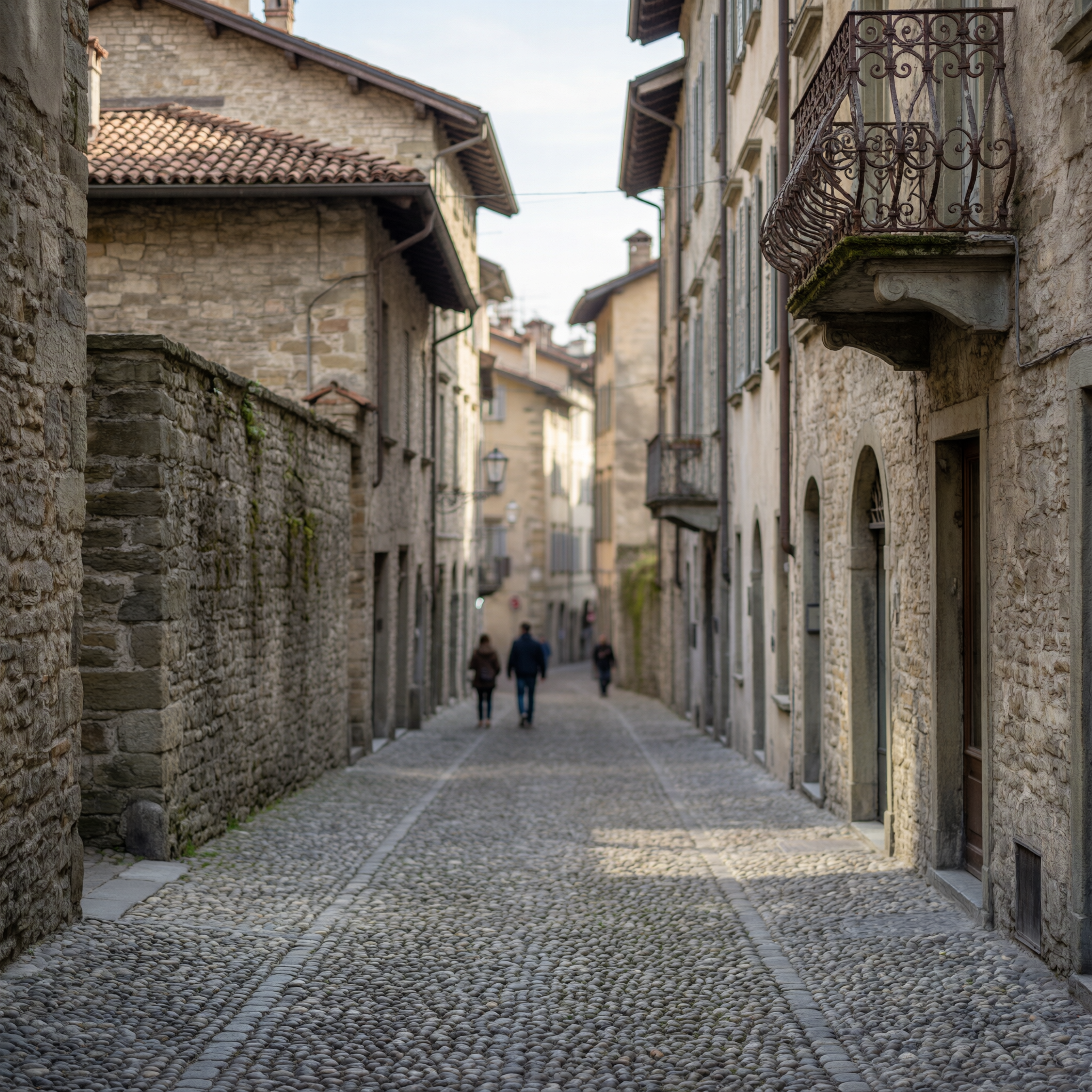
Strolling through Bergamo's Old Town, I felt history underfoot with every step on the cobblestones. The medieval buildings, especially the Palazzo della Ragione, seemed alive with stories from the past. In front of the Basilica di Santa Maria Maggiore, the Baroque and Renaissance art pulled me in and made me stop. Climbing the Venetian Walls, I saw the Alps in the distance, framed by the valleys below, a sight that genuinely stopped me in my tracks. Each turn revealed another piece of history.
Before you go: Visitor details can change. Check Bergamo: discovering the City of a Thousand – Italia.it and Visit Bergamo Alta & Bassa: Things to do – Italia.it before you go.
History of Bergamo's Old Town
In the heart of Lombardy, Bergamo's Old Town, known as Città Alta, is a hilltop district whose roots stretch back to Roman times. Narrow cobblestone streets wind between medieval and Renaissance buildings, and the whole quarter carries a palpable sense of accumulated centuries. This Northern Italian enclave rewards slow exploration, where the architecture alone tells a long and layered story.
My visit began at the Palazzo della Ragione, one of Italy's oldest municipal buildings. Its grand arches and medieval stonework hint at the town's long civic history. Standing there, I could almost hear the sounds of the markets and public gatherings that once filled the space.
Just a short walk away, the Basilica di Santa Maria Maggiore stood invitingly. Behind its Romanesque exterior lies a collection of Baroque and Renaissance art. Inside, the intricate tapestries and frescoes held my attention, each piece carrying its own story of faith and craftsmanship. The quiet of the basilica invited a moment of reflection on the lives of those who built and worshipped there.
Every corner of Bergamo's Old Town offers a piece of Northern Italy's past, making the whole district feel like a living museum worth getting genuinely lost in.
Venetian Walls and Fortifications
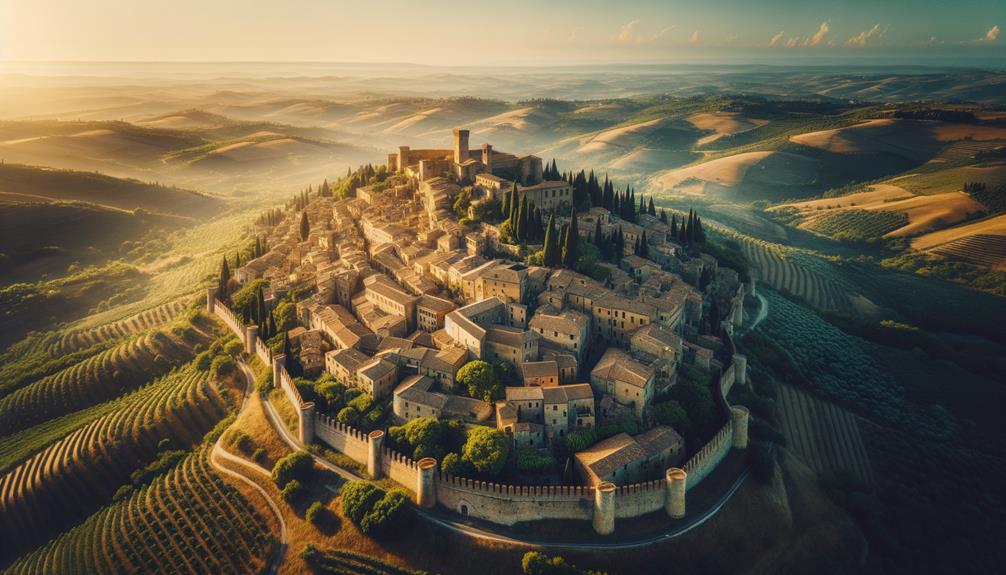
When I arrived at the Venetian Walls that encircle Bergamo's Old Town, their scale and careful construction immediately caught my eye. These 16th-century walls, built by the Venetian Republic, stretch over six kilometres and stand as a testament to both architectural skill and historical endurance. My walking tour began at Porta San Giacomo, one of the four main gates, where the stone façade set the tone for everything that followed.
Strolling along the top of the walls, I felt a genuine connection to the past. The views across the surrounding valleys and toward the distant Alps were striking, providing a sweeping backdrop to the city below. Each stretch of the walk brought another detail into focus, old battlements, cannon emplacements, and long sightlines that made the walls' defensive purpose easy to imagine.
I found myself thinking about how thoroughly the walls' purpose had shifted over the centuries. Originally built for defence, they now invite visitors to walk their length and take in the landscape. That tension between enclosure and open prospect gives the whole circuit an unexpected reflective quality.
Exploring Piazza Vecchia
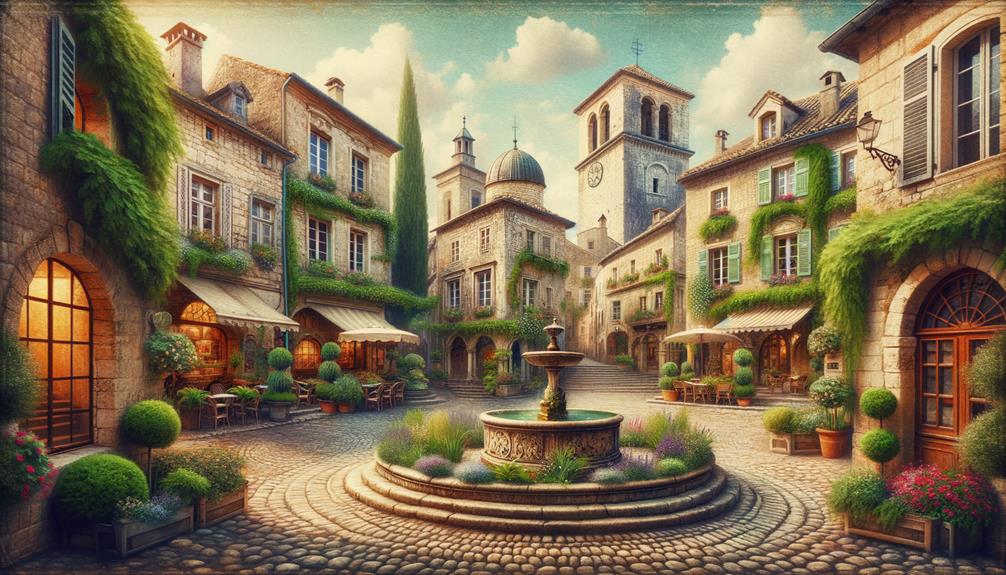
When I stepped into Piazza Vecchia, the mix of medieval and Renaissance architecture around me was immediately arresting. Each building carried traces of the markets, ceremonies, and civic life that shaped Bergamo's history. The Torre Civica promised wide views, while the Fontana Contarini and surrounding stonework gave the square a composed, unhurried character.
Architectural Marvels to See
Piazza Vecchia reads like a concentrated survey of medieval and Renaissance building, where the structures around its edges have accumulated centuries of civic and religious significance.
- Palazzo della Ragione: This 12th-century palace, considered one of Italy's oldest municipal buildings, incorporates a clock tower and frescoed ceilings that give a sense of the civic ambition behind its construction.
- Torre Civica: Standing at 52 metres, this bell tower offers sweeping views of Bergamo. It features a historic astronomical clock dating to the 15th century, a fine example of the period's mechanical ingenuity.
- Basilica di Santa Maria Maggiore: Immediately to the right of the square, this basilica's Romanesque façade, rose windows, and detailed stonework draw the eye and reward close attention.
- Grand Arches and Facades: The layering of medieval and Renaissance styles across the square's buildings reflects the different periods of Bergamo's civic and cultural development.
Every corner of Piazza Vecchia repays a slow circuit, with details that only become apparent once you stop moving.
Historical Significance Unveiled
As I wandered through Piazza Vecchia, the historical heart of Bergamo's Old Town, the square's long civic role became tangible. The Palazzo della Ragione, with its sturdy arches, has anchored justice and governance here since the 12th century. Standing among the cobblestones, I could picture the proclamations and market activity that once animated the space.
Across the square, the Fontana Contarini catches the light, a reminder of 18th-century Venetian influence on the city. The towering Torre Civica looms overhead; its Campanone bell once marked the curfew for the upper town, and climbing its steps still rewards visitors with a panoramic view of the Lombard landscape.
Piazza Vecchia is more than a location; it is a record of resilience, governance, and culture that kept drawing me back to look more carefully at what I had initially walked past.
Basilica Di Santa Maria Maggiore
Walking into the Basilica di Santa Maria Maggiore, I was struck by the Romanesque architecture and the density of decoration that had accumulated over centuries. The basilica's quiet interior encouraged a slower pace and a closer look at the craftsmanship on every surface.
As I moved through the space, several features stood out:
- Ceiling Frescoes: Biblical scenes rendered with careful detail and colour that has held up across the centuries.
- Wooden Choir Stalls: Intricately carved stalls that speak to a period when skilled woodworking was central to ecclesiastical interiors.
- Tapestries: Large wall hangings depicting scenes of faith and devotion, showcasing the work of accomplished weavers.
- Marble Statues: Placed throughout the basilica, these figures have stood witness to centuries of worship.
Every part of the basilica prompted reflection, connecting me with the many people who had stood in the same spots and looked at the same things. It is a place where the distance between past and present narrows noticeably.
Torre Civica and Its Views
Standing at the base of Torre Civica, I felt the age of its stones before I had climbed a single step. The 263-step ascent was steady work, but the promise of panoramic views kept me moving. When I reached the top, Bergamo and the Alps spread out below me in a way that made the effort feel entirely worthwhile.
Historical Significance Explored
Climbing the Torre Civica is one of the more direct ways to take in Bergamo's long history, because the tower itself is part of that history. As I made my way up, I thought about how the structure, originating in the medieval period and retaining its 12th-century form, had presided over the square below through every chapter of the city's development.
At the top, I marveled at the Campanone, a massive bell that has served as a sentinel marking time for generations. The tower’s historic clock, a remarkable survivor from the medieval period, still ticks reliably, a testament to its makers’ skill. From this vantage point, I could see the heart of Bergamo’s upper town, a living museum that includes:
- Piazza Vecchia: The central square, busy with visitors and locals alike.
- Basilica di Santa Maria Maggiore: A landmark of religious architecture directly below.
- Palazzo della Ragione: The historic seat of local government, its arches visible from above.
- Surrounding Mountains: The Alpine backdrop that has defined the town's setting for centuries.
Climbing the Torre Civica was not simply about reaching the top; it was a way of understanding how the different parts of Bergamo relate to one another.
Panoramic Views Experience
From the top of Torre Civica, the view across Bergamo's historic centre and toward the distant Alps was genuinely arresting. Those 263 steps were worth every one. Below, Piazza Vecchia resolved into a precise arrangement of rooftops and courtyards, with the Basilica di Santa Maria Maggiore and Bergamo Cathedral anchoring the scene.
The tower's medieval stonework spoke to the city's long history, and each course of brick seemed to carry the weight of that past. I felt a clear connection to the generations who had stood at this same height and looked out over the same landscape.
The Alps framed the skyline, their peaks adding a sharp contrast to the warm stone of the town below. The city spread from its ancient streets to its modern outskirts in a way that made the continuity between old and new feel natural rather than jarring. Standing there, I was glad I had made the climb.
Hidden Gems and Narrow Streets
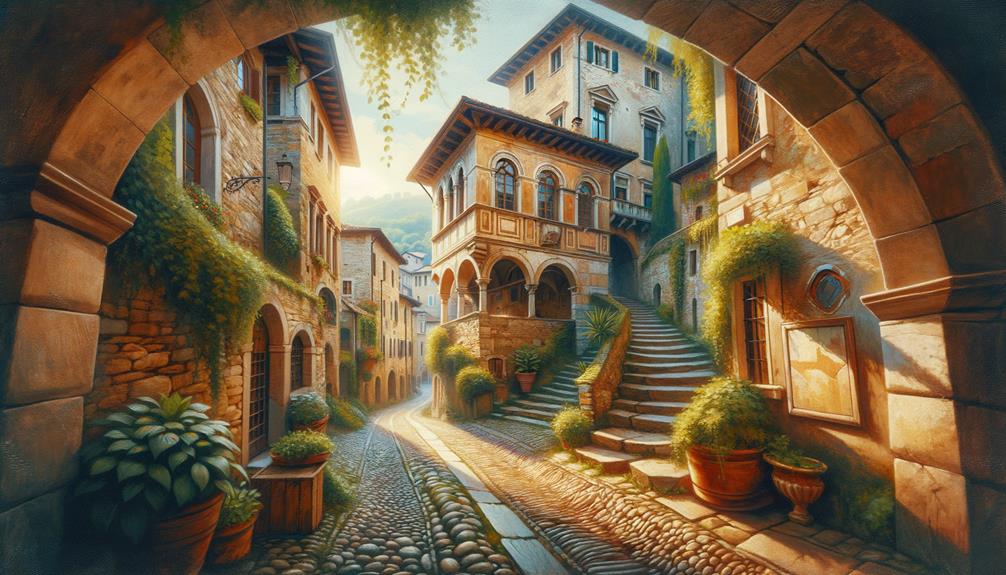
Strolling through the narrow, cobblestone streets of Bergamo's Città Alta, I felt the distance between the present and the medieval past collapse. Every corner seemed to hold something worth pausing for. The old town, with its Venetian walls and layered medieval fabric, consistently offered more than I expected.
As I wandered through these old pathways, I came across:
- The Basilica di Santa Maria Maggiore: Its detailed façade and rich interior are central to Bergamo's cultural identity.
- Piazza Vecchia: The main square, where Renaissance and medieval architecture sit side by side and each building carries its own history.
- Porta San Giacomo: One of the principal gates of the 16th-century Venetian Walls, a well-preserved example of the Republic's military engineering.
- Via Gombito: A lively street lined with shops and cafes, well suited to a slow walk and a sense of everyday life in the upper town.
The winding streets of Città Alta reward unhurried exploration. The most interesting discoveries tend to come when you stop following a fixed route and simply see where the lanes lead.
Cultural Events and Festivals
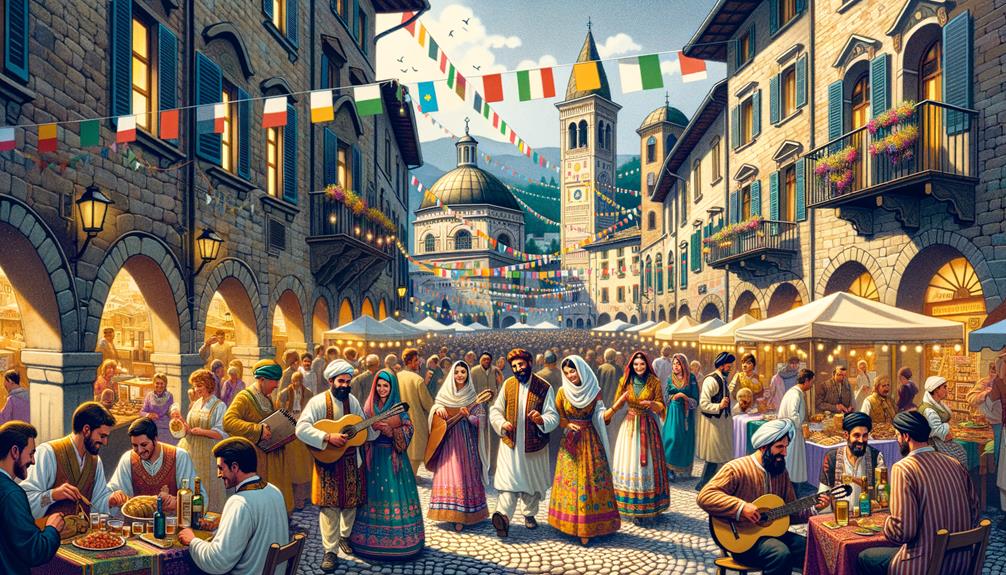
As I wandered through the historic streets of Bergamo, I found myself drawn into the town's calendar of cultural events and festivals, each one adding a different layer to the experience of the old city.
One of my favourite experiences was the annual Bergamo Film Meeting, an established film event that draws cinema enthusiasts from across Europe. The setting of Piazza Vecchia gave screenings an atmosphere that no purpose-built venue could replicate.
Another highlight was the Festa di Sant’Alessandro, an annual celebration honoring the city’s patron saint. The streets came alive with processions, music, and dance, weaving a lively mix of local culture. I joined in the festivities, feeling the community’s spirit through every drumbeat and song, a reminder of how deeply tradition runs through life in Bergamo’s Città Alta.
The festival honouring the works of local composer Gaetano Donizetti was a treat for the ears. The historic Teatro Donizetti buzzed with performances that brought the composer's operas back to the city where he was born, pulling me into a world where past and present sat comfortably together.
In Bergamo, every festival is a celebration of life's rich and diverse mix.
Frequently Asked Questions
What Is Special in Bergamo?
Bergamo is a city with genuine depth. It is nicknamed Città dei Mille for its role in Italy's unification, and the medieval Città Alta, with its Venetian Walls and hilltop piazzas, gives that history a physical form. Walking through it, I found the past consistently close to the surface.
Why Visit Bergamo, Italy?
I keep returning to Bergamo because it balances medieval history with an unpretentious everyday character. The cobblestone streets, the food, and the long views from the upper town all contribute to a place that feels worth taking time over rather than rushing through.
How Much Time to Spend in Bergamo?
I'd suggest at least two days. One day covers the main sites of Città Alta comfortably, but a second day allows for slower exploration, the walls, the side streets, a longer lunch, and a better sense of how the upper and lower towns relate to each other.