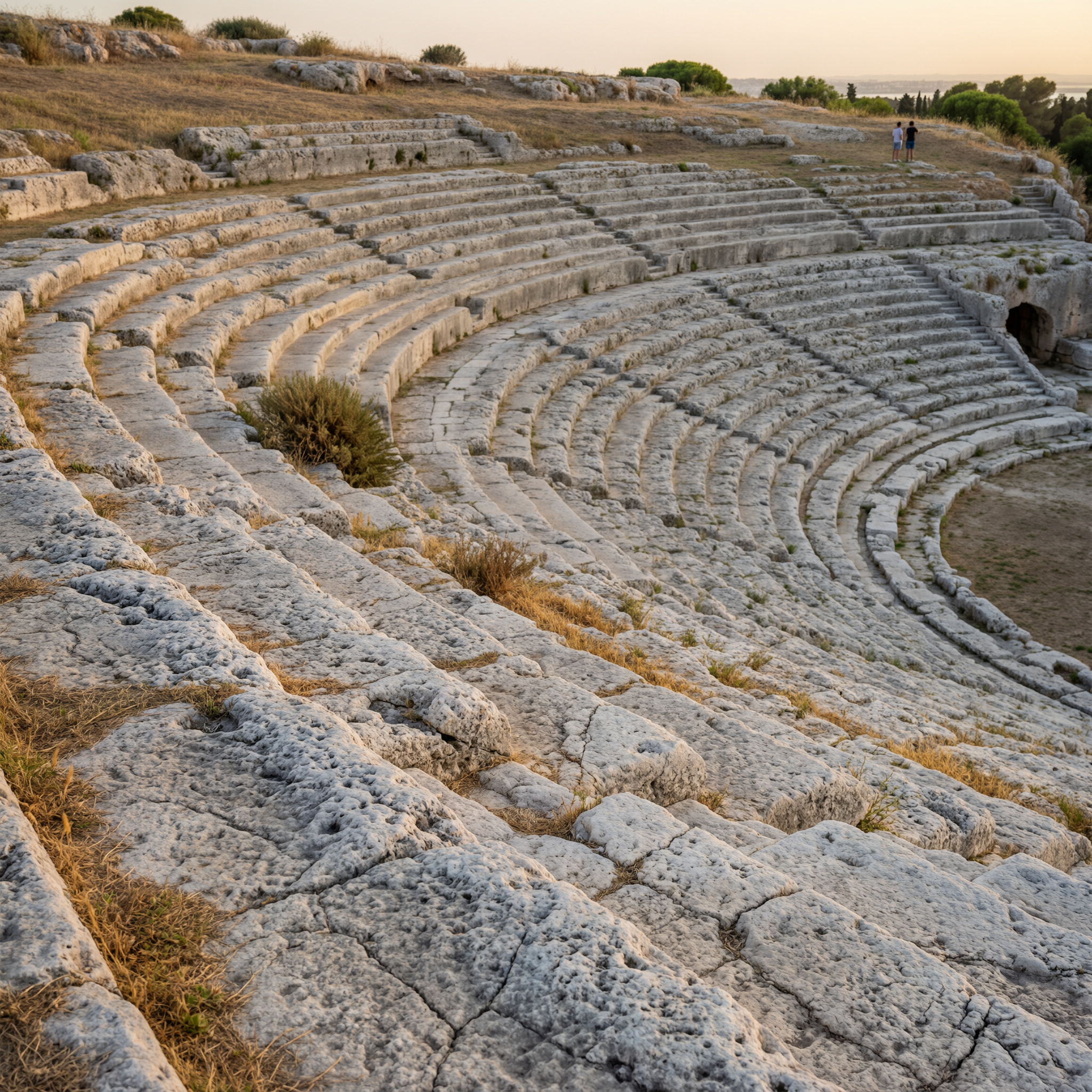
On my first trip to Sicily, I visited the Siracusa Greek Theatre, a UNESCO World Heritage Site whose stone seats, carved directly into the hillside, stopped me in my tracks. The sheer scale of the place was unexpected, row upon row of ancient rock rising above the stage, with the city and the sea visible beyond. Standing there, I couldn’t help but think about the centuries of history compressed into those stones, from classical Greek dramas to the performances that still take place here today.
Before you go: Visitor details can change. Check 61st INDA Classical Performances – Greek Theatre of Syracuse May 2026 and Siracusa 2026 Greek Theatre Festival before you go.
History of Siracusa Greek Theatre
The Siracusa Greek Theatre, built in the 5th century BC, is a remarkable example of ancient Greek architectural ambition. As I walked through its remnants, I was struck by the weight of what had happened here. Situated on Temenite Hill within the Neapolis Archaeological Park, the theatre was far more than a performance space, it was a communal gathering place at the heart of civic life. From the upper tiers, the city of Siracusa and a sliver of sea are still visible, a view that must have framed every performance for its ancient audience.
I thought about the scenes of ancient Greek society that had played out here, the performances, the public debates, the powerful speeches that once echoed across the stone. This wasn’t a space reserved for the elite; it was a democratic gathering place where citizens came to watch dramas that wrestled with human freedom, fate, and morality. The stones seemed to carry those stories, linking me to a culture that placed art and intellect at the center of public life.
Standing there, I felt a genuine appreciation for the cultural legacy of the ancient Greeks. The Siracusa Greek Theatre isn’t just an archaeological site, it’s an enduring symbol of human creativity and the idea that a community is shaped by the stories it tells itself.
Architecture and Design
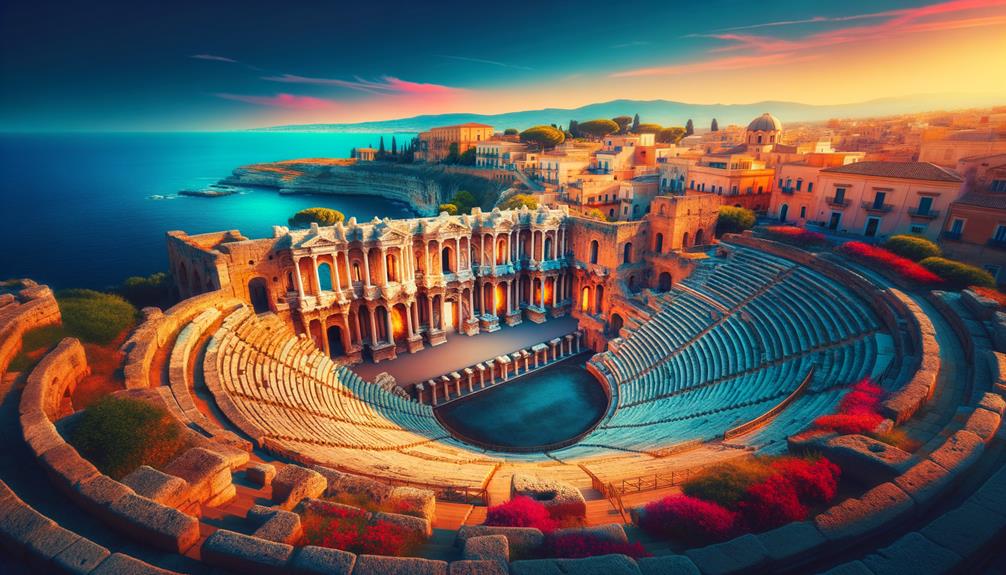
As I wandered through the ruins, I found myself studying the structure as much as absorbing the atmosphere. The teatro greco di Siracusa is a masterclass in marrying function with setting. The semi-circular seating, carved directly into the natural slope of Temenite Hill, forms an organic amphitheatre that channels sound with quiet precision.
The design is both practical and considered. The large orchestra at the centre was laid out to host elaborate performances, with sightlines calculated so that every seat offered a clear view of the stage. The tiered seating ensured that the experience was broadly shared, regardless of where in the cavea you sat.
The seating area, known as the cavea, is hewn from the rock itself, a testament to the precision of Greek stonework. The skene, the building behind the stage, served as a dressing room and storage area. The diazoma, a horizontal walkway dividing the seating tiers, allowed audiences to move freely between sections. The proscenium, the front portion of the stage, was both decorative and functional.
Thinking about the teatro greco di Siracusa, I felt genuine admiration for the ancient Greeks’ ability to create spaces that have outlasted almost everything built since. History, art, and architecture converge here in a way that feels entirely unforced.
Key Performances and Events
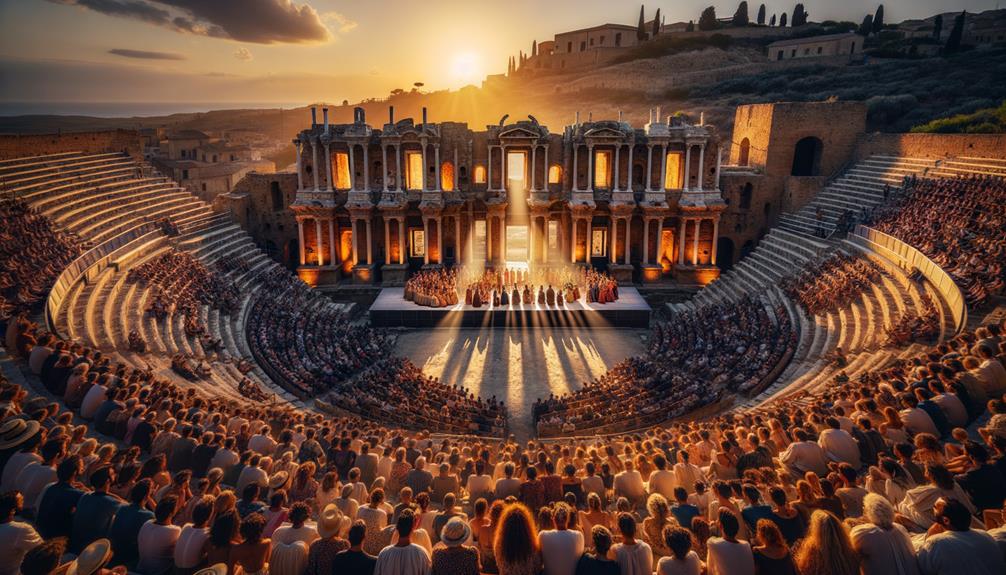
For centuries, the Siracusa Greek Theatre has hosted performances that have left their mark on both ancient and modern culture. Walking through its stone seats, you sense the history layered into the place, Greek tragedies and comedies once held audiences rapt here, and the tradition continues. The scale of the Syracuse Greek Theatre is striking, and it is remarkable that it still functions as a living stage.
One of the most memorable moments for me was watching a modern staging of Aeschylus’ The Persians. The quality of the acting and the theatre’s natural acoustics made the ancient text feel immediate. The theatre remains an active cultural venue, and the annual INDA Classical Performances, running each year through May and June, are the centrepiece of its modern programme.
Nearby, the Ear of Dionysus adds another layer of intrigue. This limestone cave is renowned for its unusual acoustics, and legend has it that Dionysius the Tyrant used it to eavesdrop on prisoners, though historians treat the story as folklore rather than fact. The blend of documented history and local legend around the Syracuse Greek Theatre gives every visit an extra dimension.
Tour Options and Packages

Reflecting on the history and performances at the Siracusa Greek Theatre, it struck me that the right tour can add real depth to a visit. Located within the Neapolis Archaeological Park, the site rewards those who arrive with some context, and several operators offer guided options to provide it.
Private guided tours of roughly 90 minutes are available for small groups, typically covering the theatre alongside other park highlights such as the Altar of Hieron and the Ear of Dionysus cave. Morning and afternoon departures are usually offered. Check current pricing and availability directly with tour operators before booking.
For those wanting to cover more ground, day tours from Taormina and Catania combine Syracuse with stops at Ortigia and Noto, blending archaeology with baroque architecture. Private day trips with a dedicated driver are another option, allowing a more tailored itinerary across Ortigia and the Neapolis.
Some operators include park entry as part of a guided package, which can simplify logistics on busy days. Verify what is included and confirm current pricing before booking, as availability and costs vary by season.
- Private guided 90-minute tour
- Day tours from Taormina and Catania
- Private day trips with a personal driver
- Guided entry packages
These options suit a range of interests and can offer a richer understanding of this UNESCO World Heritage site.
Ticket Prices and Discounts
General admission to the Neapolis Archaeological Park, which includes the Greek Theatre, is approximately €10–€12 for adults, though prices can vary. Discounts may apply for students, EU citizens, and residents, check at the park entrance or on the official site before visiting, as the details are subject to change.
For the annual INDA Classical Performances, tickets are sold separately through INDA’s official booking channels, with pricing varying by sector and performance. Resident and student concessions may be available; confirm current terms directly with INDA before purchasing.
If you plan to attend more than one performance during the festival season, multi-show subscriptions are sometimes offered and can represent better value. Check the INDA website for the current season’s options.
Whether you’re visiting for the archaeology alone or combining it with a performance, it’s worth confirming ticket details in advance, particularly during the May–June festival period, when demand is highest.
Best Time to Visit
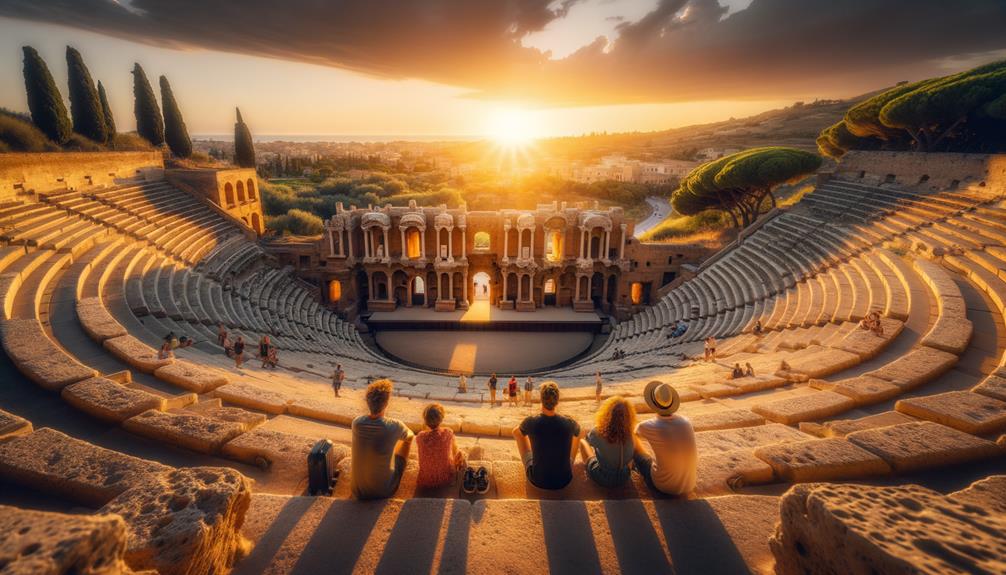
The best time to visit the Siracusa Greek Theatre depends on what you’re after. Weather, crowd levels, and the performance calendar all play a role, and each season offers a different kind of experience.
Seasonal Weather Conditions
Spring is a particularly pleasant time to visit the Siracusa Greek Theatre. Temperatures are mild, the surrounding landscape is green, and the site feels unhurried. For those interested in the classical performances, late spring also coincides with the opening of the annual INDA festival, which runs through May and June.
Walking through the theatre on a clear spring morning, with a light breeze off the hill and the stone still cool underfoot, is a genuinely good way to take in the site. The longer days also give you more time to explore the wider Neapolis park without feeling rushed.
- Comfortable temperatures: Well-suited to leisurely exploration.
- Flowers in bloom: Adding colour to the ancient stonework.
- Longer days: More time to take in the site and its surroundings.
- Smaller crowds: A quieter, more reflective experience than peak summer.
Thinking back on my visit, the weather genuinely shaped how I experienced the Siracusa Greek Theatre. The combination of open sky, ancient stone, and a manageable number of other visitors made the place feel accessible in a way that a crowded midsummer afternoon might not.
Peak Tourist Periods
May and June are the busiest months for culturally motivated visitors, drawn by the INDA Classical Performances, the annual festival of ancient Greek drama that has been staged at the theatre for decades. Temperatures are warm but manageable, and evening shows, which begin at 19:00 in May and 19:30 in June, benefit from the cooler air after sunset. July and August bring the highest tourist numbers overall, though the INDA festival concludes by late June, so no classical performances are scheduled during high summer.
Visiting early in the morning is the most reliable way to avoid both crowds and the midday heat. Long queues can form during peak periods, so arriving close to opening time makes the visit considerably more comfortable. It’s also worth checking the calendar for Italian public holidays, which can bring larger-than-usual crowds.
For classical performances, May and June are the cultural highlight of the year at the theatre. If attending a show is part of your plan, book tickets well in advance through INDA’s official channels, popular productions sell out quickly.
Special Events Schedule
The Siracusa Greek Theatre’s event calendar centres on classical performances, with the annual INDA festival as its main draw. Spring and early summer, May through June, are the prime months for those wanting to see ancient dramas and comedies staged in their original setting. Check the official INDA programme for the current season’s schedule before planning your trip.
When I visited, the combination of the ancient setting and a live performance was genuinely affecting. The ruins of Siracusa felt especially present during those evening shows, when the stone caught the last of the light.
- INDA Classical Performances: Running through May and June, this festival stages classical Greek plays in the original theatre.
- Historical Reenactments: Occasional events bring key moments from Siracusa’s past to life.
- Cultural Festivals: Local traditions, food, and music feature at various points in the year.
- Special Concerts: Contemporary musicians occasionally perform in this historically resonant setting.
These events deepen the theatre experience and offer a more direct connection to the island’s heritage. If you can align your visit with the INDA festival, it’s worth the effort to plan around it.
Getting There
Getting to the Siracusa Greek Theatre is straightforward from the city centre. A taxi or bus will get you there in 10–15 minutes, while the walk from the centre takes around 20 minutes and passes through some pleasant parts of the city. If you’re flying in, Catania-Fontanarossa Airport has regular connections to Siracusa by train and bus.
Transportation Options Overview
The theatre sits within the Neapolis Archaeological Park and is easy to reach by several means, whether you prefer to walk, use public transport, or take a taxi.
If you enjoy walking, the theatre is about a 20-minute stroll from the Siracusa city centre, a pleasant route that lets you get a feel for the city before arriving at the site.
For public transport, a bus from the city centre reaches the park in roughly 10–15 minutes. Services run frequently, making this a practical and inexpensive option.
Taxis are readily available across Siracusa. A 10–15 minute ride to the theatre entrance is a convenient choice if you’re short on time or prefer door-to-door travel.
If you’re arriving by train, there is no direct service to the theatre. Alight at Siracusa railway station and continue by bus or taxi to complete the journey.
Here’s a quick breakdown:
- Walking: 20 minutes from Siracusa city centre
- Bus: 10–15 minutes from city centre to Neapolis Archaeological Park
- Taxi: 10–15 minutes from city centre
- Train: Alight at Siracusa station, then continue by bus or taxi
Best Travel Times
Early morning is the best time to arrive at the Siracusa Greek Theatre. The site is quieter, the light is softer, and the heat has not yet built up, a real advantage in summer, when temperatures climb sharply by midday. The park typically opens at 9:00, though hours vary by season; check the official site before visiting to confirm current times.
The site is open year-round, with the most settled weather running from spring through early autumn. May and June stand out for visitors interested in the classical performances, while those coming purely for the archaeology will find the shoulder months of April and September offer a good balance of weather and manageable crowds.
Here’s a quick reference to help plan your trip:
| Factor | Details |
|---|---|
| Best Months to Visit | April to October |
| Theatre Hours | 9:00 AM to 6:00 PM |
| Nearest Airport | Catania-Fontanarossa |
| Travel Time from City | 10-15 minutes by bus or taxi |
Siracusa rewards visitors in every season, but an early start consistently makes for a better experience, quieter, cooler, and with the stone catching the morning light in a way that the midday glare simply doesn’t match.
Nearby Attractions
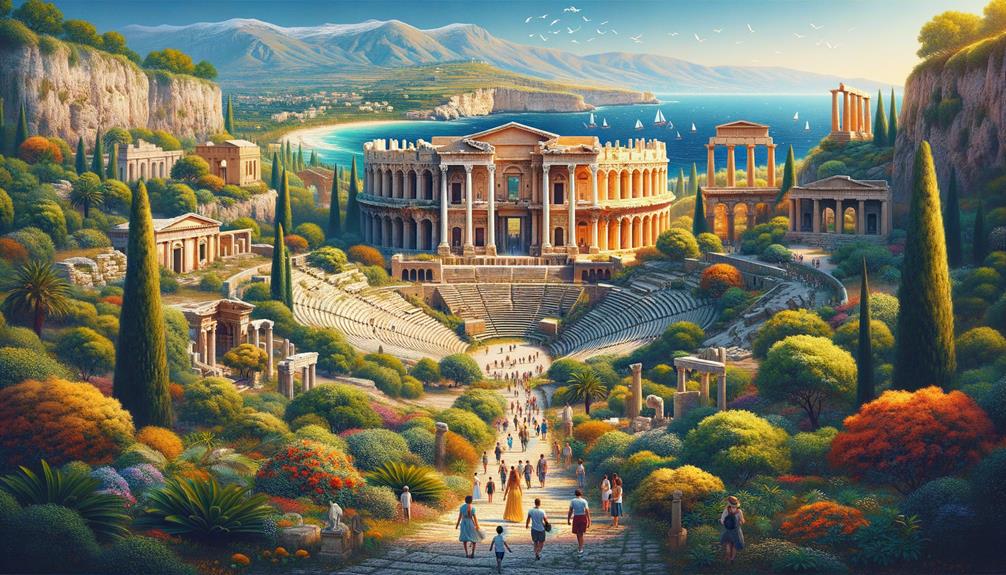
The area around the Siracusa Greek Theatre is dense with history. Here are some nearby places that left a strong impression on me:
- Ortigia Island: A short distance from the theatre, this island holds the old heart of Siracusa, narrow streets, baroque facades, and a working waterfront. I spent an afternoon wandering its lanes, stopping at the market and watching the fishing boats come in.
- Noto: A short drive from Siracusa, Noto is one of Sicily’s finest baroque towns. Walking its main corso, I was struck by the consistency of the golden limestone architecture, the whole town was rebuilt after a 1693 earthquake, and the result is unusually coherent.
- Neapolis Archaeological Park: The theatre sits within this larger park, which also contains the Roman Amphitheatre, the Altar of Hieron, and the Ear of Dionysus, each worth time on its own.
- Catacombs of San Giovanni: Beneath the city, these early Christian burial sites offer a peaceful and solemn experience. The quiet underground passages made a strong impression on me, and I found the atmosphere unlike anything else in Syracuse.
Each of these added something distinct to my visit, and together they made Siracusa feel like a place that repays more than a single day.
Visitor Tips
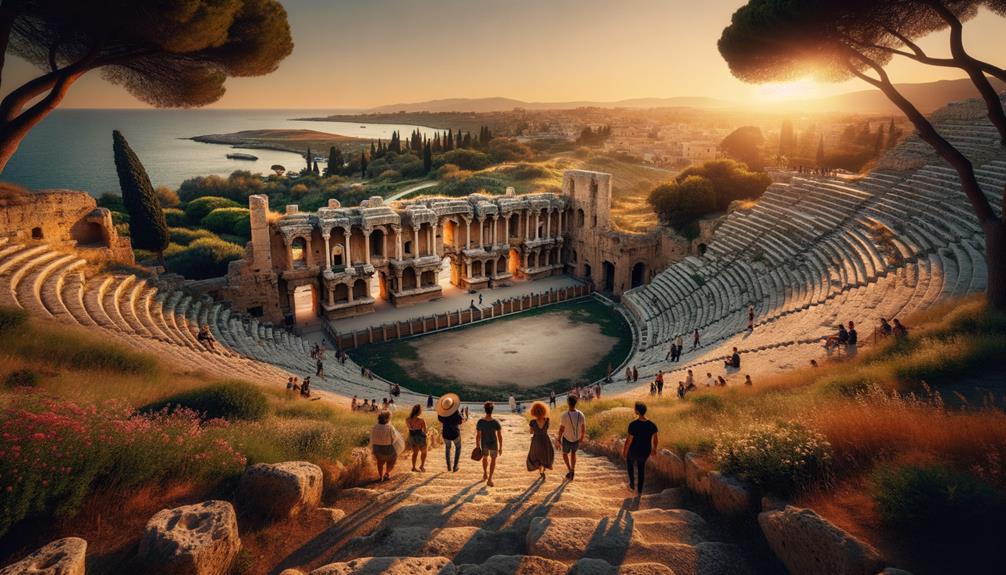
A few practical notes to help you get the most from a visit to the Siracusa Greek Theatre, a UNESCO World Heritage site within the Neapolis Archaeological Park.
Aim to arrive early morning or in the late afternoon. Both windows avoid the worst of the midday heat and tend to be less crowded, and the lower sun makes for better photographs of the stone.
Wear sturdy, comfortable shoes. The ancient paving and stone steps are uneven in places, and you’ll want to move around freely without worrying about your footing.
Bring water and a hat. The site is largely exposed, and the Sicilian sun is intense from late spring through early autumn.
A local guide can make a real difference. The site’s layers of history, Greek, Roman, and later, are easier to read with someone who knows the context, and a good guide will point out details that are easy to walk past.
Here’s a quick reference table to help you prepare:
| Tip | Reason |
|---|---|
| Visit early/late | Avoid heat and crowds |
| Comfortable shoes | Uneven ancient stones |
| Bring water and a hat | Intense Sicilian sun |
| Hire a local guide | Gain deeper historical insights |
Looking back on my visit, following these basics, arriving early, dressing sensibly, and taking time rather than rushing, made the Siracusa Greek Theatre one of the most satisfying sites I’ve visited in Sicily.
Unique Experiences
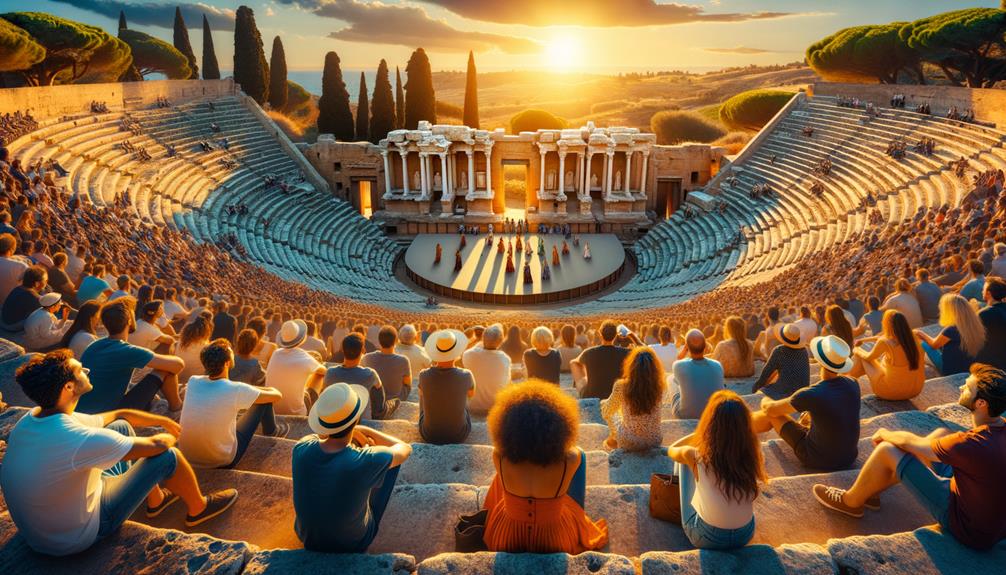
Beyond a standard walk-through, there are several ways to engage more deeply with the Siracusa Greek Theatre. Whether you’re drawn by the archaeology, the performances, or simply the setting, a little planning opens up options that a casual visit might miss.
A private guided tour offers a more focused experience. With small group sizes, you can take your time at the most interesting points, ask questions freely, and get a clearer sense of how the theatre functioned in its original context. Verify current availability and pricing with operators directly.
For a broader day out, tours from Taormina or Catania combine the Greek Theatre with the Neapolis Archaeological Park, the island of Ortigia, and the baroque town of Noto, a useful way to cover a lot of ground if your time in Sicily is limited.
Here are some options worth considering:
- Private guided tour: Focused, unhurried, and tailored to your interests.
- Day trips from Taormina and Catania: A wider cultural sweep across eastern Sicily.
- Private walking tours: An intimate look at the theatre and its immediate surroundings.
- Group tours: A sociable option for those who enjoy sharing the experience.
Each approach offers a different way into the history of Siracusa, choose the one that fits how you like to travel.
Frequently Asked Questions
What Is the Teatro Greco in Siracusa?
The Teatro Greco in Siracusa is a 5th-century BC Greek theatre carved into the rock of Temenite Hill. One of the best-preserved ancient theatres in the world, it sits within the Neapolis Archaeological Park and forms part of the UNESCO World Heritage Site ‘Syracuse and the Rocky Necropolis of Pantalica.’ It continues to host classical performances each spring.
What Should I Wear to the Greek Theatre?
Light, comfortable clothing works best. The site is largely open to the sun, so a hat and sunglasses are worth packing, and breathable fabrics help in warmer months. Wear shoes you’re happy to walk in on uneven stone, the ancient paving demands something more practical than sandals or dress shoes.
What Is the Most Beautiful Greek Theatre?
Beauty is subjective, but for me the Siracusa Greek Theatre is hard to beat. The way the cavea is cut into the hillside, with the city and sea visible beyond the stage, gives it a setting that few ancient sites can match. Its continued use as a performance venue only adds to the effect.
Are There Any Greek Theatres Still Standing?
Yes, a number of ancient Greek theatres survive in good condition. I’ve visited Epidaurus and Delphi in Greece, both of which are extraordinary in their own right. Siracusa, Segesta, and Taormina in Sicily also preserve impressive examples. Each site has its own character, shaped by its landscape and history.