When I first visited the Arezzo Antique Market, I quickly realized that preparation is key to enjoying the experience. Parking near the historic center can be complicated—more on that below—so I made sure to sort that out in advance. Navigating the hilly streets required comfortable shoes with good arch support. I found that doing a little research on market prices beforehand helped me avoid overpaying, and polite bargaining often led to the best deals. My cross-body bag was a lifesaver, keeping my hands free, and layering my clothes helped me stay comfortable as the temperature shifted through the day. These small preparations made my visit considerably smoother.
Before you go: Visitor details can change. Check Fiera Antiquaria di Arezzo – 2026 Calendar and Information and Fiera Antiquaria di Arezzo – Official Website before you go.
Market Schedule and Timing
The best time to visit the Arezzo Antique Market is straightforward: the first Sunday of every month, along with the Saturday immediately before it. The Fiera Antiquaria di Arezzo turns the historic Piazza Grande into a treasure hunter’s paradise, and it runs year-round.
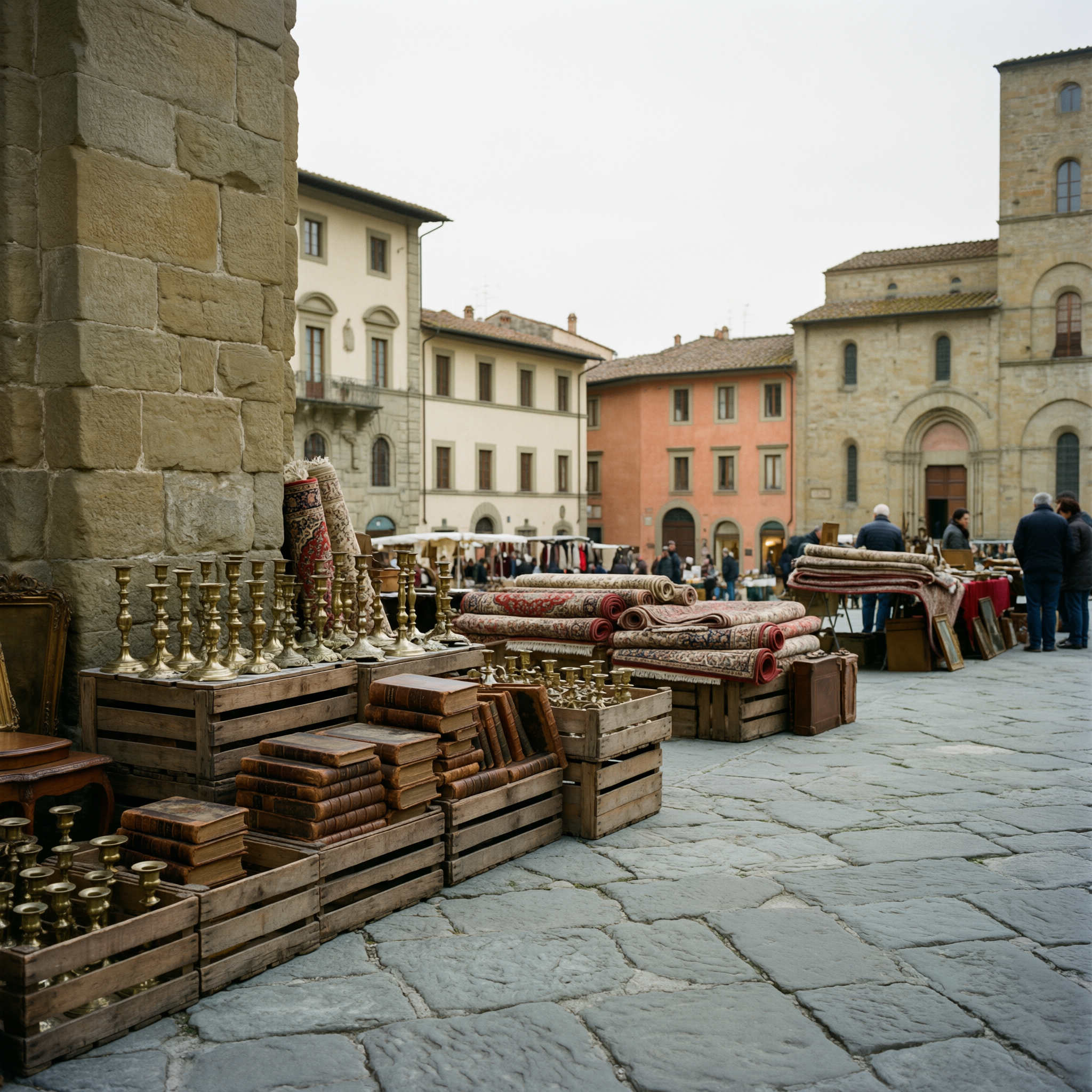
Strolling through the market on that first Sunday, you can almost feel history coming alive. Vendors from across Italy gather here, offering everything from Renaissance furniture to vintage jewelry. The air carries the scent of old books and polished wood, and the sounds of lively bargaining fill the square.
There is something freeing about getting lost in this mix of history and commerce. Each stall has its own story. Whether you are an avid collector or simply curious, the Arezzo Antique Market offers a genuine glimpse into Italy’s cultural past.
Location and Layout
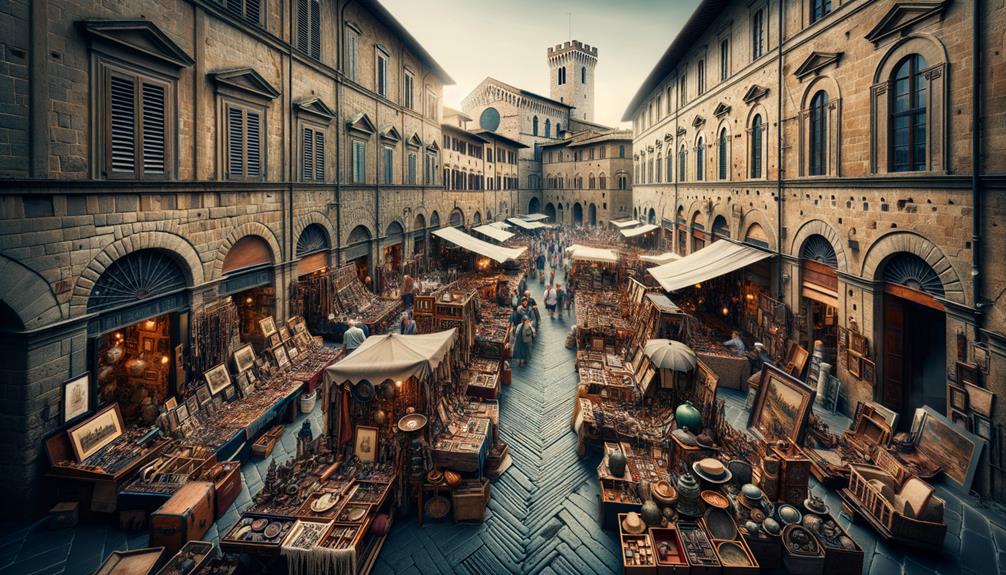
Right in the center of Arezzo, the Antique Market spreads through the charming Piazza Grande and its surrounding medieval streets, creating a maze of historical finds. On the first Sunday of every month—and the Saturday before it—the historic center fills with over 400 vendors showcasing their wares. The Piazza Grande, with its sloping cobblestones and medieval buildings, is the market’s main hub. As I roamed through the layout, it felt like stepping back in time.
Each alley branching off the Piazza offers its own stalls, selling everything from vintage jewelry to Renaissance art. The market’s setup is both chaotic and charming, with vendors occupying every nook and cranny of the historic center. It is easy to get lost, but that is part of the appeal. The scents of aged books and polished antiques mix with the aroma of freshly brewed espresso from nearby cafes.
As I wandered through the maze of stalls, I found hidden gems and enjoyed lively haggling sessions with enthusiastic sellers. The market’s setting in Arezzo’s historic center adds to its charm, making every visit a journey through history.
Parking Tips
Navigating Arezzo’s antique market is a real adventure, but parking can be tricky. After several visits, I’ve picked up some tips to help make your trip smoother. Here’s what works:
- Train Station Parking: Parking near the train station is a good option. It costs just 3 EUR for 4 hours, but it can fill up quickly. Getting there early is a smart move.
- Managed Car Parks: Official sources recommend managed parking facilities as a safer alternative on market days. Parcheggio Cadorna is one option cited, though rates and availability can change—check ahead before relying on it.
- Park and Ride: On busy market days, finding parking close to the center can be stressful. Parking outside the city and taking a bus or taxi in is often the least complicated option and leaves you free to focus on the market.
What to Wear

When I went to the Arezzo Antique Market, I quickly noticed how important it was to wear comfortable shoes. The town’s hilly terrain and cobblestone streets make sturdy footwear essential. With the weather being unpredictable, especially in spring and autumn, dressing in layers proved a smart move. Practical clothing and a secure cross-body bag made it easier to move through the busy stalls and keep my belongings safe.
Comfortable Footwear Essentials
To really enjoy the Arezzo Antique Market, you’ll want shoes with good arch support. The historic center’s hilly terrain and cobblestone streets can be hard on your feet over a long day. I’ve found that your choice of footwear makes a significant difference by the time the afternoon rolls around.
As you get ready for your visit, keep these tips in mind:
- Solid, supportive shoes: Choose a pair that can handle crowds and potentially uneven or damp surfaces. Your feet will thank you after several hours among the market stalls.
- Breathable, moisture-wicking materials: Shoes that keep your feet cool and dry make a noticeable difference when you’re covering a lot of ground through Arezzo’s historic streets.
- Closed-toe protection: Skip the open-toed shoes. Cobblestones can be uneven underfoot, and crowded market conditions mean your toes need some protection.
I’ve seen many visitors regret wearing flimsy shoes, which can make it hard to enjoy the market’s charm. Bringing a spare pair or a set of insoles is a sensible precaution, especially if your main pair becomes uncomfortable or wet.
Weather-Appropriate Outfit Choices
Italian weather can be unpredictable, so dressing in layers is a smart move when visiting the Arezzo Antique Market. As I wandered through the stalls on the first Saturday and Sunday of the month, I found that layering let me adjust quickly to shifting temperatures. Mornings can start off quite cool, especially in autumn and winter, so I recommend a lightweight base layer—cotton or a moisture-wicking fabric works well.
I always pack a mid-layer, like a light sweater or fleece, which I can easily remove as the day warms up. For outerwear, a jacket that is both windproof and water-resistant is a practical choice. The market spreads across the historic center, and a sudden rain shower can arrive without much warning.
Comfortable yet stylish footwear is essential, and don't forget a hat and sunglasses for sun protection. A crossbody bag keeps your hands free for browsing through the treasures. I always find that when I'm immersed in the charm and history of the antiques market in Arezzo, I truly appreciate the freedom that weather-appropriate outfit choices provide.
Item Wishlist
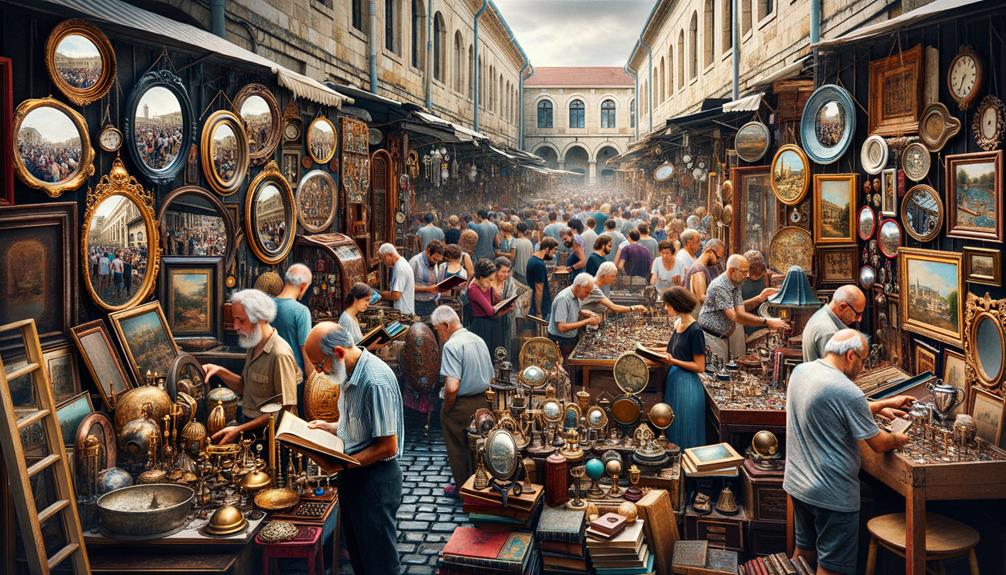
Browsing the many stalls at the Arezzo Antique Market, I can’t help but mentally compile a wishlist of items that reflect the depth of Italian history and craftsmanship. This antiques fair is a genuine treasure trove—you can find anything from medieval relics to vintage fashion pieces, and each stall opens a window onto a different era.
Here’s what tops my wishlist:
- Renaissance Paintings: These works capture a period when Florence and Tuscany were at the heart of artistic innovation. Owning an original or a well-crafted reproduction feels like holding a piece of history in my hands.
- Murano Glassware: The intricate designs of Murano glass are genuinely striking. No two pieces are exactly alike, making each one a distinct work of art that also carries the story of centuries-old Venetian glassblowing tradition.
- Antique Jewelry: Whether it’s a brooch from the Victorian era or a handcrafted necklace from the early twentieth century, antique jewelry at Arezzo can transform even a simple outfit into something with a story behind it.
Wandering through the market, every item hints at its past, and each purchase becomes a tangible connection to Italy’s cultural heritage.
Negotiating Prices
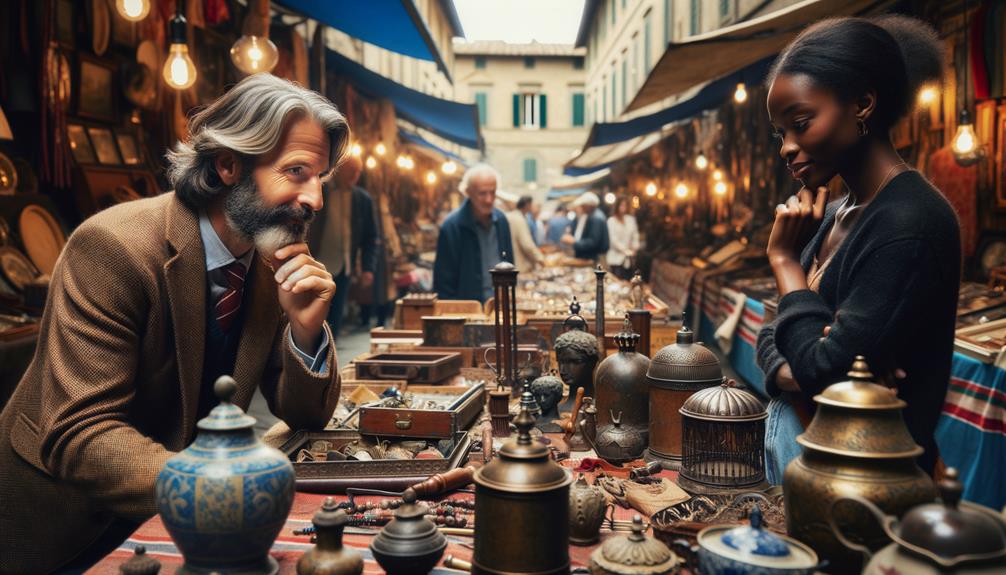
Haggling at the Arezzo Antique Market is quite the experience, blending cultural nuance and personal interaction to arrive at a fair price. I’ve learned that being ready to negotiate is important—vendors expect it. Prices at first glance can seem high, but polite bargaining is part of the culture here, and vendors will often come down if you engage with them respectfully.
Before heading to the market, I always look up the approximate market value of items I’m interested in. This gives me a reasonable basis for negotiating and helps me avoid overpaying. Timing matters too—vendors tend to be more flexible later in the day, when they are keen to move remaining stock before packing up.
Approaching negotiations with respect, patience, and a friendly manner can make a real difference. It’s about building a brief connection with the seller, not simply pushing for the lowest number. A little Italian goes a long way here too.
| Tip | Strategy | Benefit |
|---|---|---|
| Research | Know market value | Avoid overpaying |
| Timing | Negotiate later in the day | Better deals |
| Politeness | Be respectful and friendly | Build rapport with vendors |
| Initial Offer | Start lower than your target price | Room to negotiate |
| Walk Away | Be prepared to leave | Shows seriousness |
Food and Drink Options
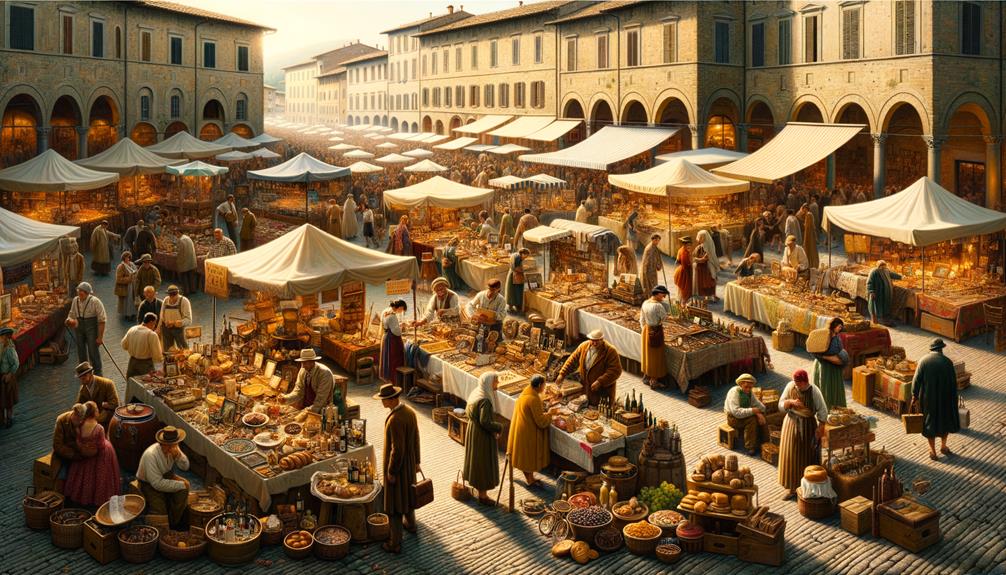
While roaming the Arezzo Antique Market, I discovered that the local food and drink options offer a welcome break from the busy stalls. The city’s culinary scene is diverse and well-suited to a long day of browsing.
One of my favorite spots is Caffe Dei Costanti, located in Piazza San Francesco. This cafe is a local favorite, and for good reason. You can sit with an espresso or an Aperol Spritz and watch the market crowds pass by, especially on a busy Sunday.
For those with a sweet tooth, Gelateria Sunflower in the same piazza is worth a stop. Their pistachio gelato is a creamy, nutty treat—exactly what you want after a morning of bargaining and exploring.
If you’re looking for something different, Tao, located opposite the train station, offers an all-you-can-eat sushi lunch. Pricing may have changed since last reported, so check with the restaurant directly before visiting.
- Caffe Dei Costanti
- Gelateria Sunflower
- Tao Sushi Restaurant
Each of these spots offers a distinct taste of Arezzo’s food scene, ensuring that a visit to the antique market is as satisfying for your appetite as it is for your collecting instincts.
Hidden Treasures
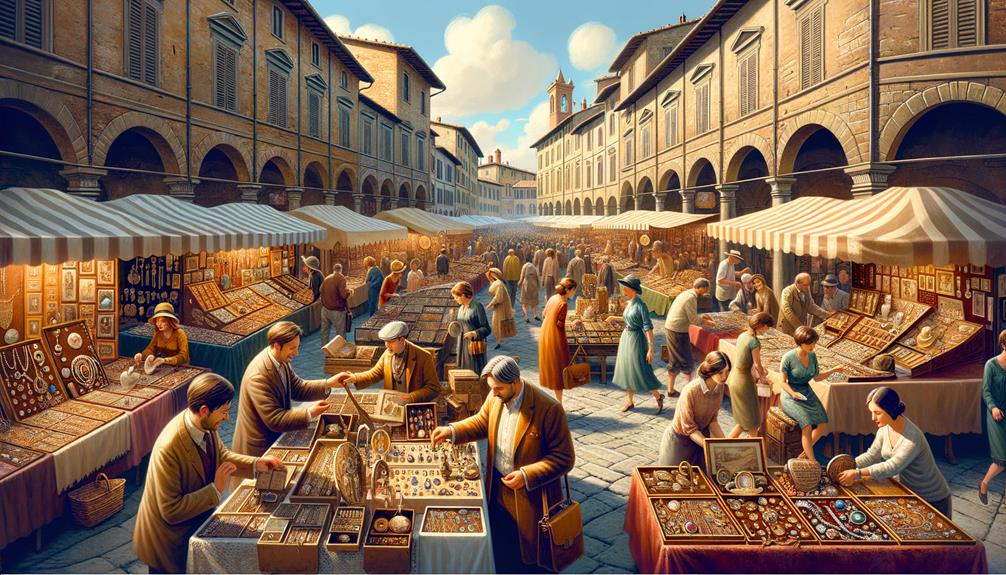
Walking through the busy Arezzo Antique Market, I found myself surrounded by pieces of Italy’s history and craftsmanship. Each stall was its own maze of antiques, with every item hinting at stories from long ago. I navigated through rows of vintage jewelry, ornate furniture, and delicate porcelain figurines with a growing sense that I could spend the entire day here without covering everything.
One stall in particular caught my attention with its collection of intricately designed silverware. The vendor, an elderly man with a twinkle in his eye, shared the origins of each piece. It was remarkable to learn that some dated back to the Renaissance, crafted by artisans whose techniques had been passed down through generations.
The market was more than a place to buy things; it was a window into culture. I was drawn to a leather-bound journal with yellowed pages. The seller mentioned it had once belonged to a local poet, which added a touch of mystery to the find.
The Arezzo Antique Market is more than a shopping destination; it is a gateway to Italy’s past. For anyone who enjoys discovery and history, finding these hidden treasures makes for an unforgettable afternoon.
Frequently Asked Questions
What Day Is Market Day in Arezzo, Italy?
The Fiera Antiquaria di Arezzo takes place on the first Sunday of every month and the Saturday immediately before it. Note that when the first of the month falls on a Sunday, the preceding Saturday is in the previous month. The market runs year-round in the historic center. Check the official schedule online to confirm dates before you travel.
Which One Is the Greatest Antique Market in the World?
I’ve traveled widely, and for sheer scale and variety, Paris’s Marché aux Puces de Saint-Ouen is hard to beat. Its sprawling layout, range of dealers, and lively atmosphere make it a destination in its own right for anyone serious about antiques.